The Micro-Matrix Name Badge
The Micro-Matrix Name Badge
An iterative exploration in wearable technology, culminating in a custom PCB design with microscopic free hand surface-mount soldering.
An iterative exploration in wearable technology, culminating in a custom PCB design with microscopic free hand surface-mount soldering.
Project Type
Wearable Technology & Hardware Prototyping
Wearable Technology & Hardware Prototyping
Key Skills
Custom PCB Design, SMD Soldering, Hardware Engineering, Iterative Prototyping, Parametric CAD Design
Custom PCB Design, SMD Soldering, Hardware Engineering, Iterative Prototyping, Parametric CAD Design
Primary Tools
KiCAD, Autodesk Fusion 360, Pixelblaze Pico Microcontroller, Custom PCBs, Xinglight 1mm Addressable LEDs, 3.7V LiPo Batteries
KiCAD, Autodesk Fusion 360, Pixelblaze Pico Microcontroller, Custom PCBs, Xinglight 1mm Addressable LEDs, 3.7V LiPo Batteries
Overview
Born out of an unexpected two-week hospital stay, this project began as a rudimentary, hand-soldered thank-you gift for my nurses. What started as a simple circuit exploration rapidly evolved into a determined six-iteration engineering challenge. The goal was to create an ultra-compact, animated wearable name badge, pushing my fabrication skills from basic LED wiring all the way to designing my first custom surface mount printed circuit board (PCB) and mastering 1mm surface-mount soldering.
Born out of an unexpected two-week hospital stay, this project began as a rudimentary, hand-soldered thank-you gift for my nurses. What started as a simple circuit exploration rapidly evolved into a determined six-iteration engineering challenge. The goal was to create an ultra-compact, animated wearable name badge, pushing my fabrication skills from basic LED wiring all the way to designing my first custom surface mount printed circuit board (PCB) and mastering 1mm surface-mount soldering.
The Challenges
Power Constraints: Balancing the desire for bright, animated illumination with the extreme size and weight limitations of a wearable badge.
Component Miniaturization: Transitioning from bulky, pre-wired components to some of the smallest individually addressable LEDs on the market (1mm Xinglight LEDs) to achieve high-resolution text.
Skill Acquisition: Learning custom PCB design and delicate surface-mount (SMD) soldering from scratch to achieve a professional, reliable final product.
Power Constraints: Balancing the desire for bright, animated illumination with the extreme size and weight limitations of a wearable badge.
Component Miniaturization: Transitioning from bulky, pre-wired components to some of the smallest individually addressable LEDs on the market (1mm Xinglight LEDs) to achieve high-resolution text.
Skill Acquisition: Learning custom PCB design and delicate surface-mount (SMD) soldering from scratch to achieve a professional, reliable final product.
The Solution & Process
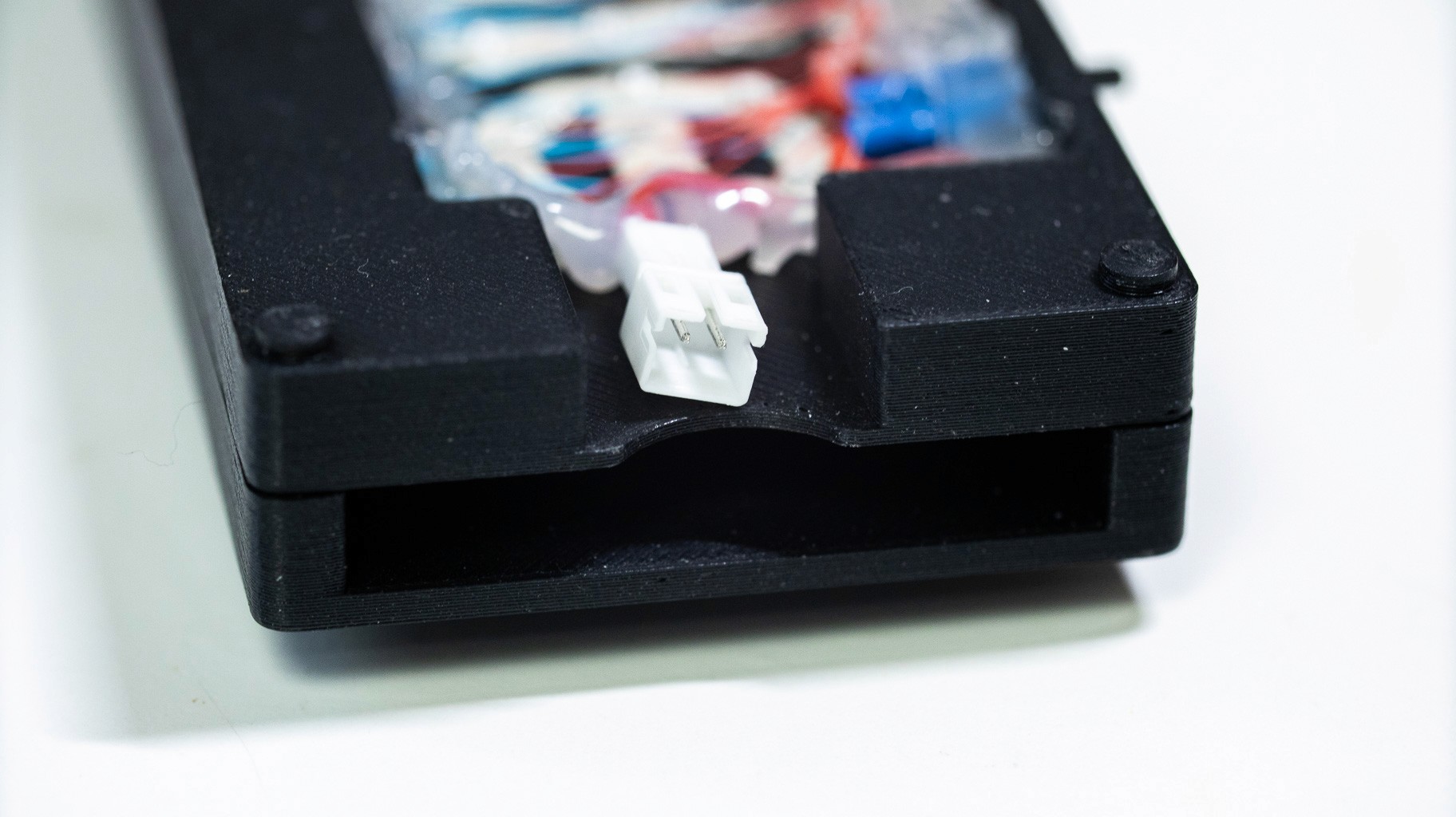
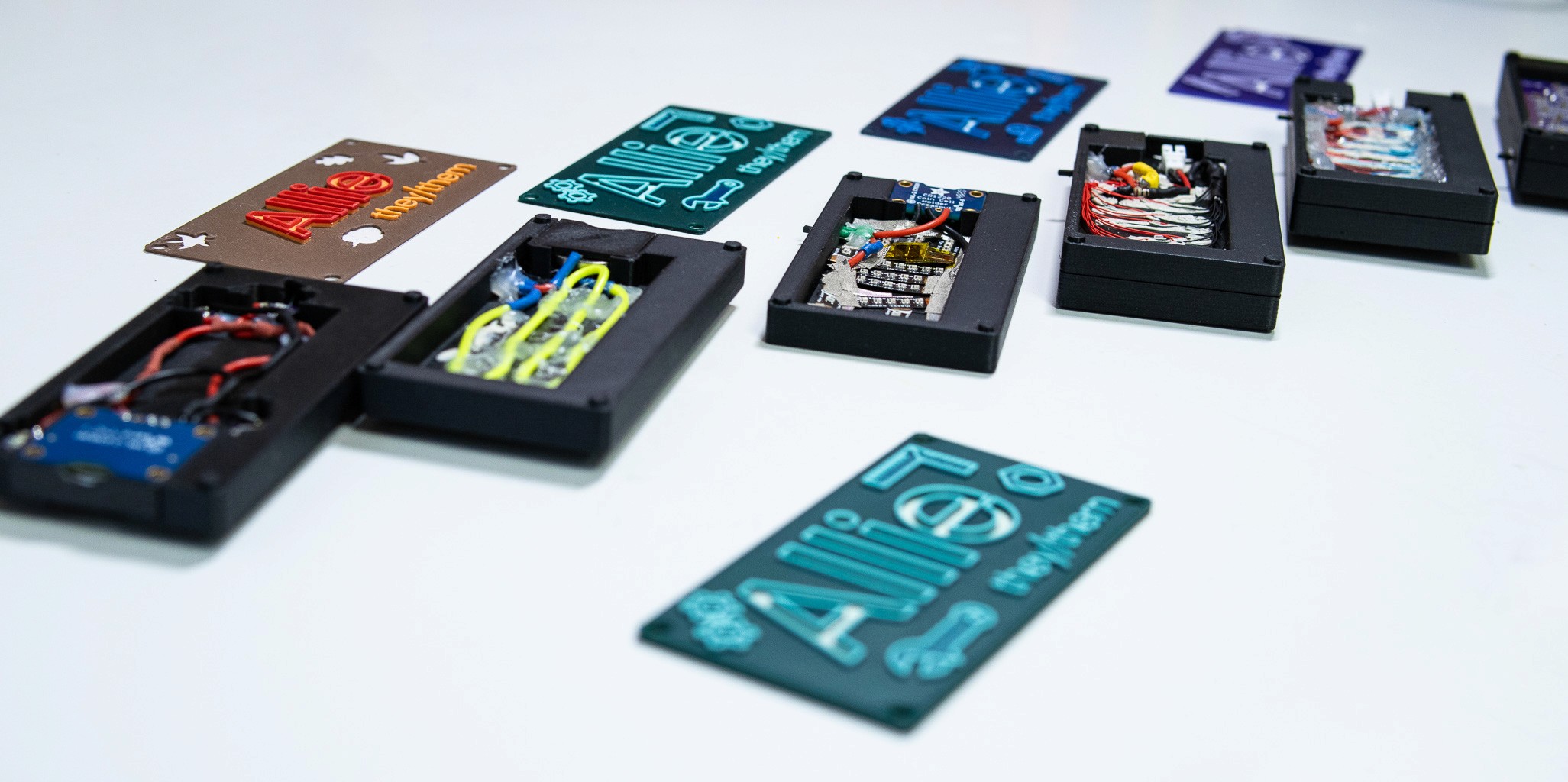
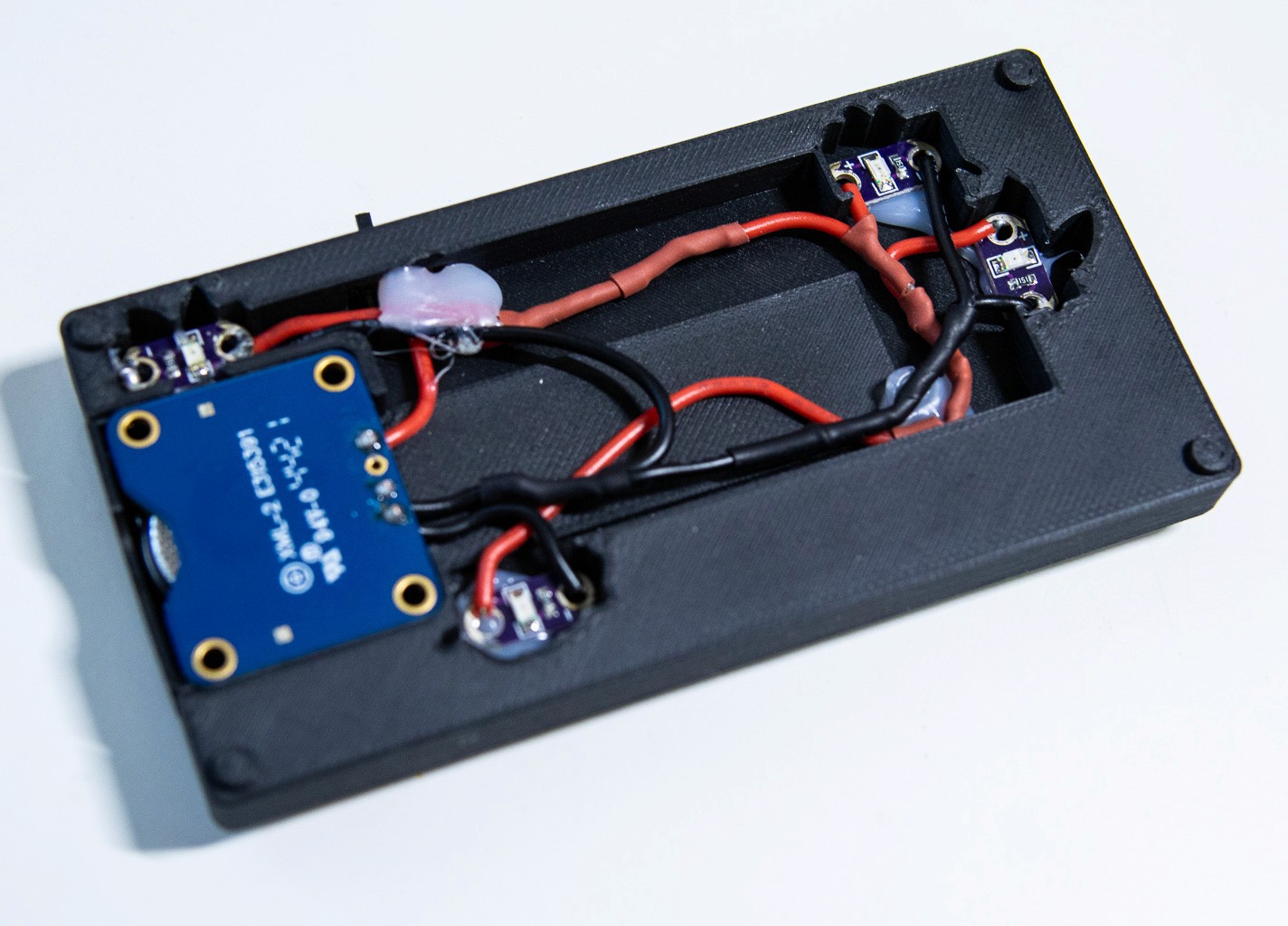
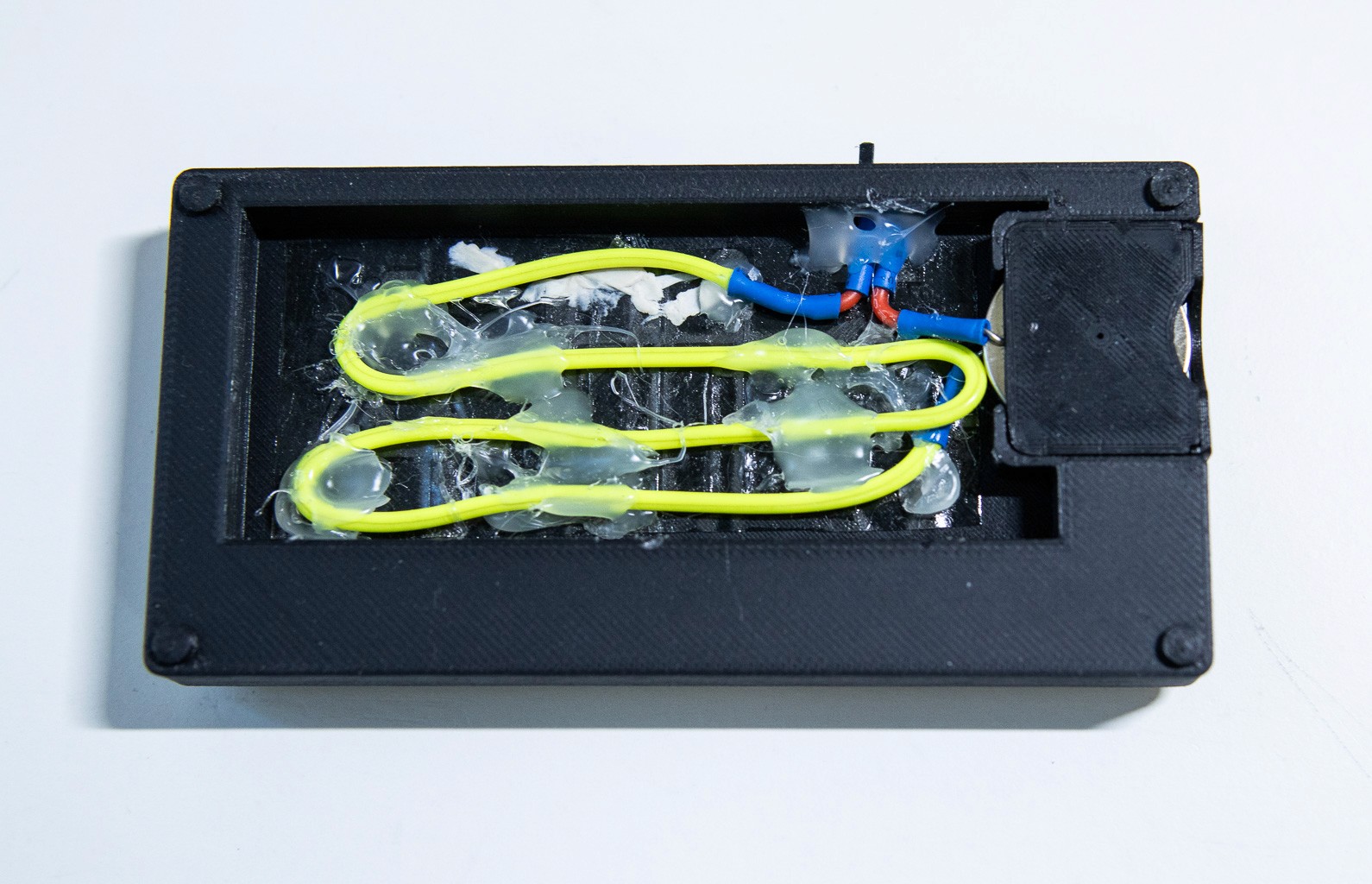
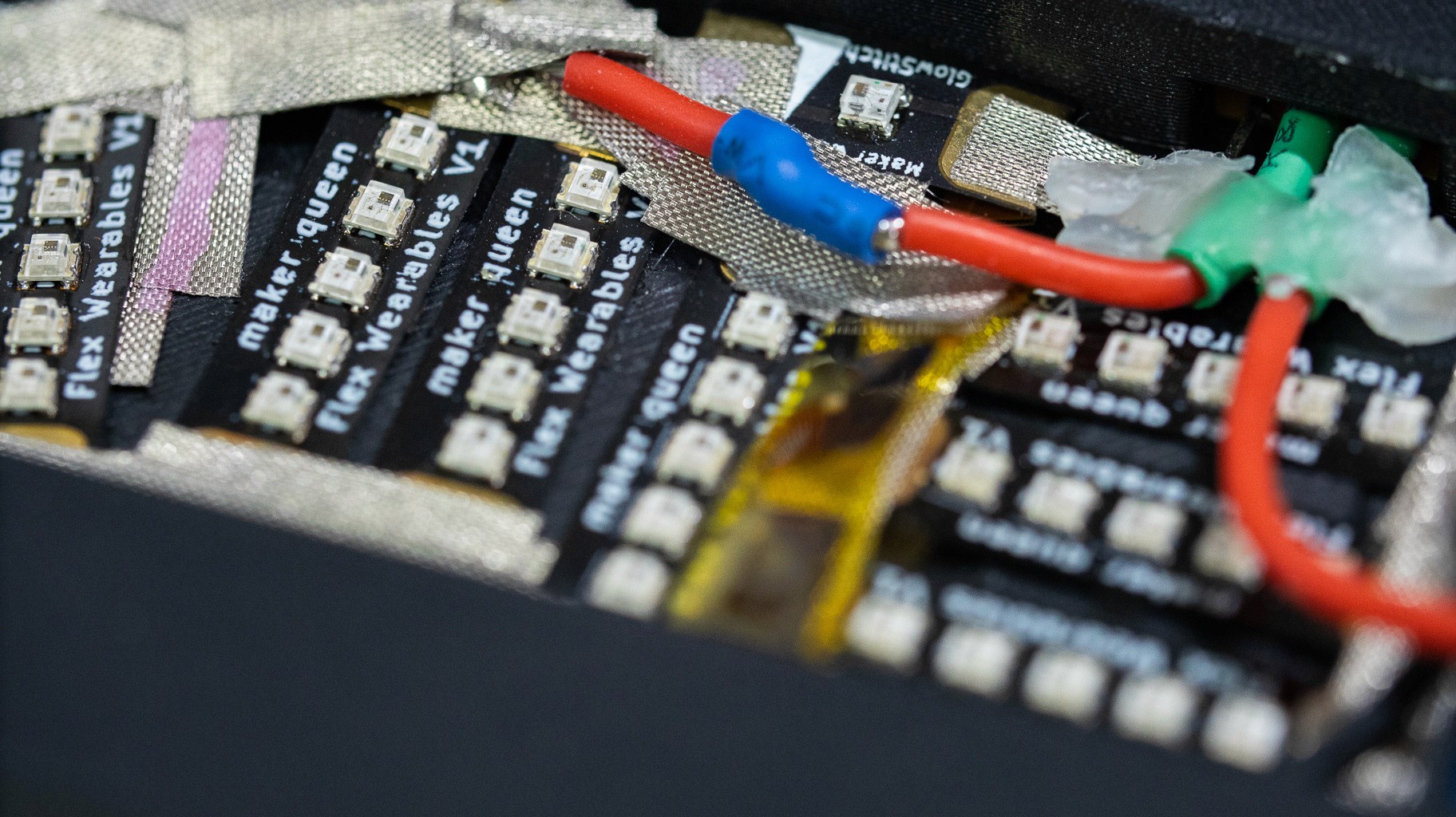
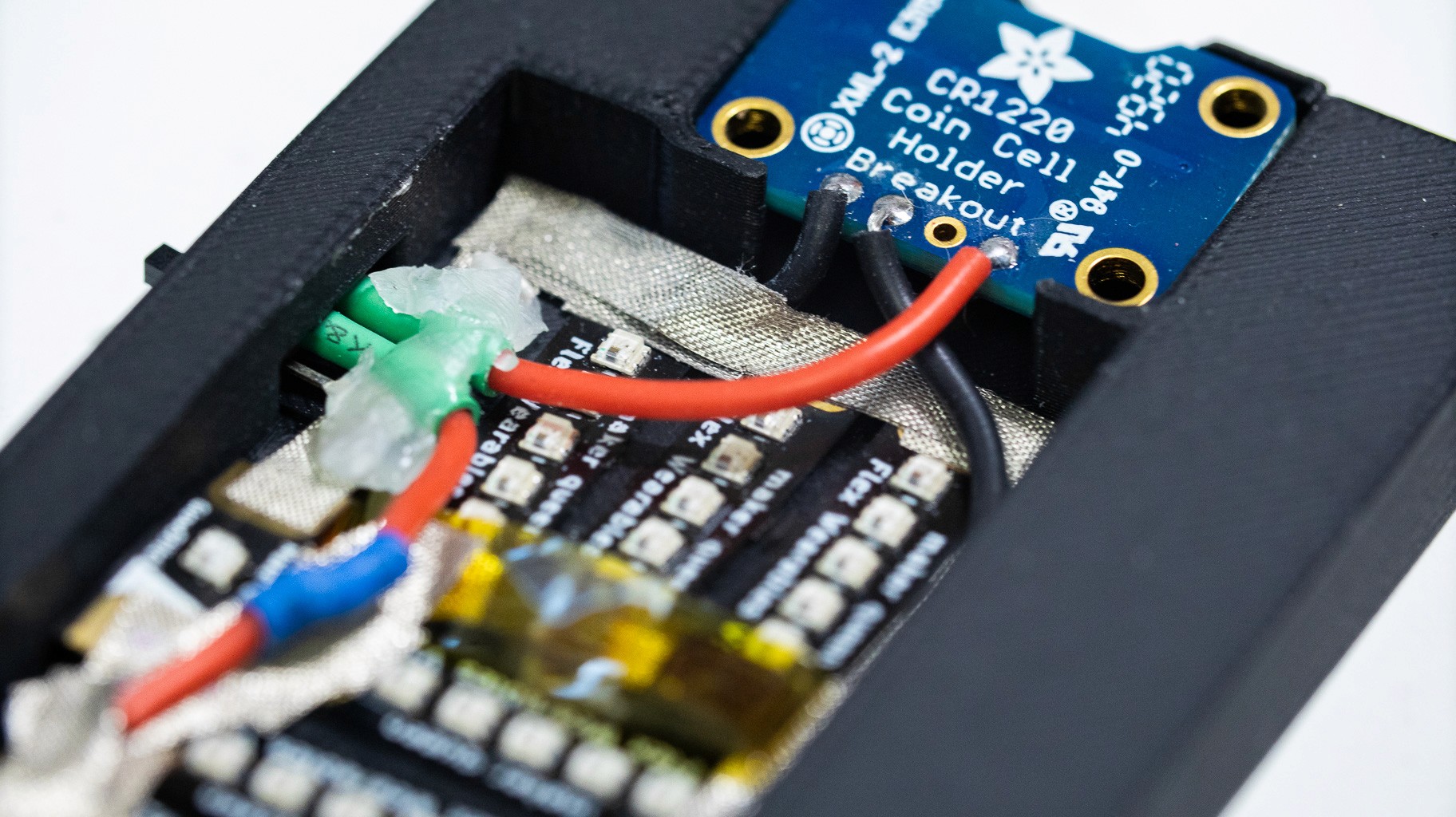
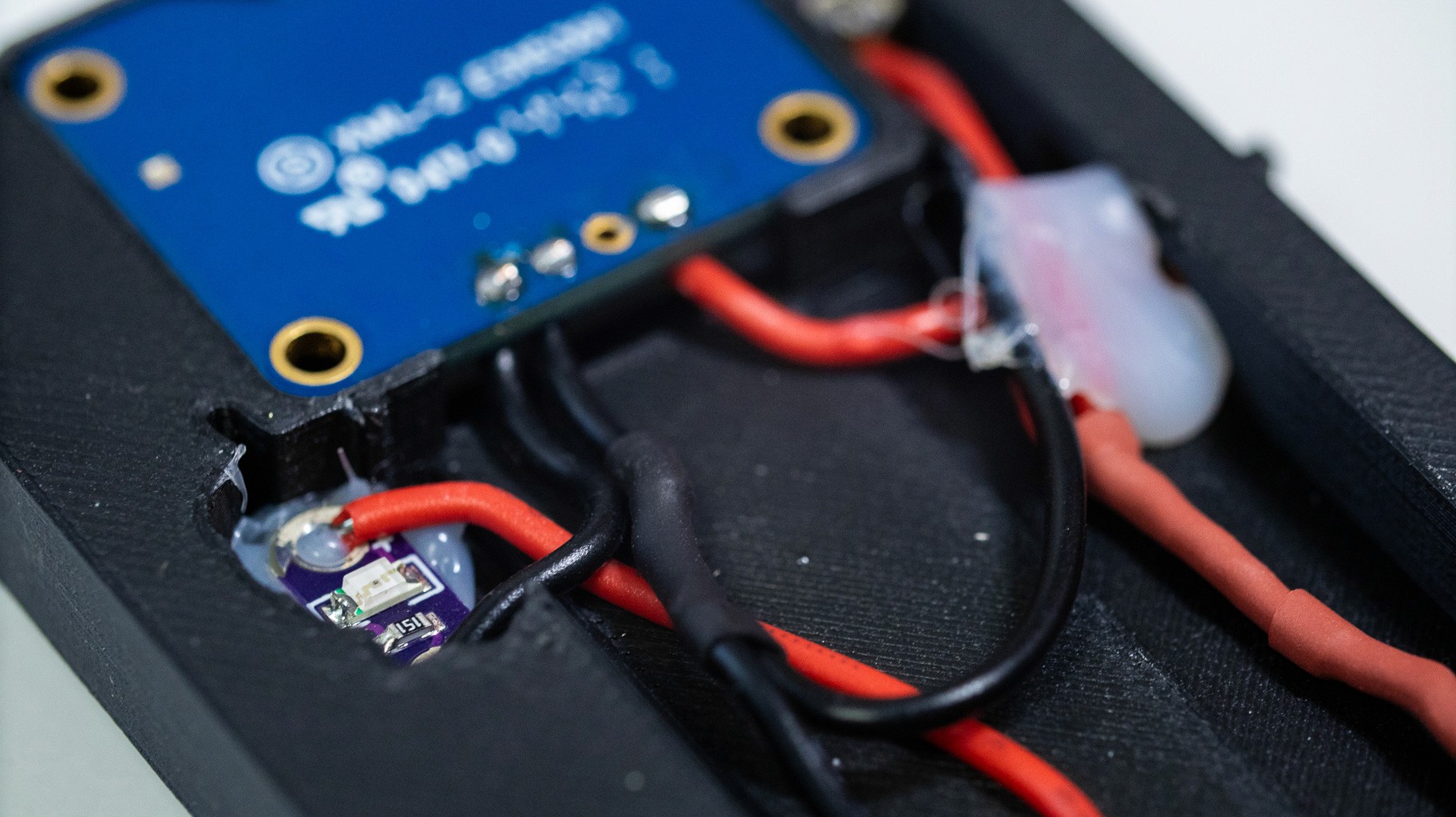
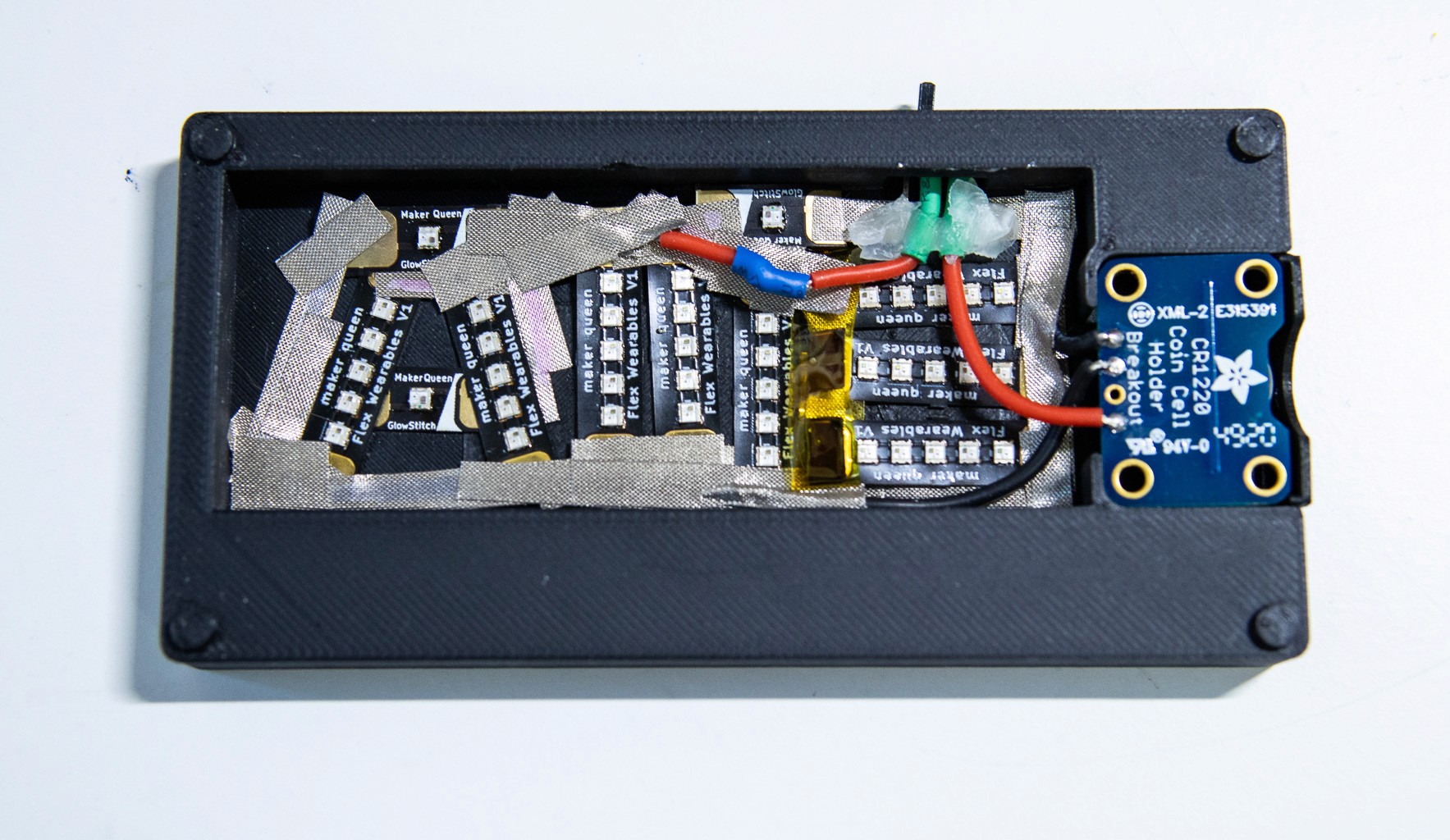
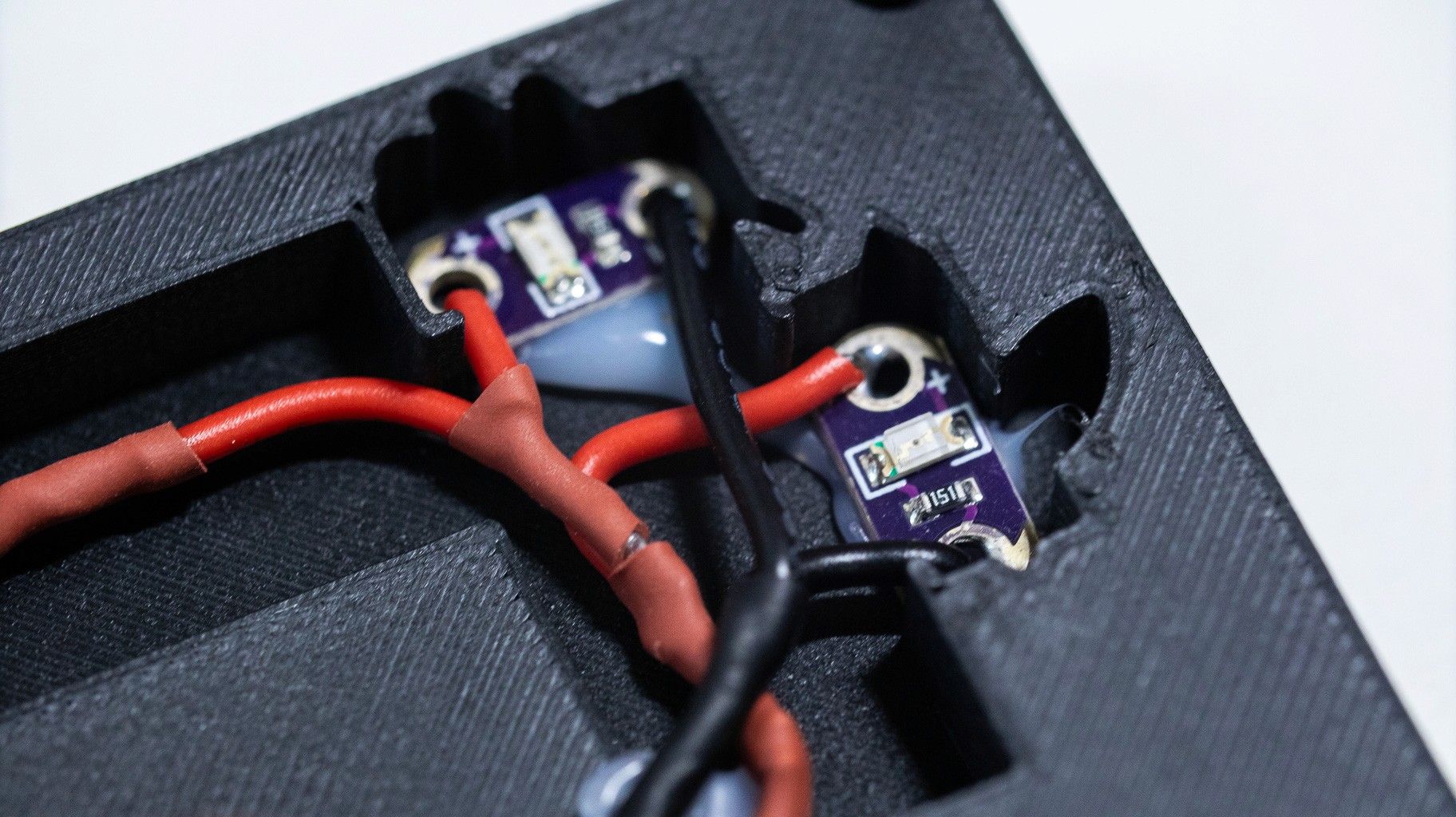
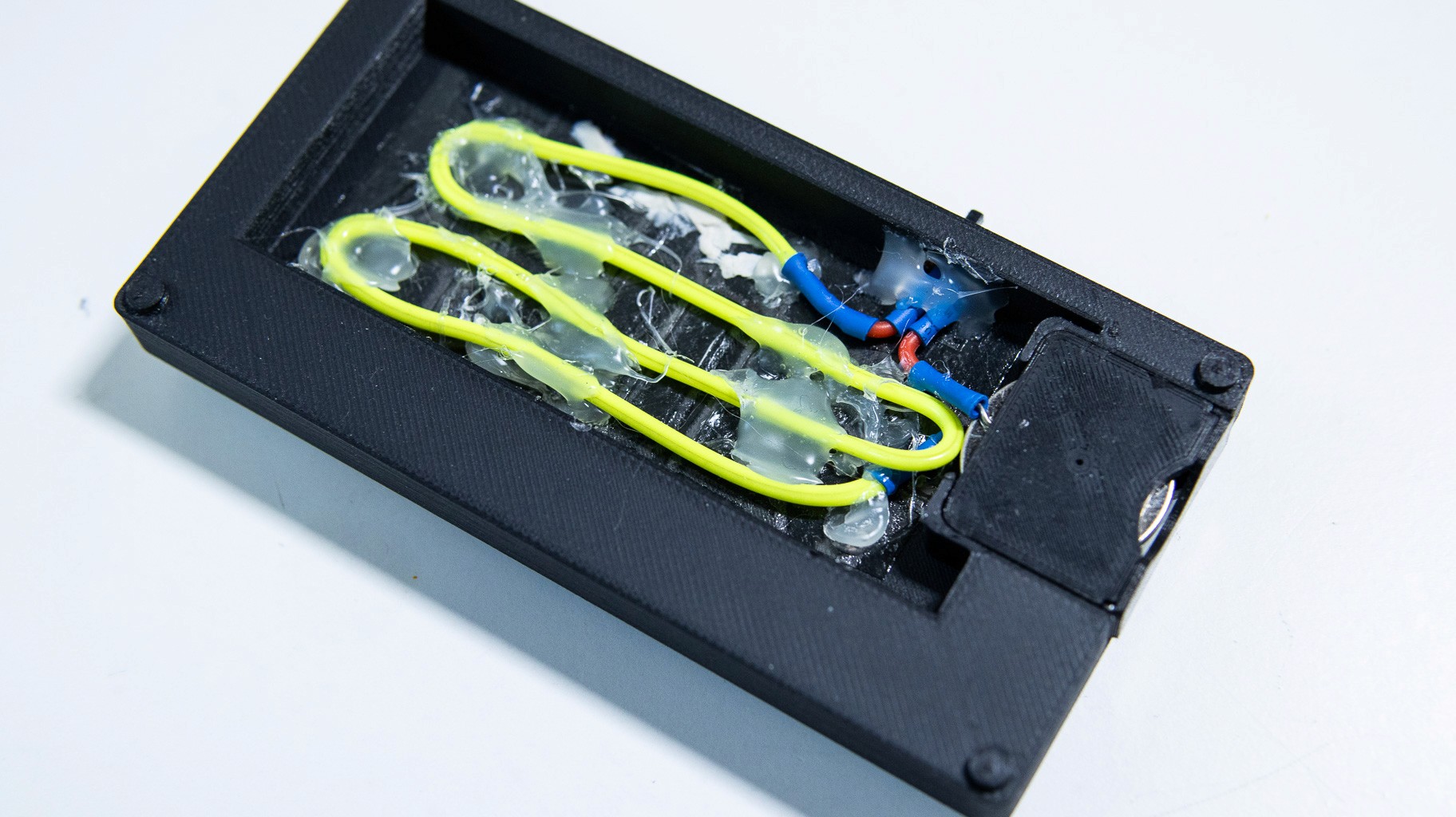
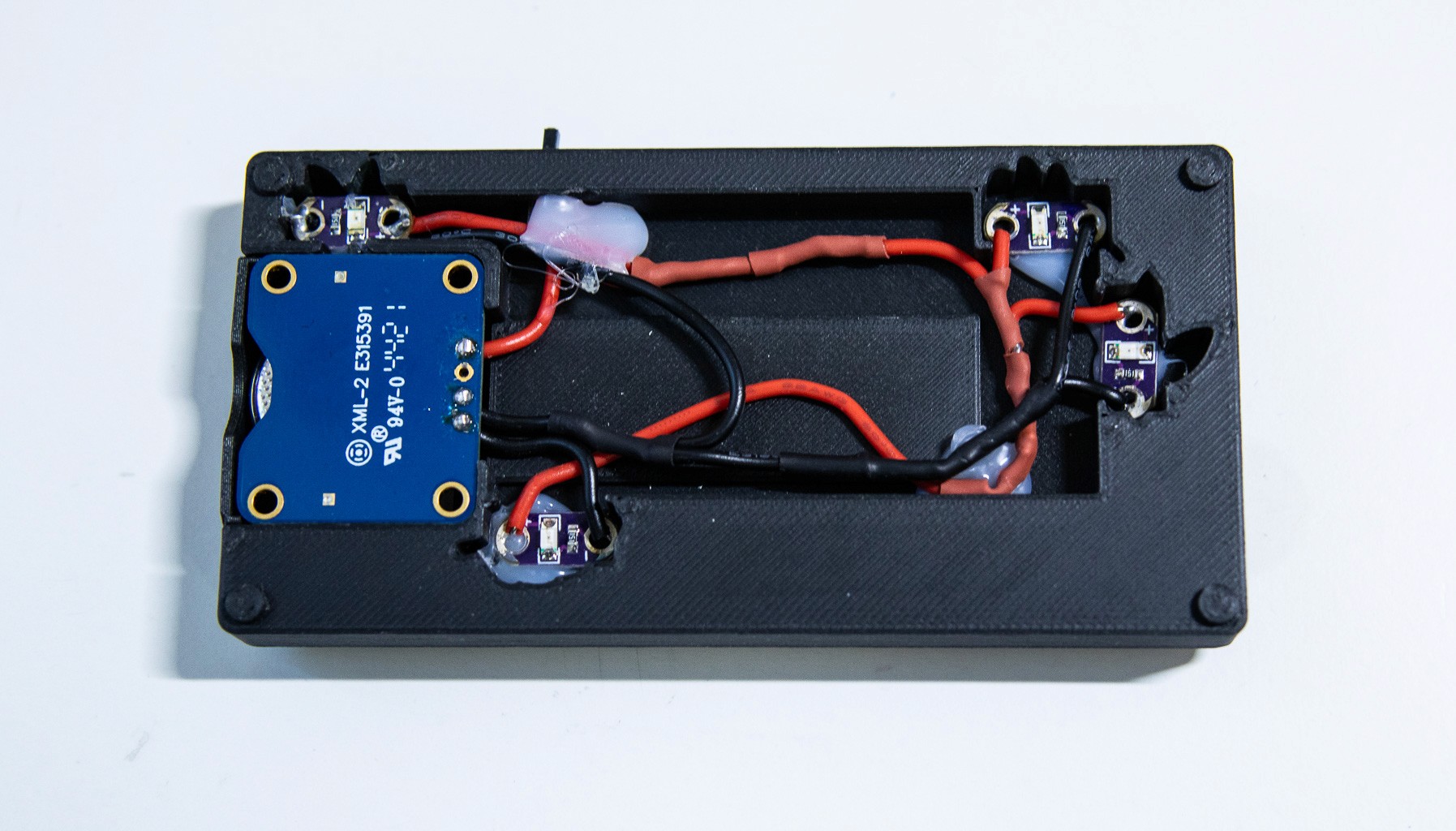
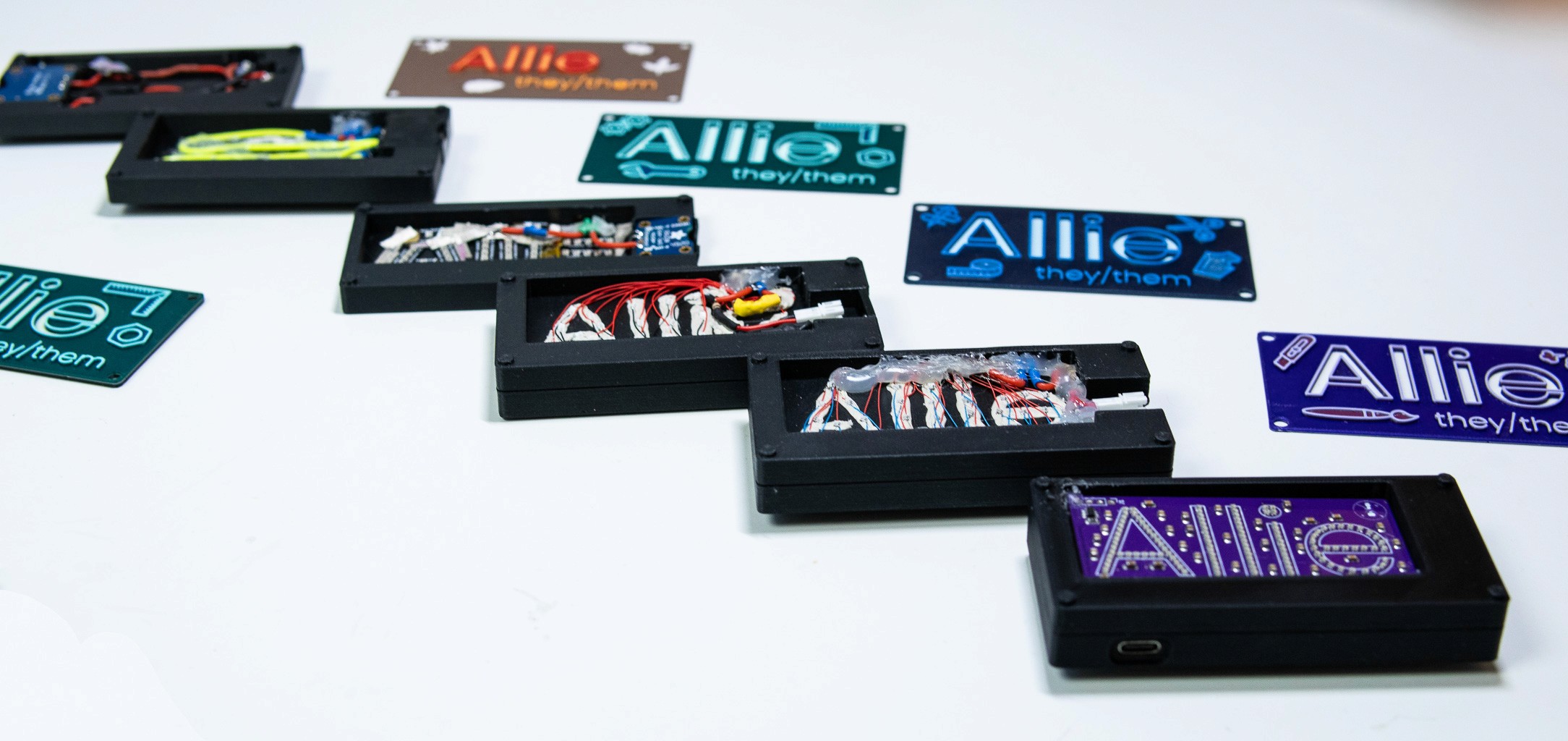
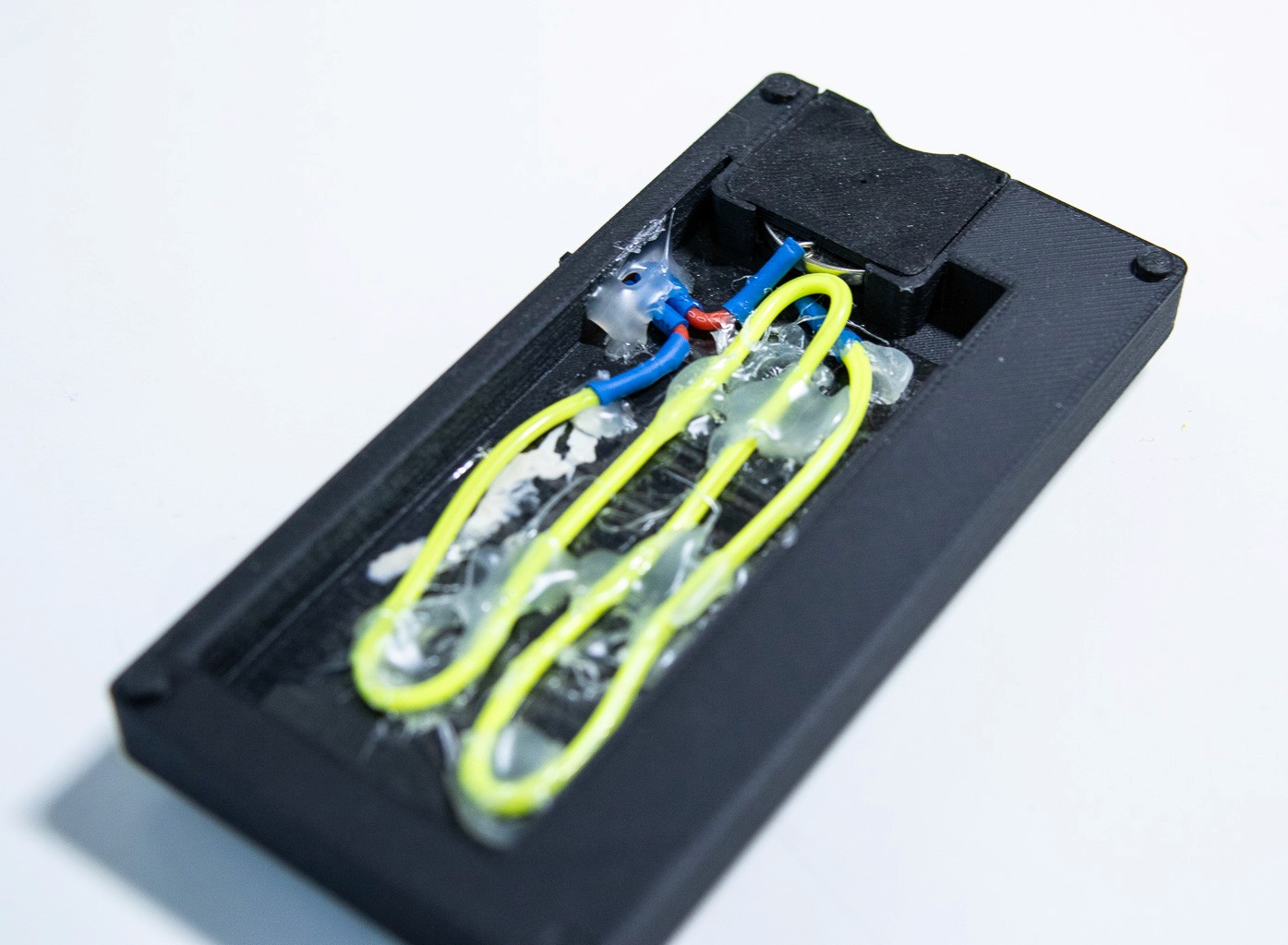
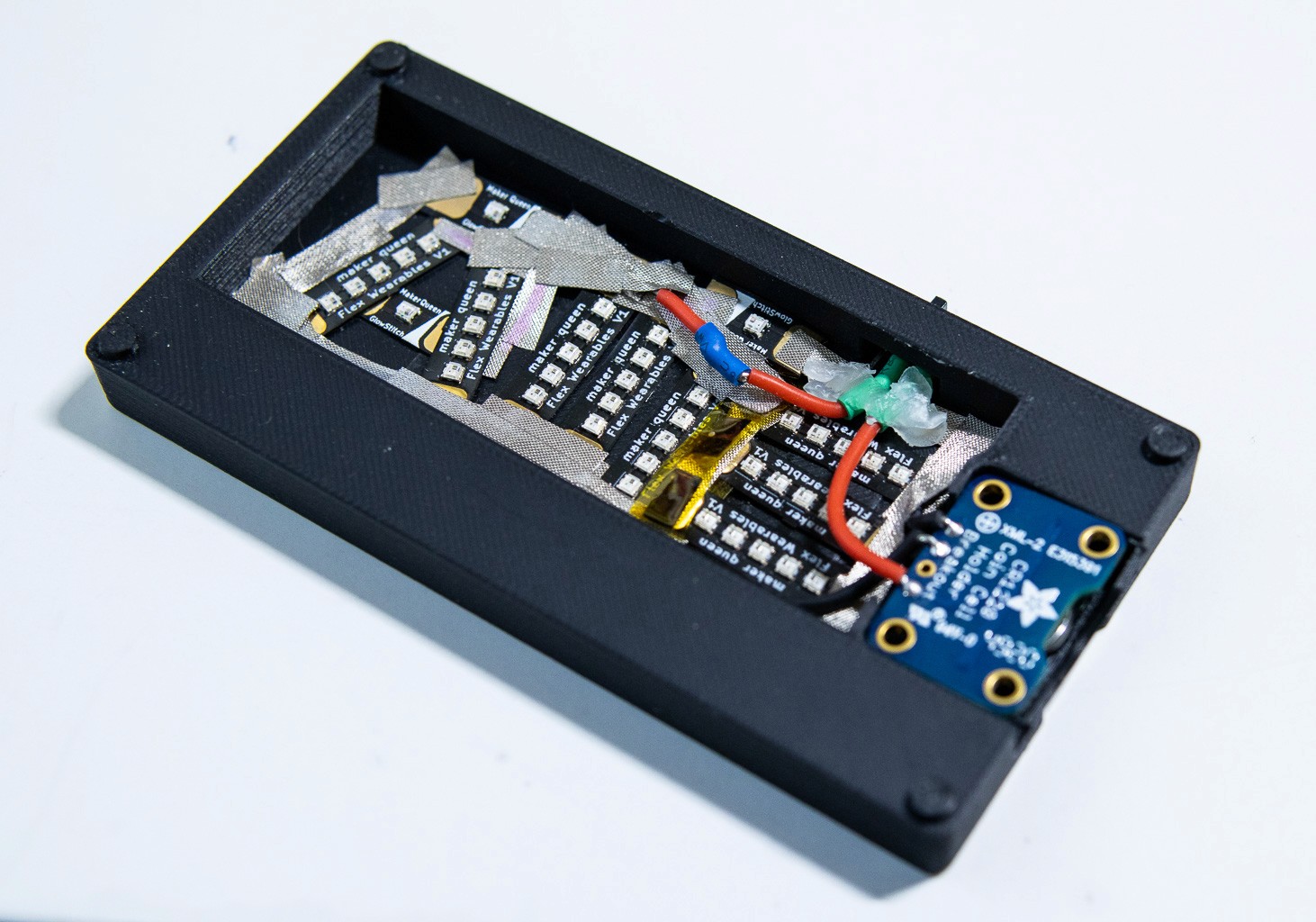
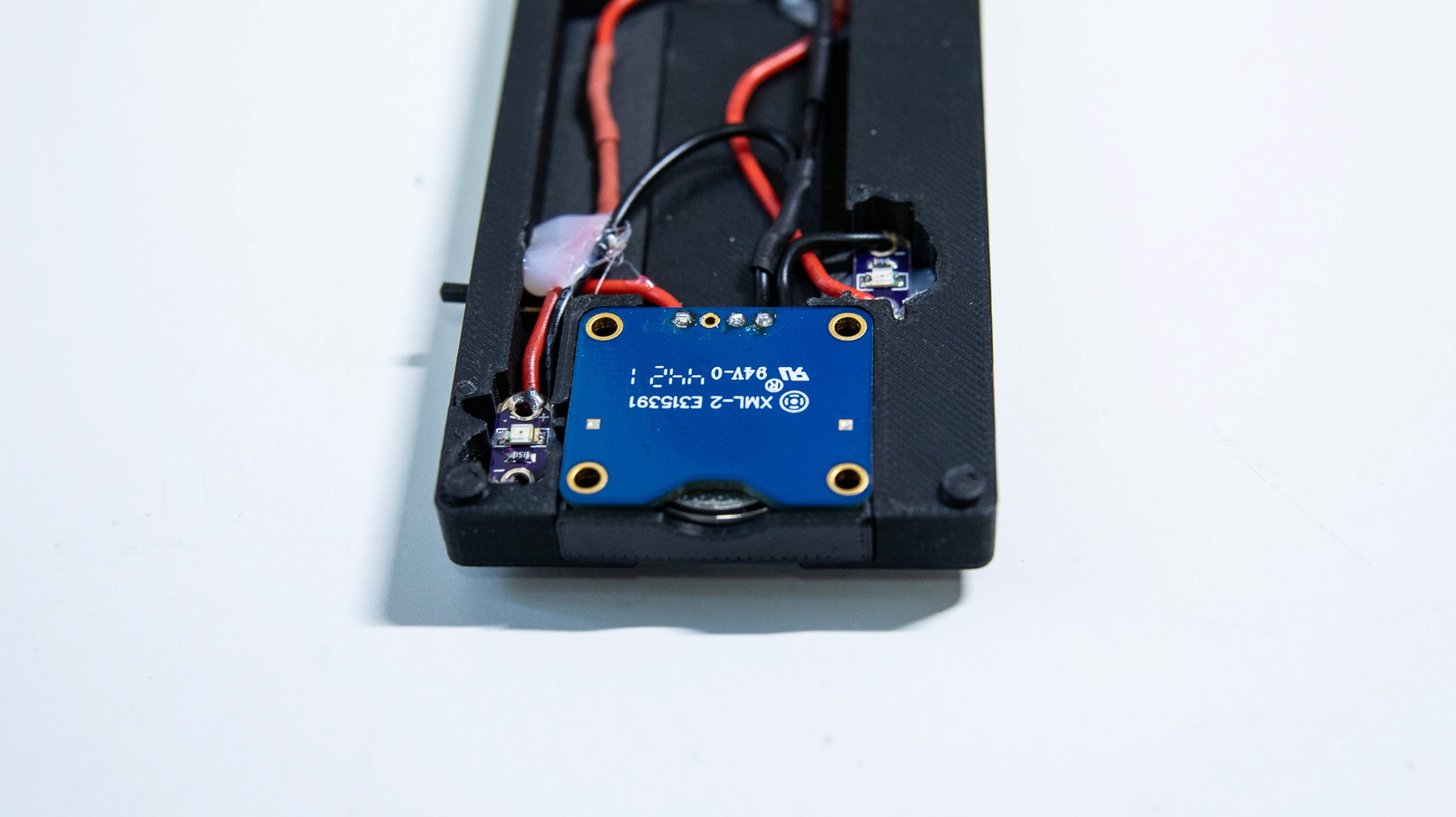
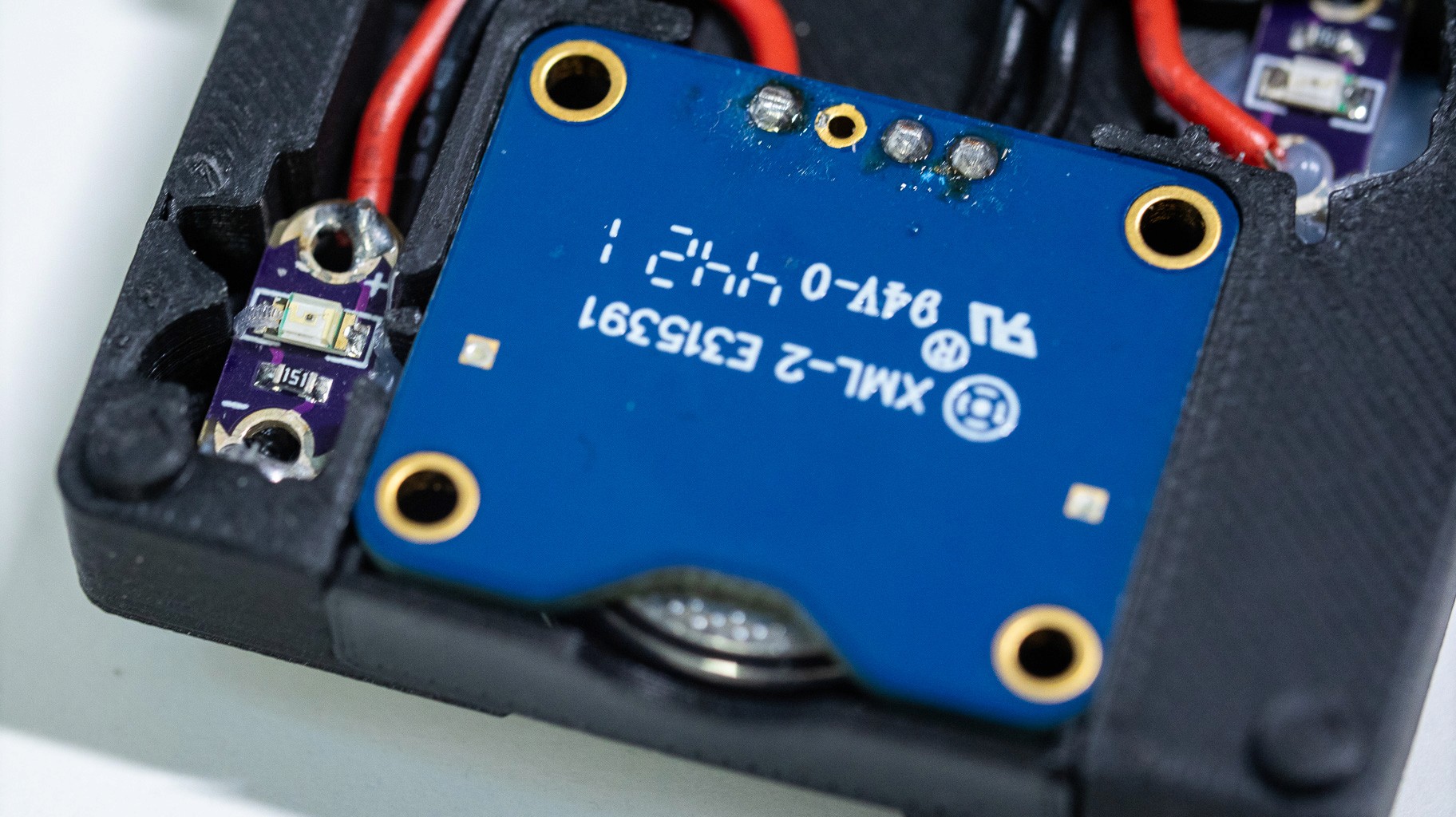
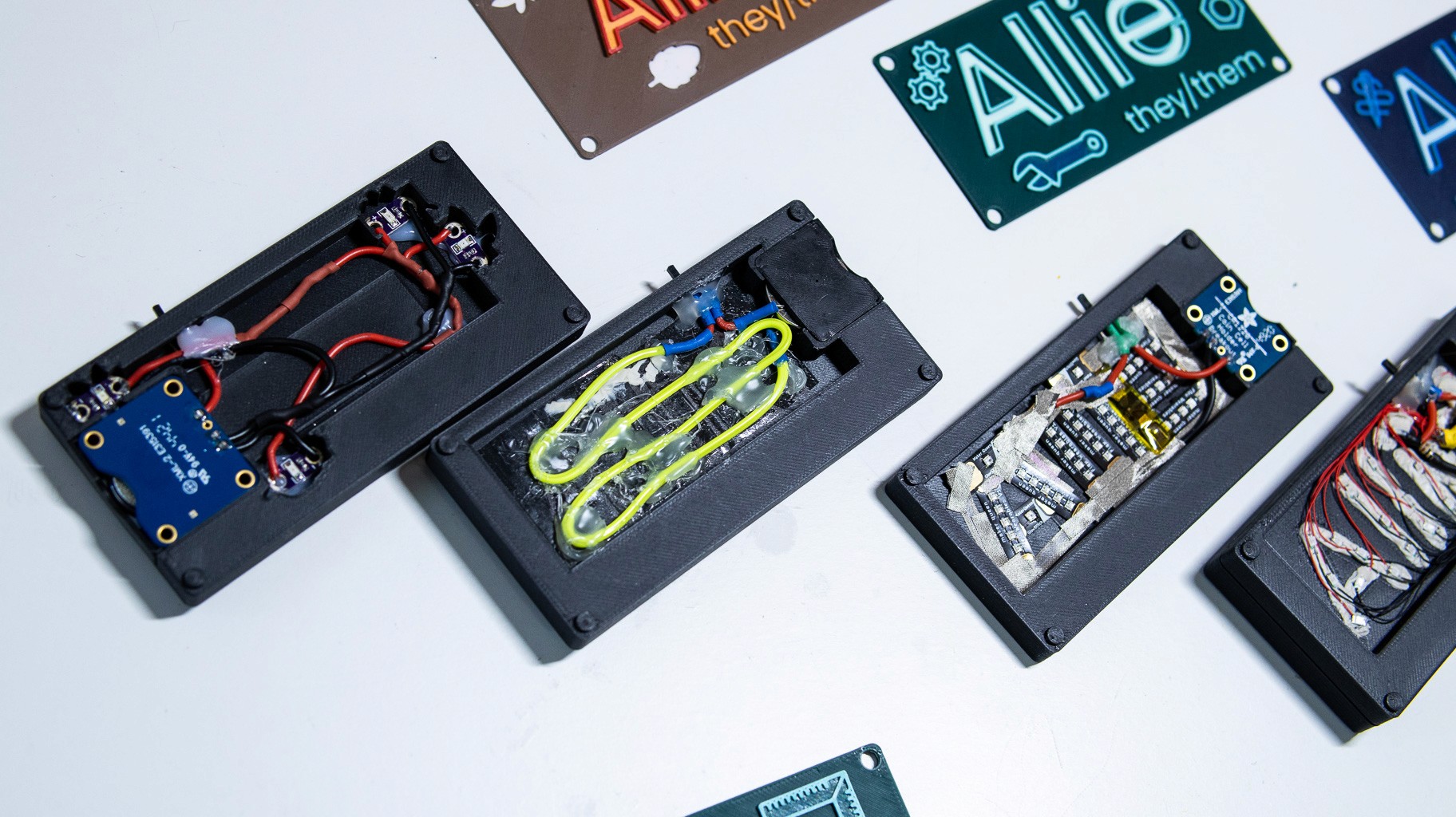
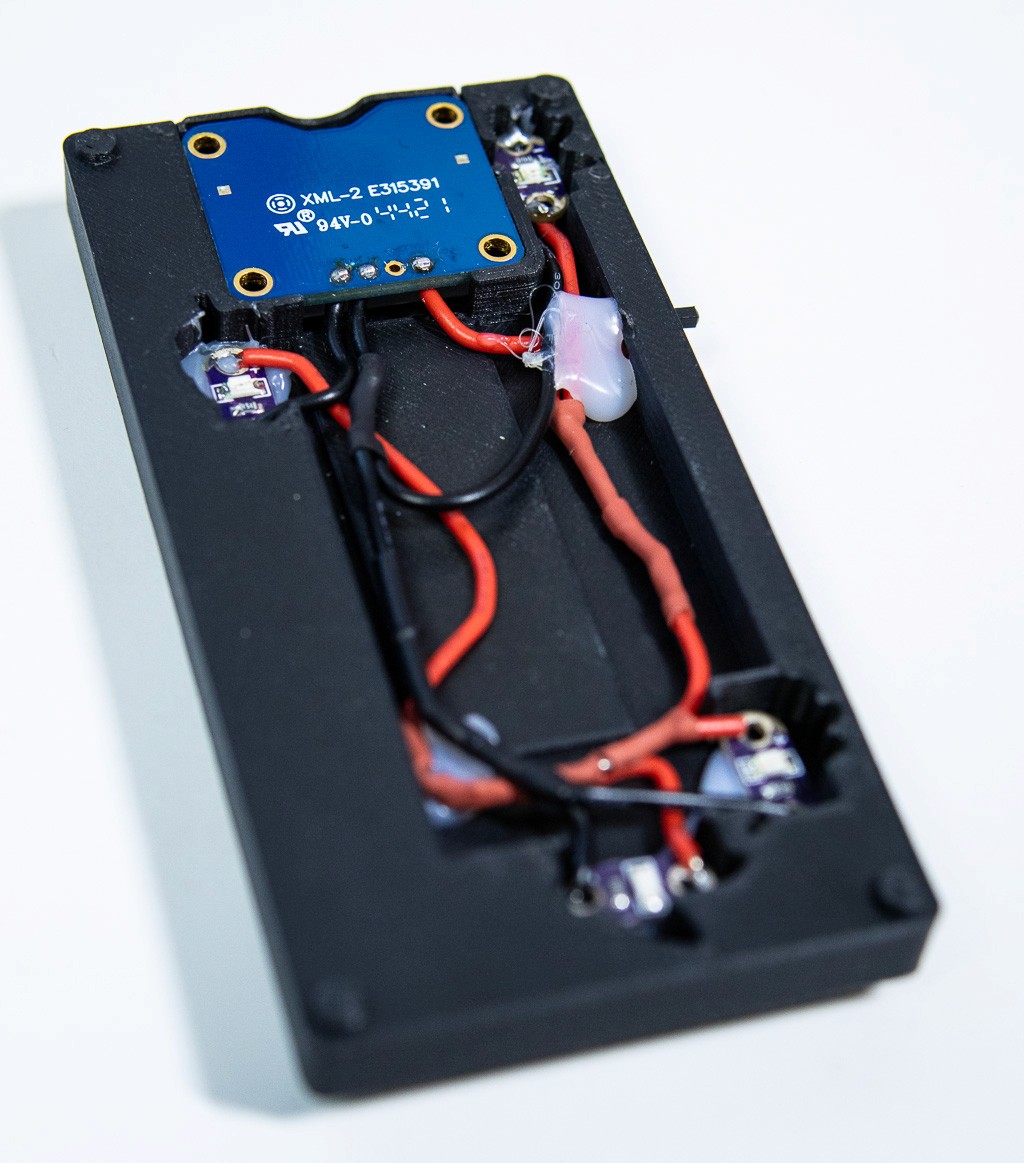
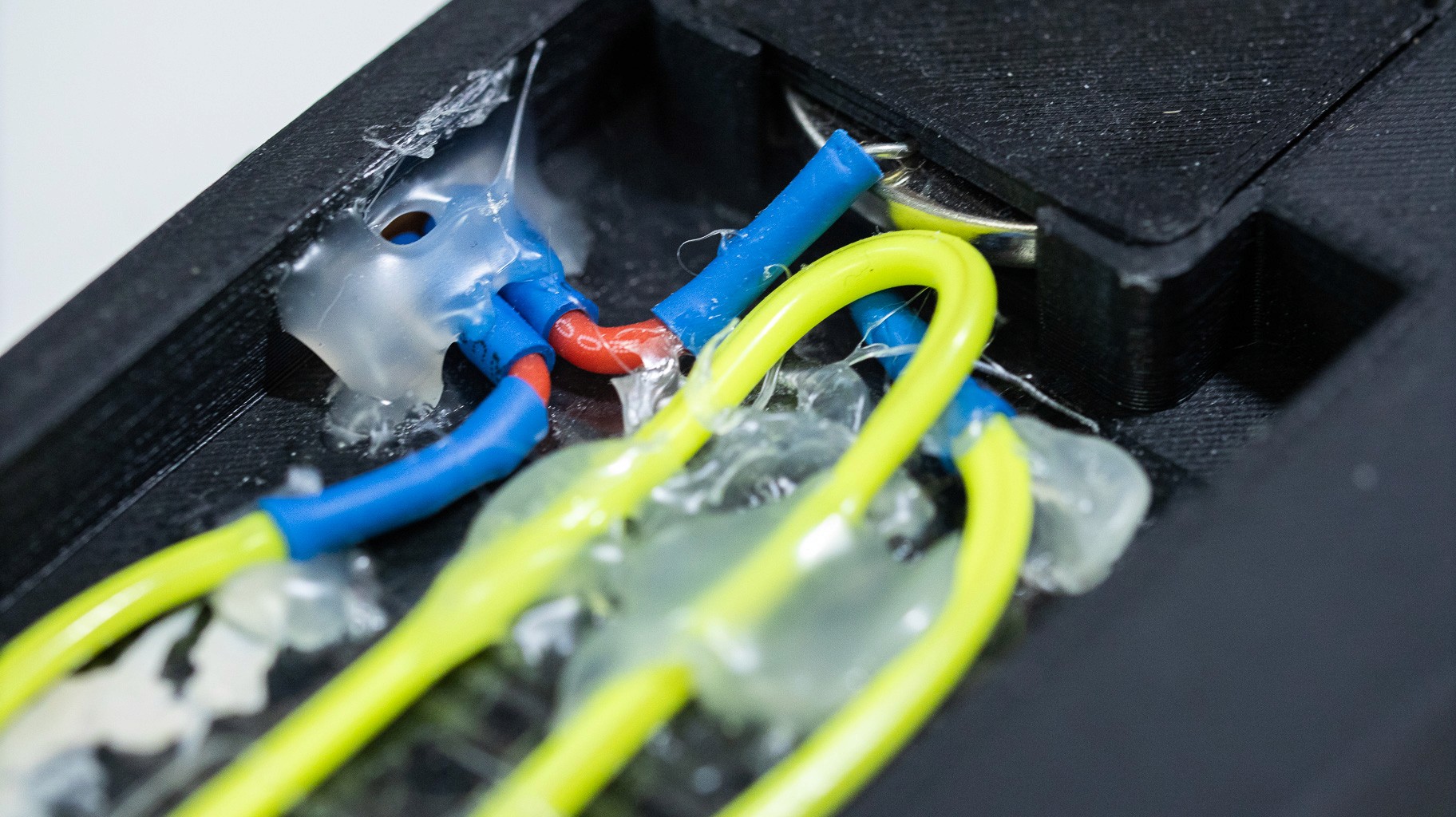
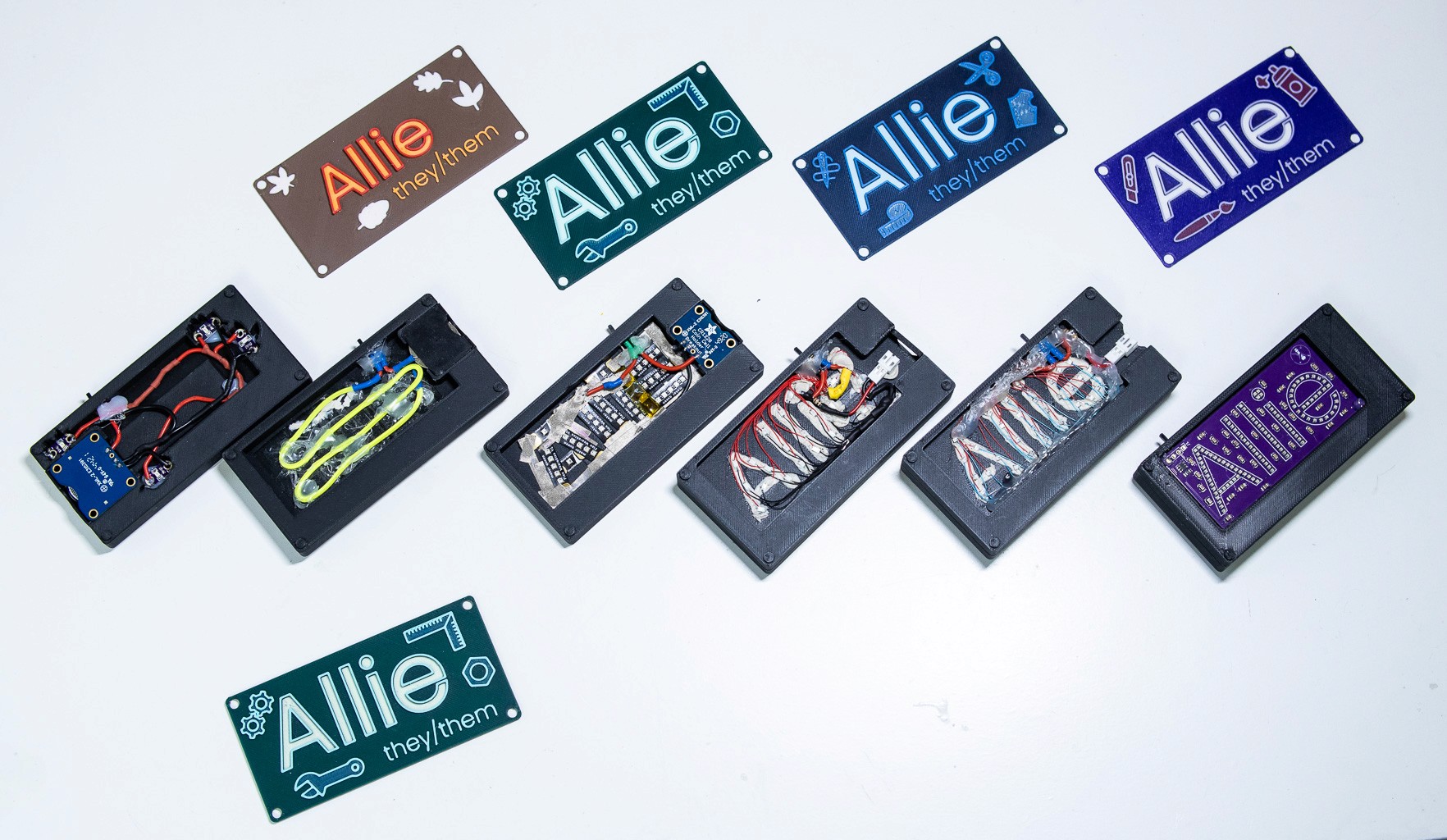
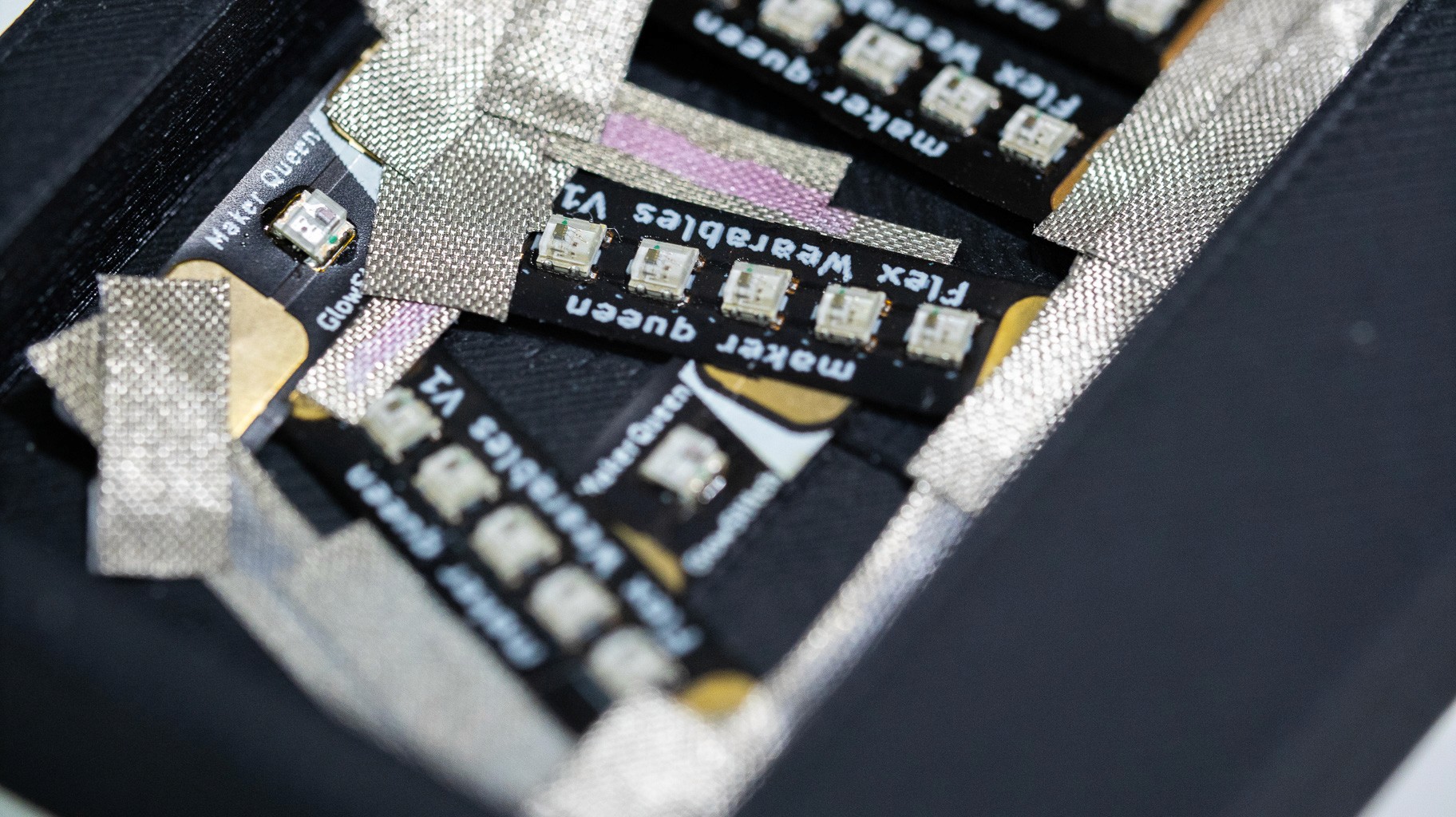
Early Iterations & Constraint Testing: The initial prototypes prioritized simplicity, utilizing Lilypad LEDs, LED noodles, and GlowStitch LEDs powered by coin-cell batteries. These early builds quickly revealed a bottleneck: while coin-cell batteries were ideal for user experience, they could not provide the necessary current for bright, sustained backlighting. I pivoted the design to utilize 3.7V lithium polymer (LiPo) batteries, trading a slight increase in thickness for vastly superior power output.
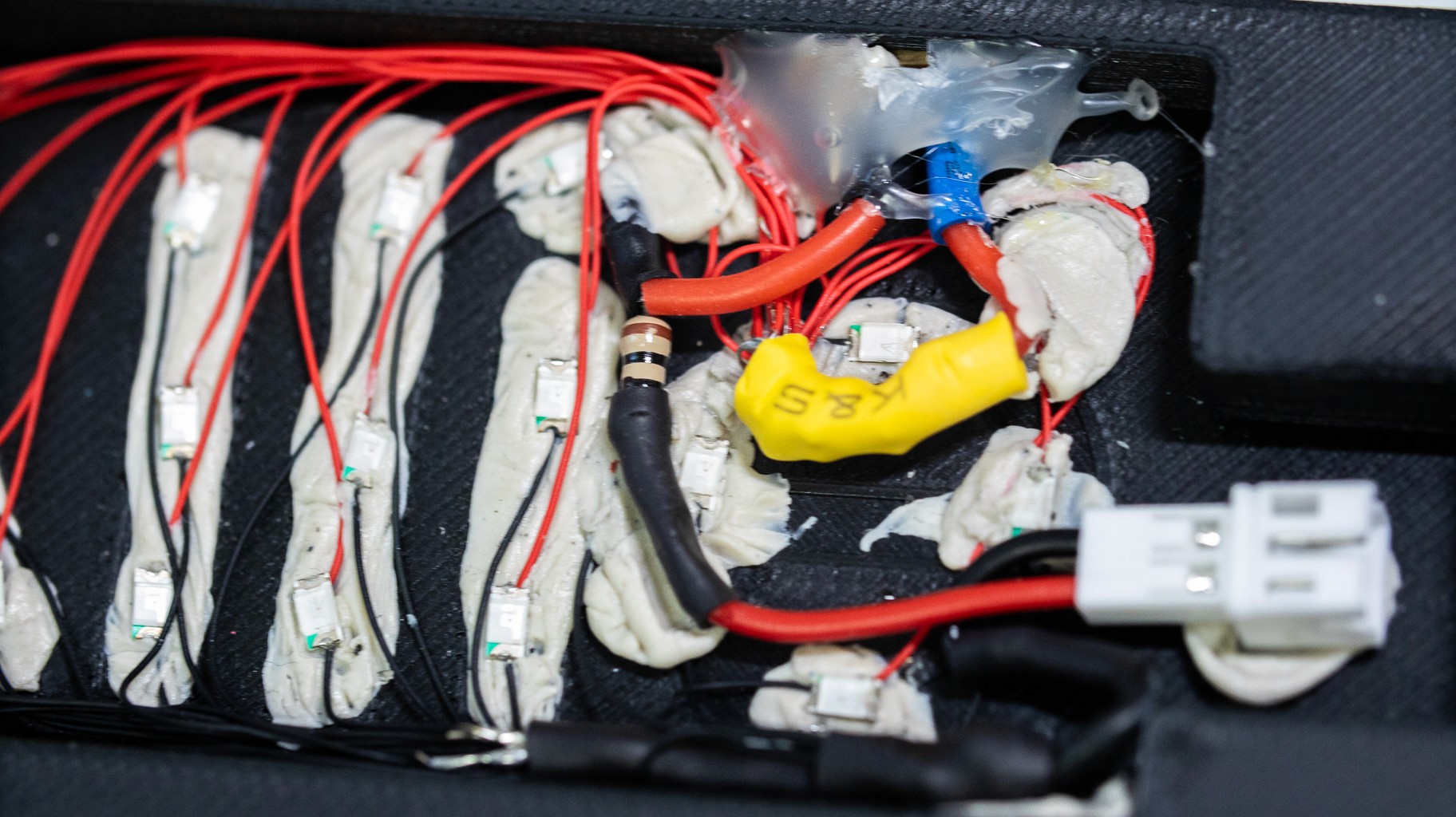
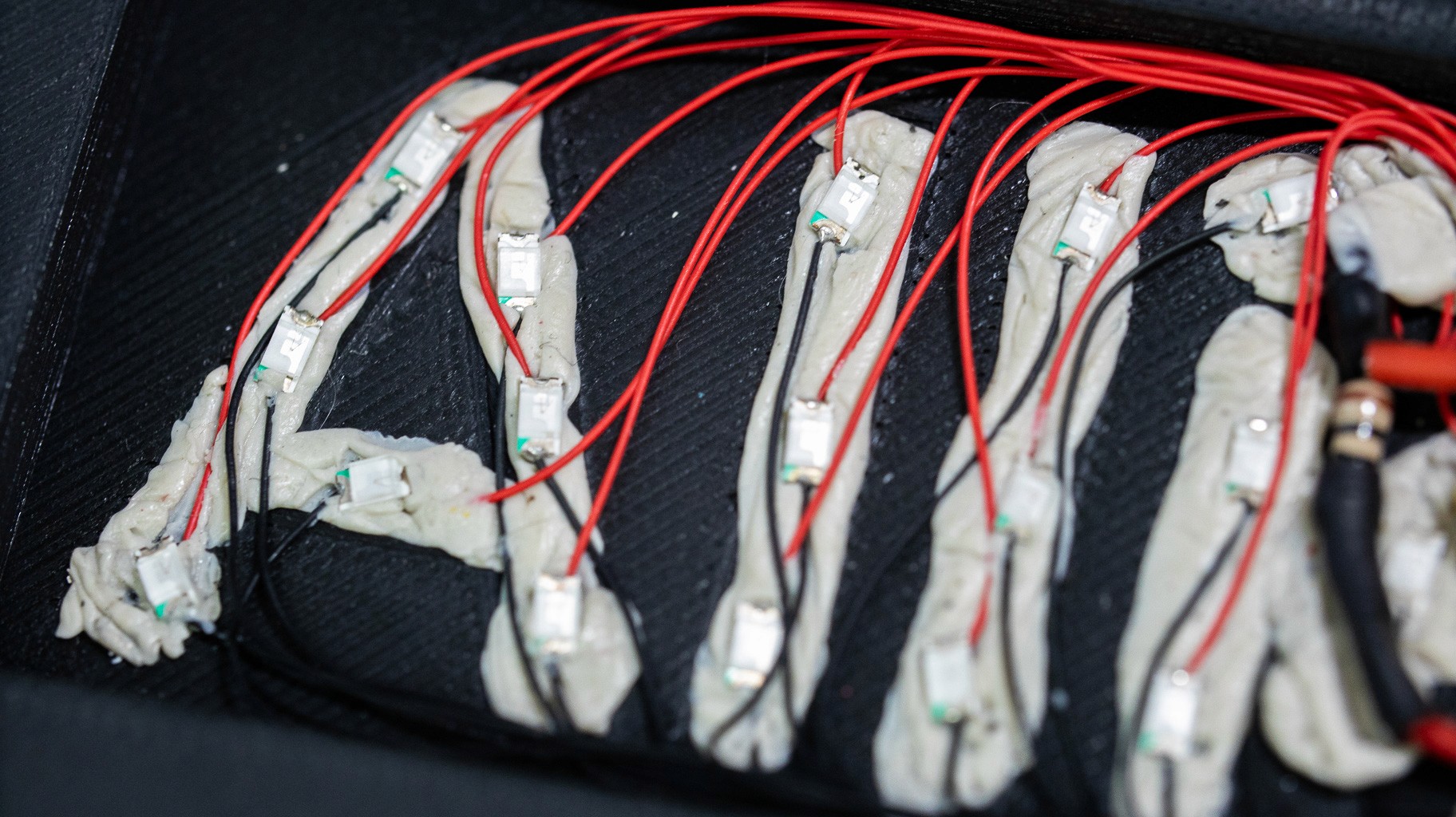
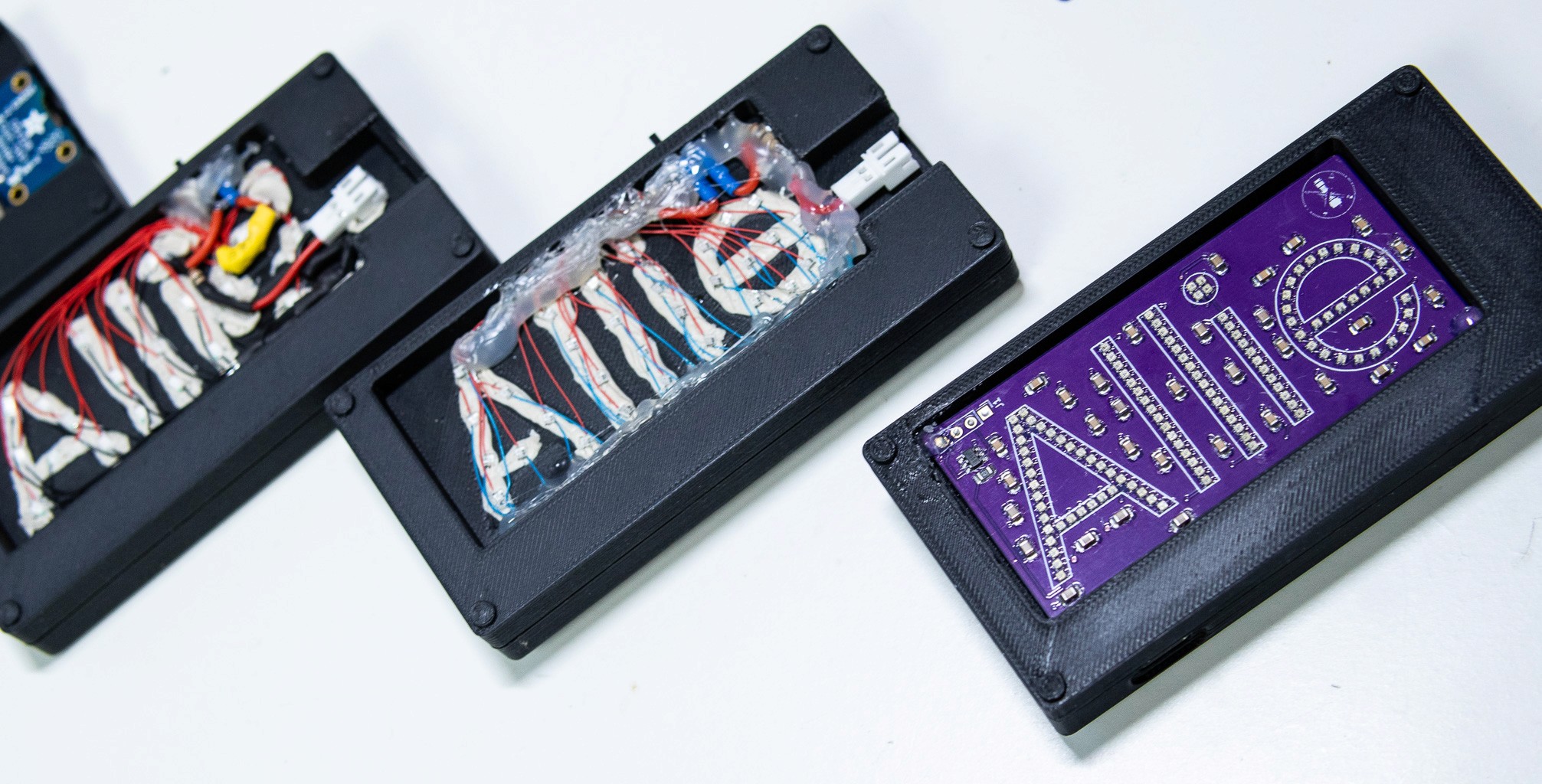
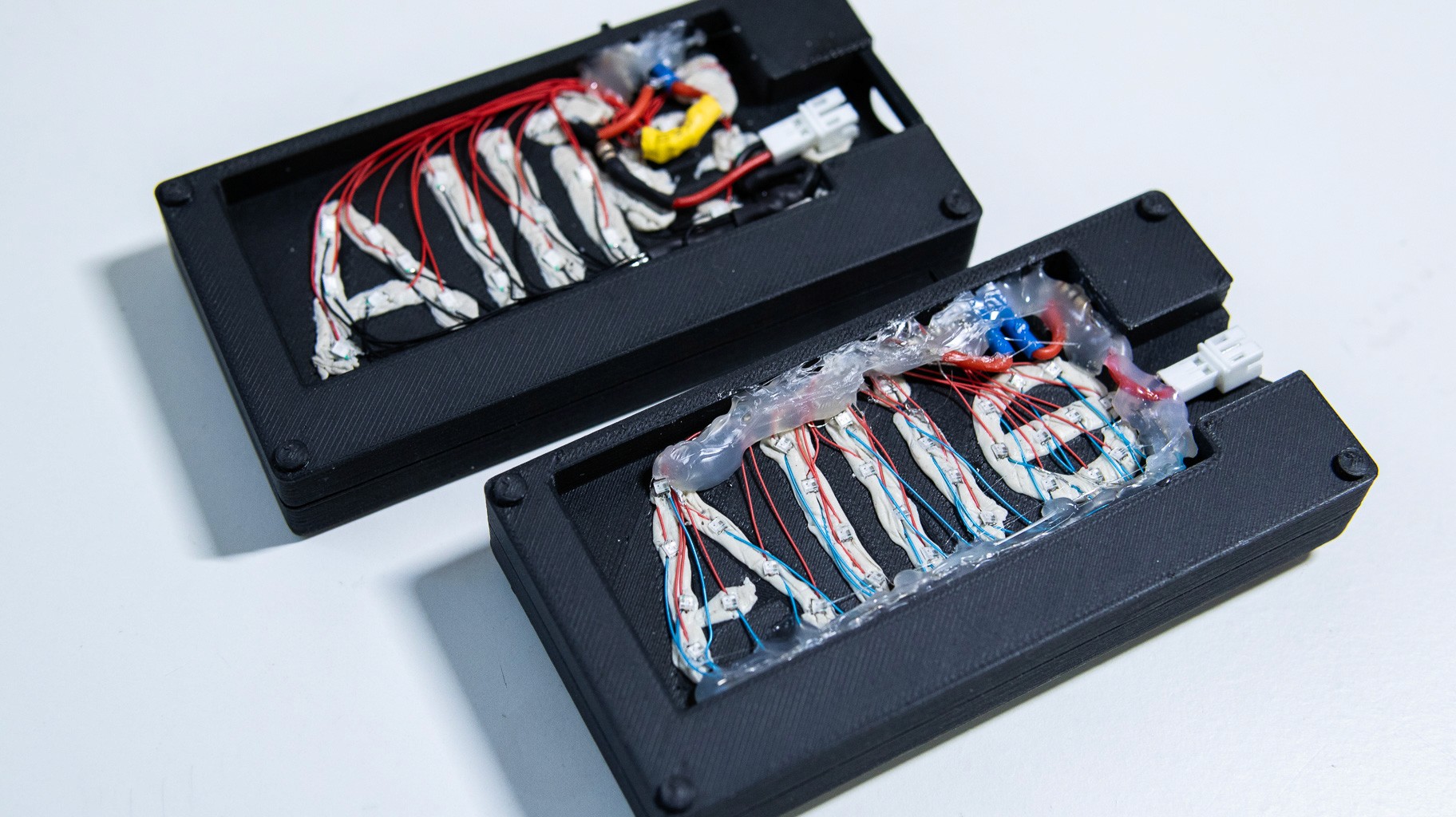
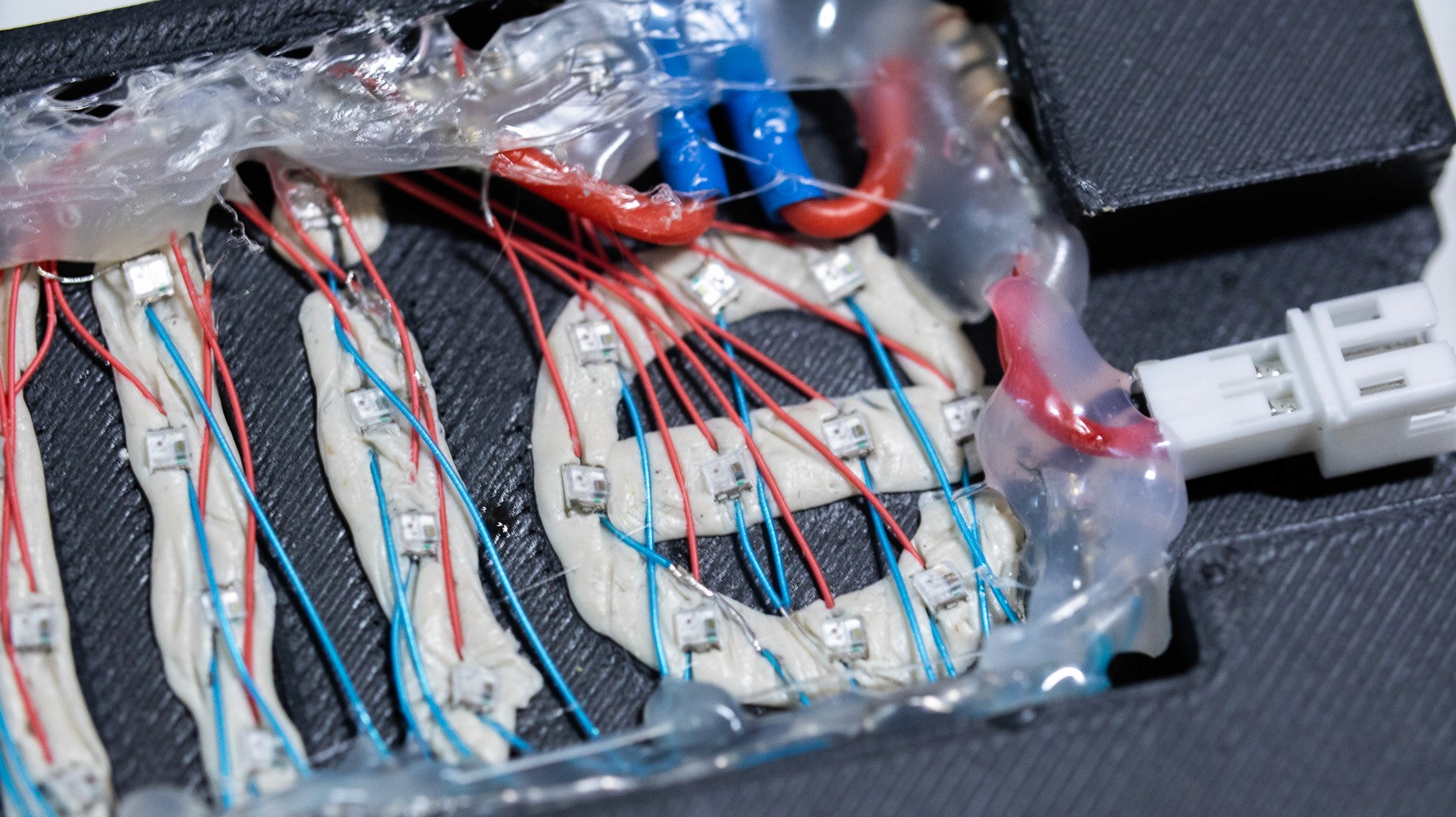
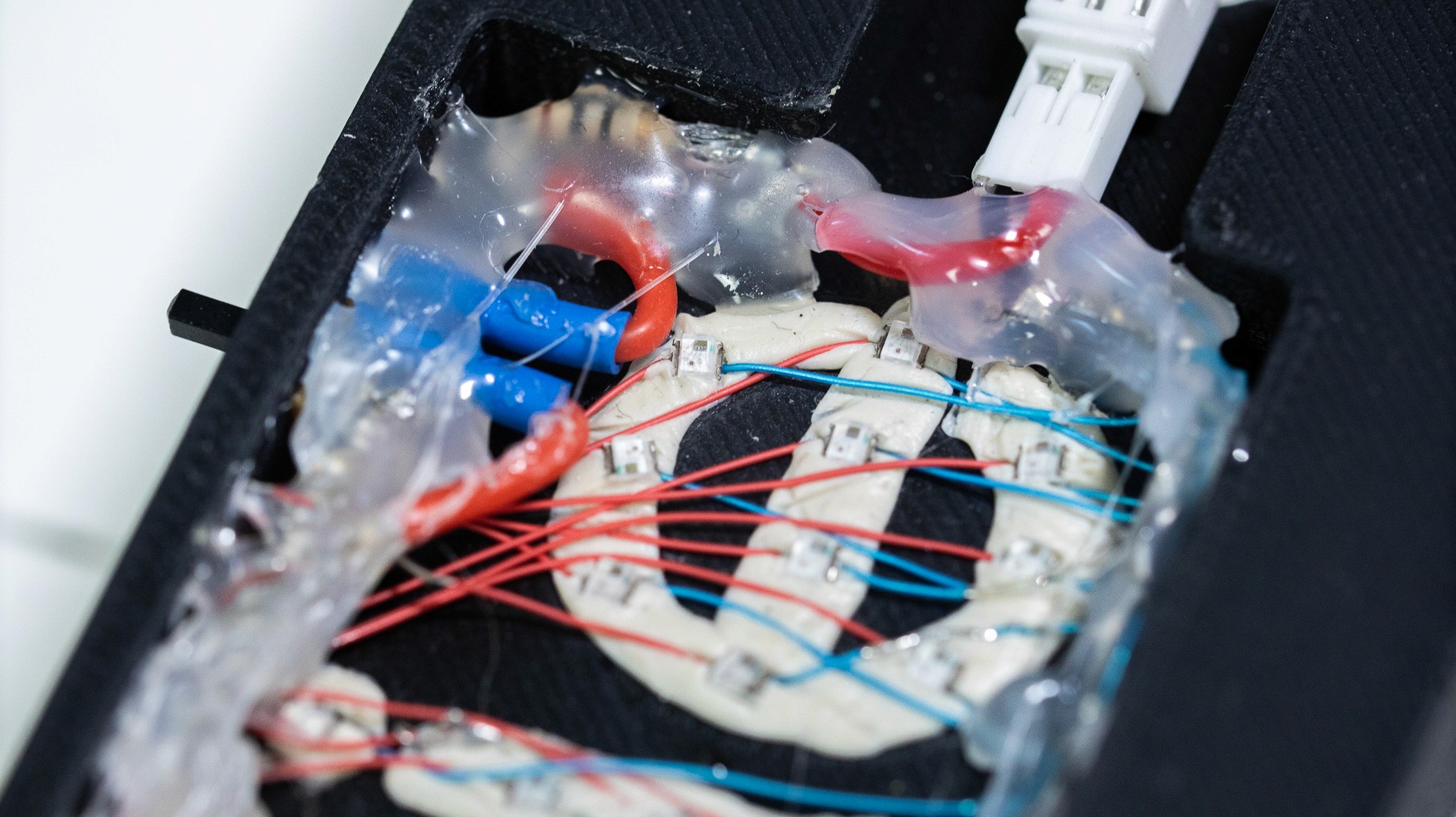
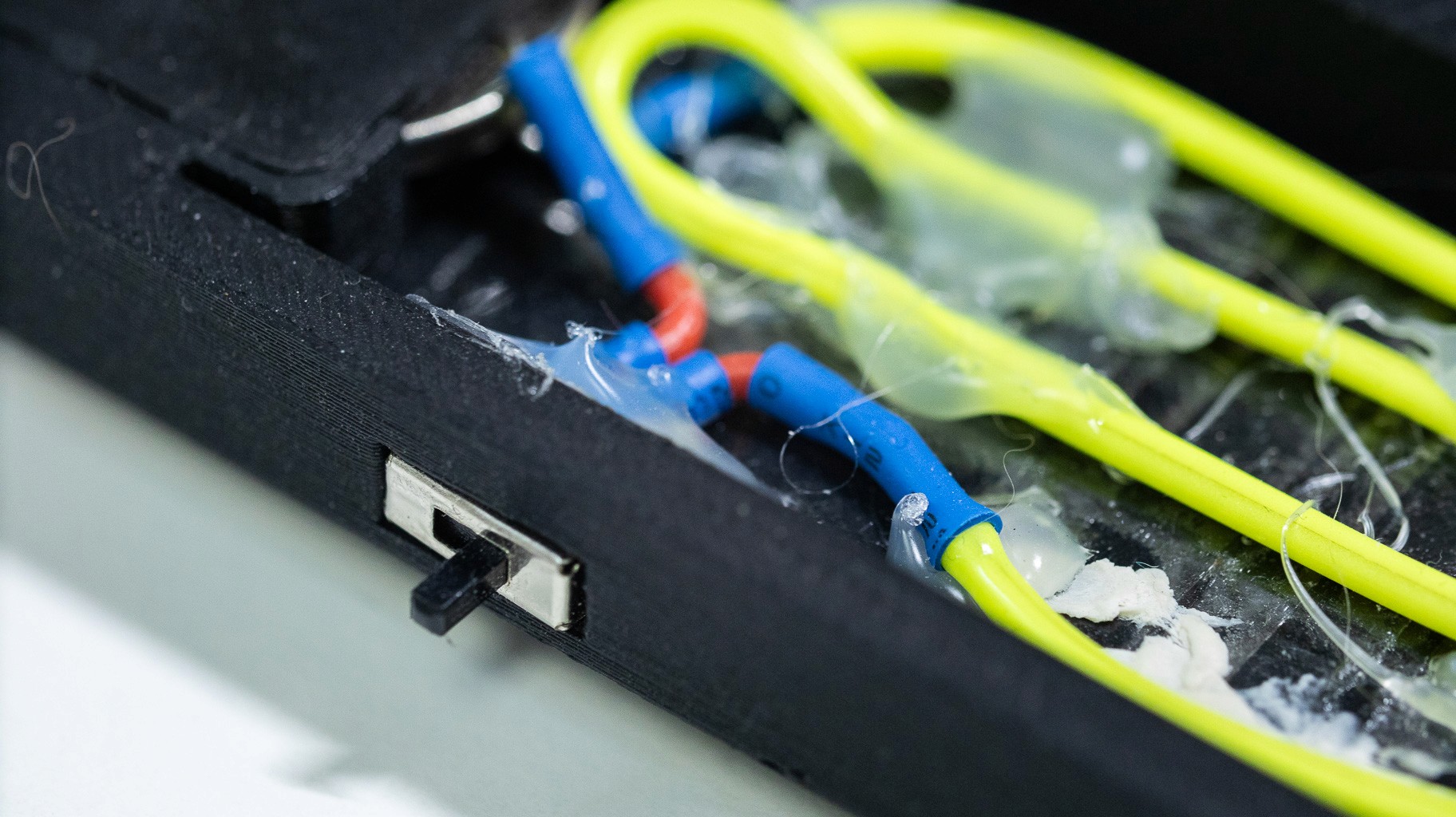
Manual Miniaturization: To achieve the resolution required to spell out a name, the LEDs needed to shrink. The intermediate iterations utilized pre-wired 1206 and 0805 LEDs, temporarily stabilized in Blu-tak while I painstakingly stripped and soldered microscopic wires by hand. While the result was visually successful, the manual labor was unsustainable and highly prone to failure, signaling the need for a better manufacturing approach.
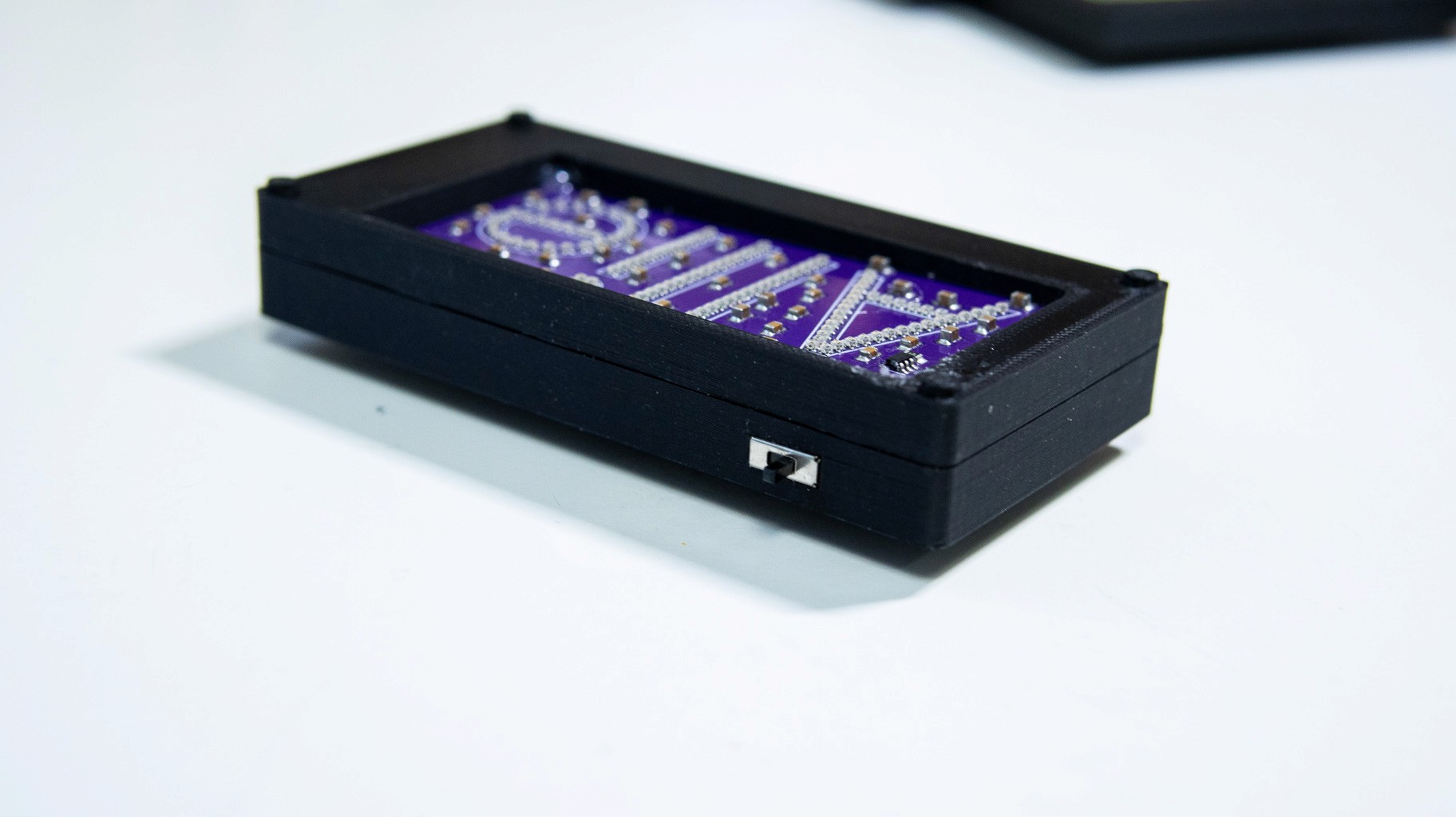
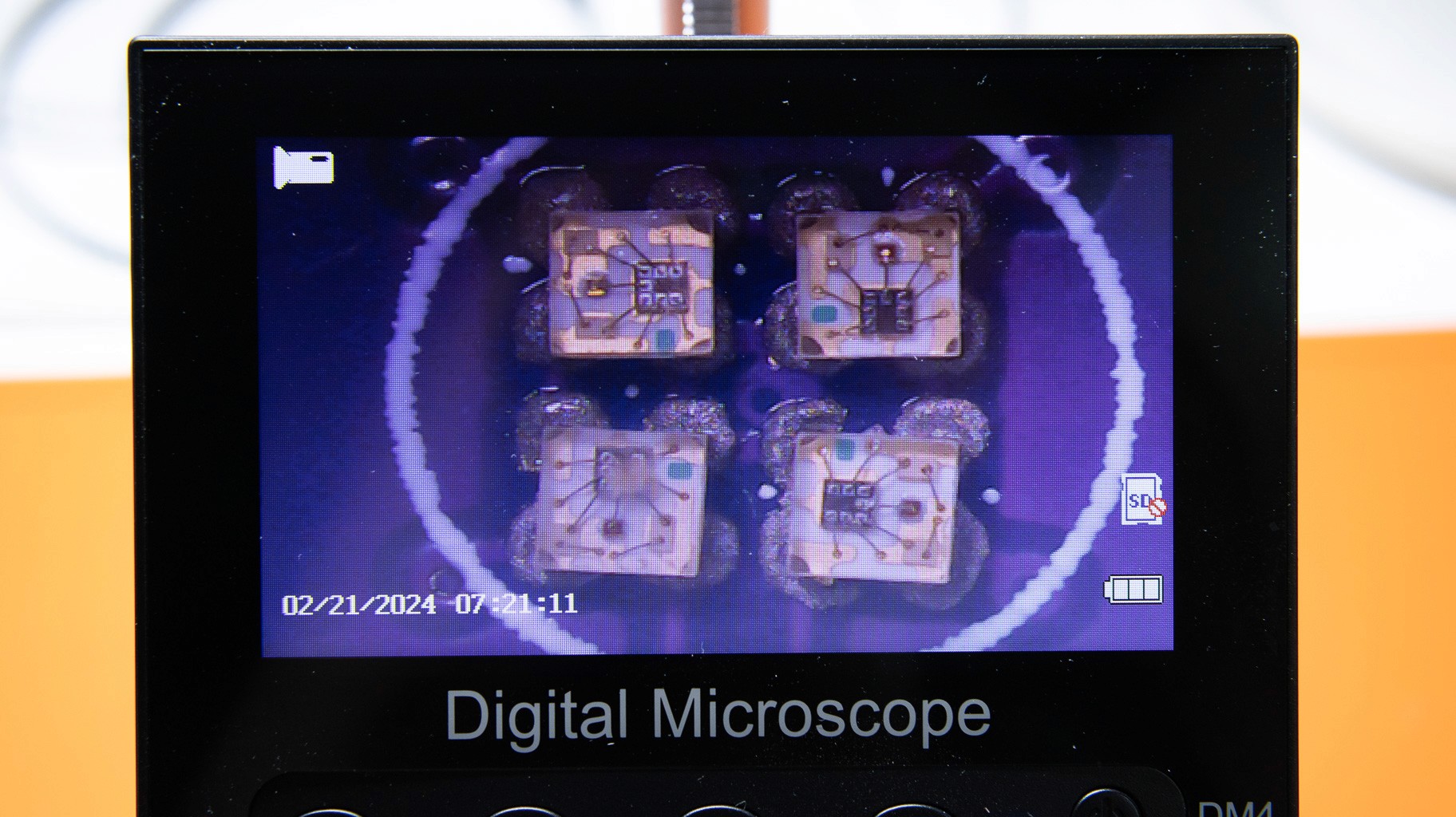
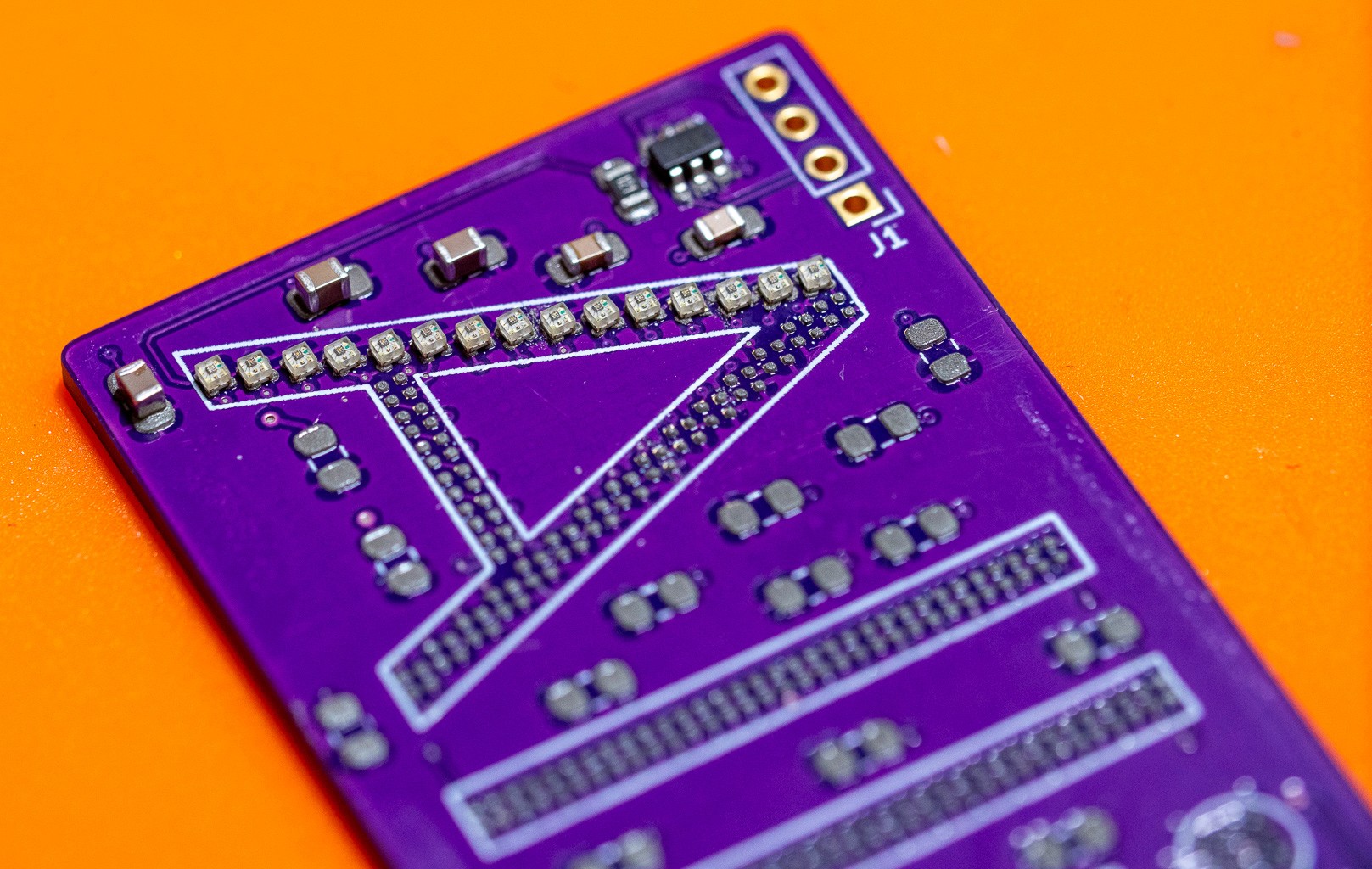
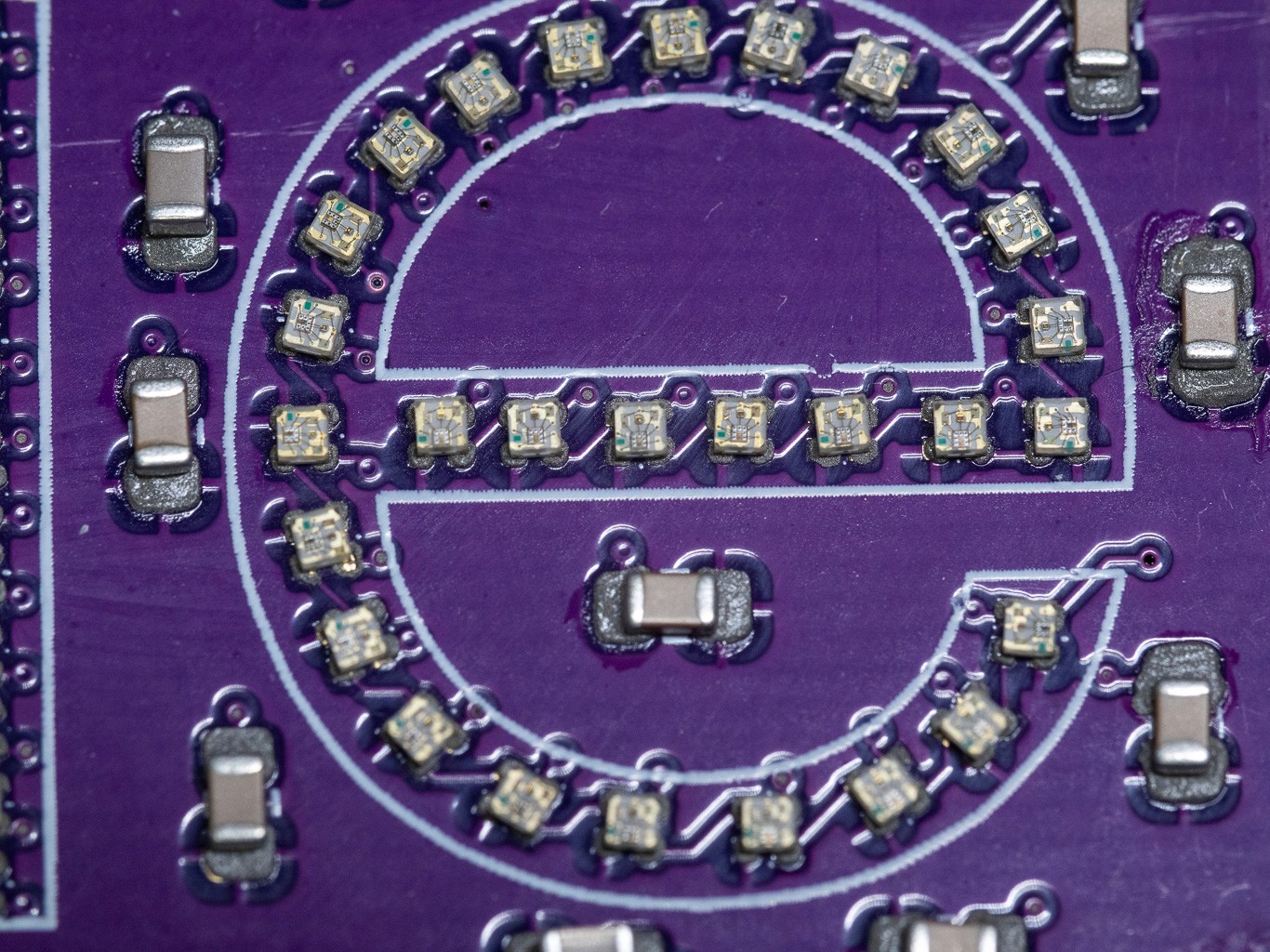
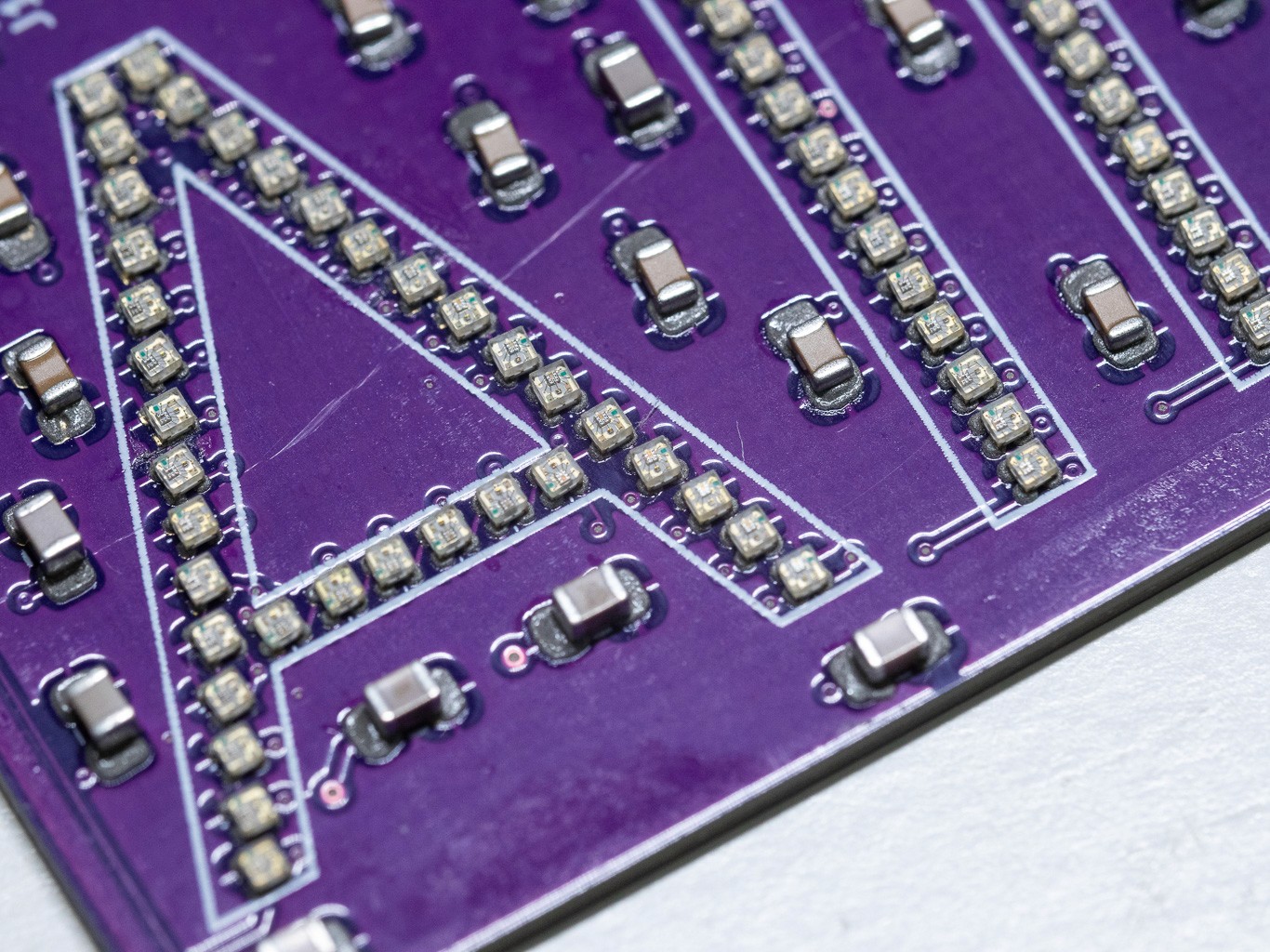
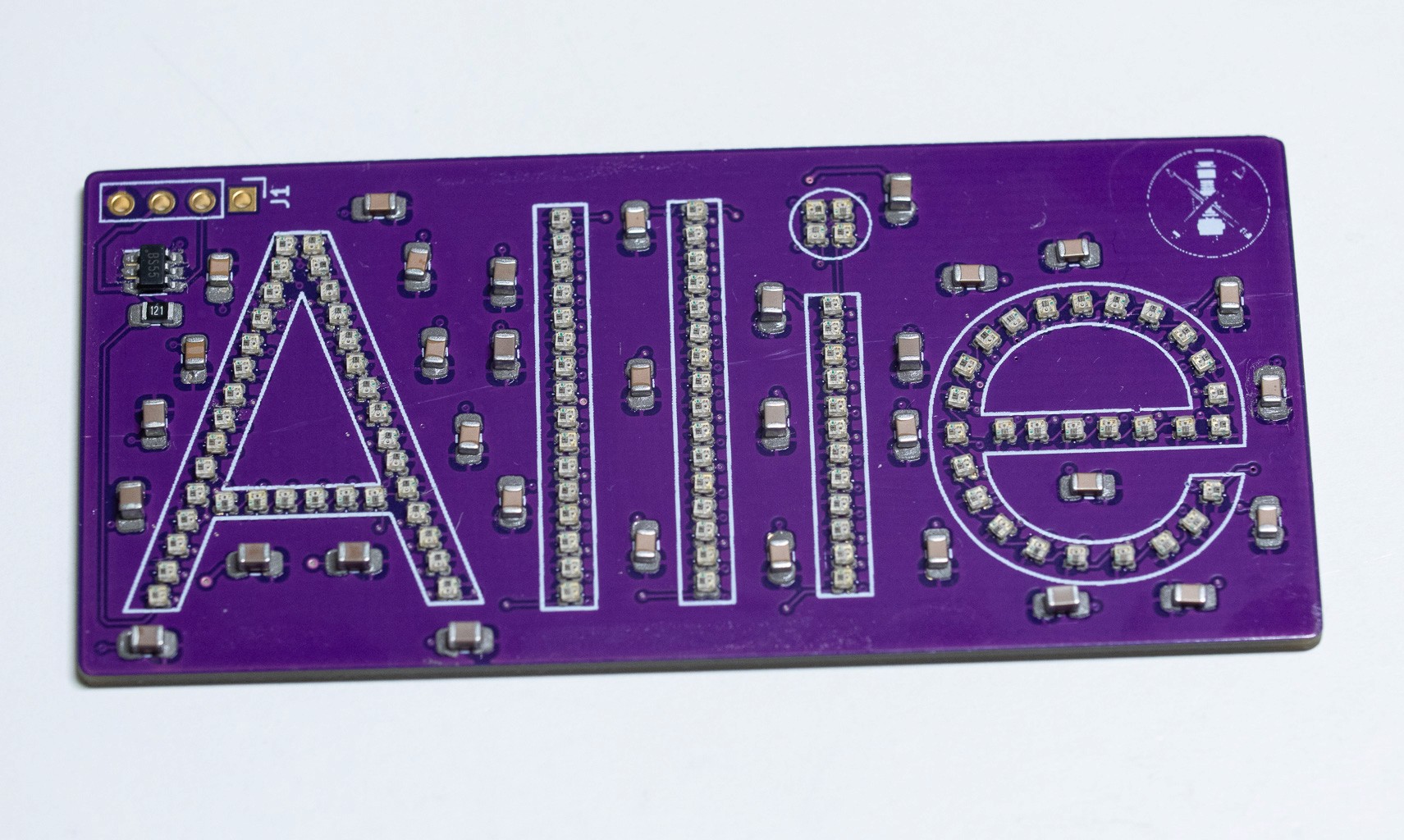
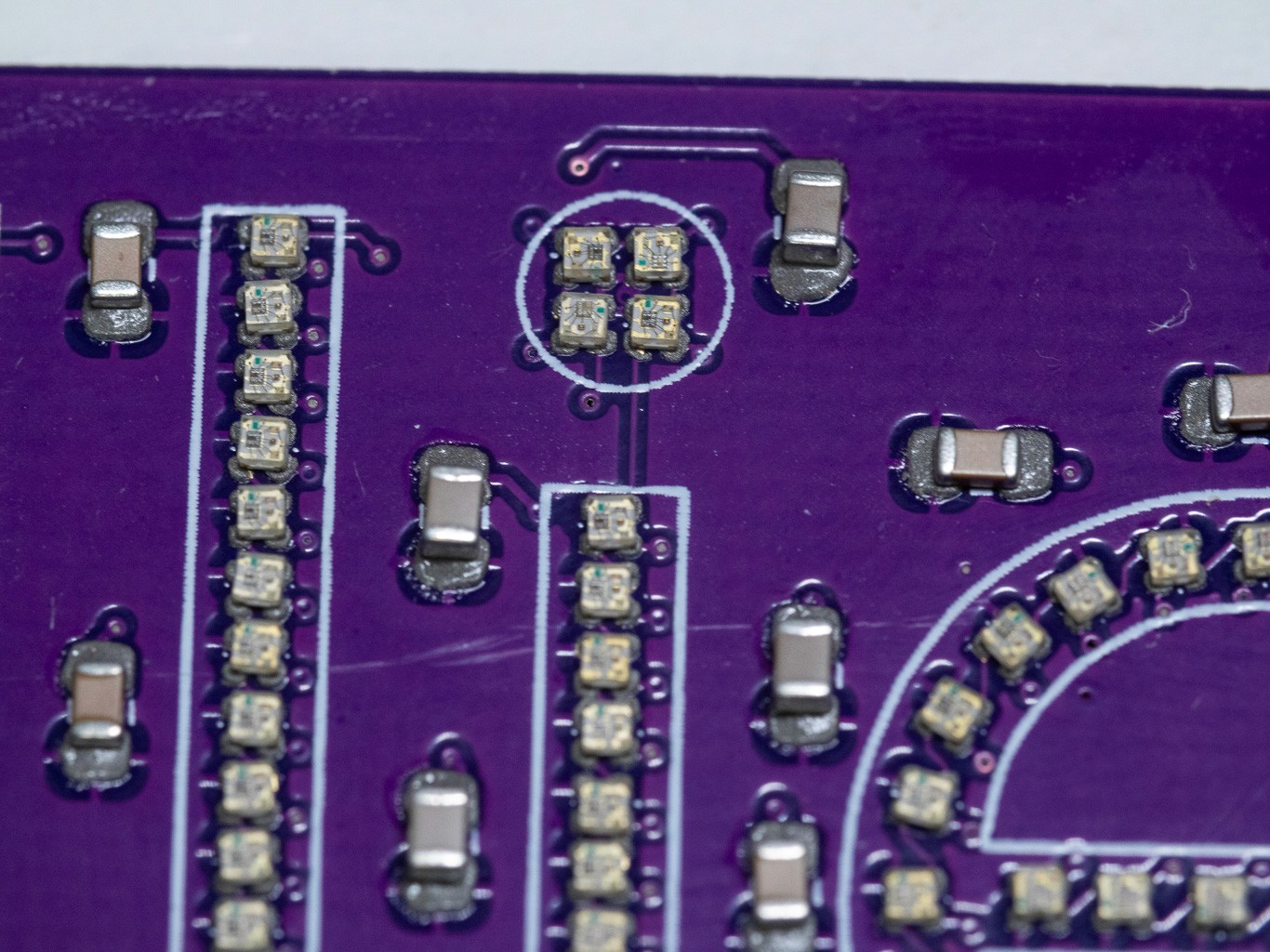
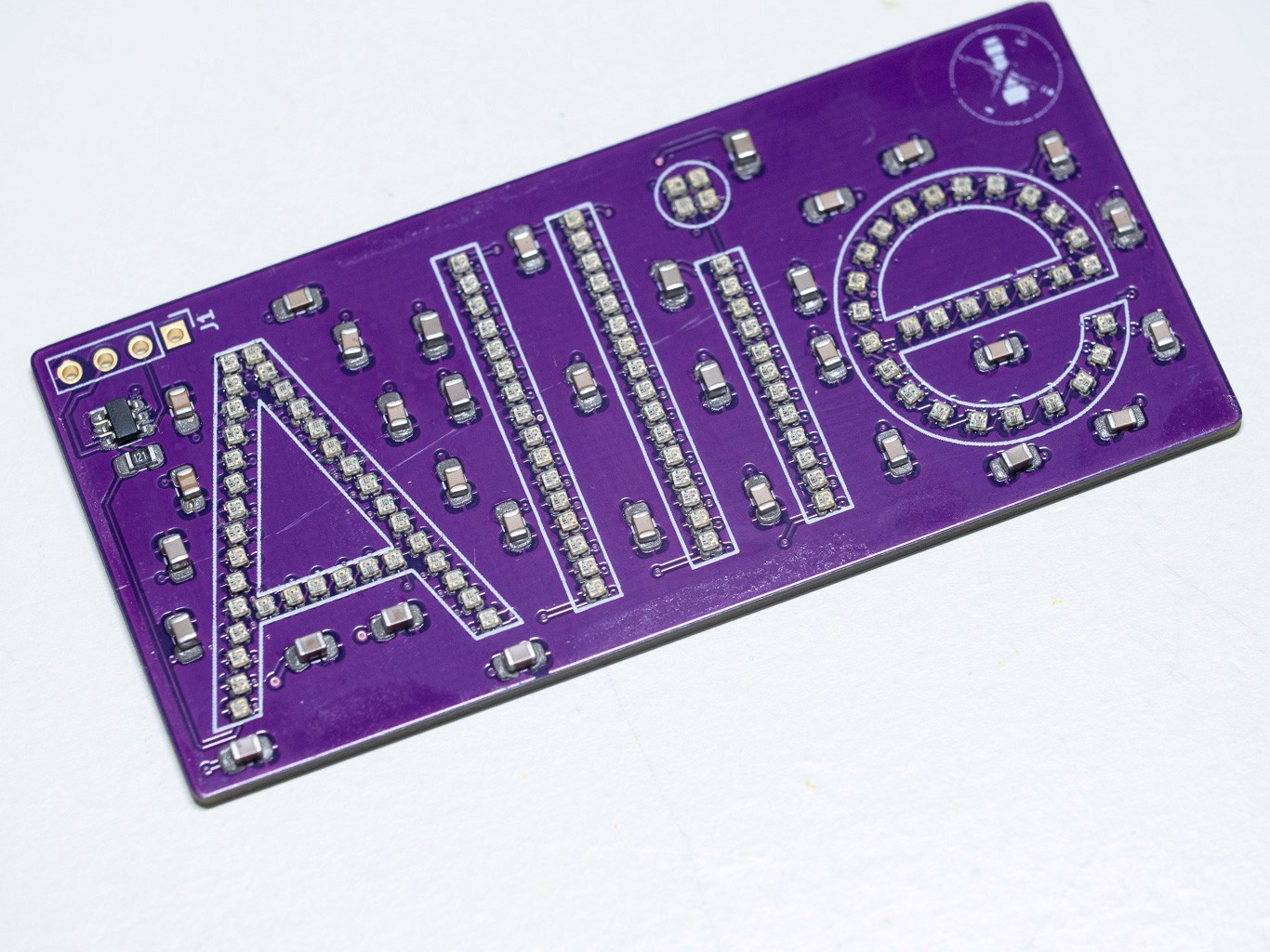
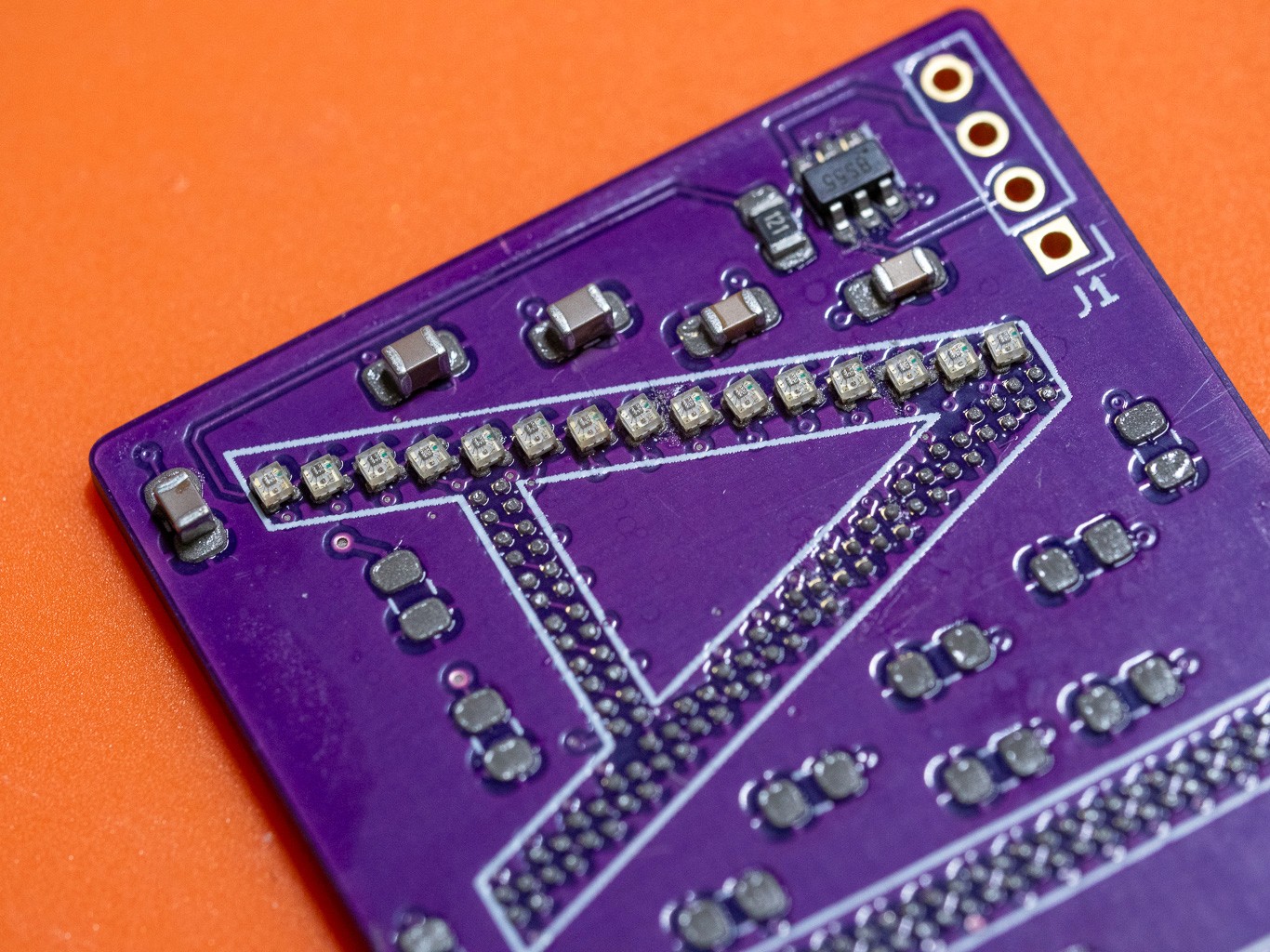
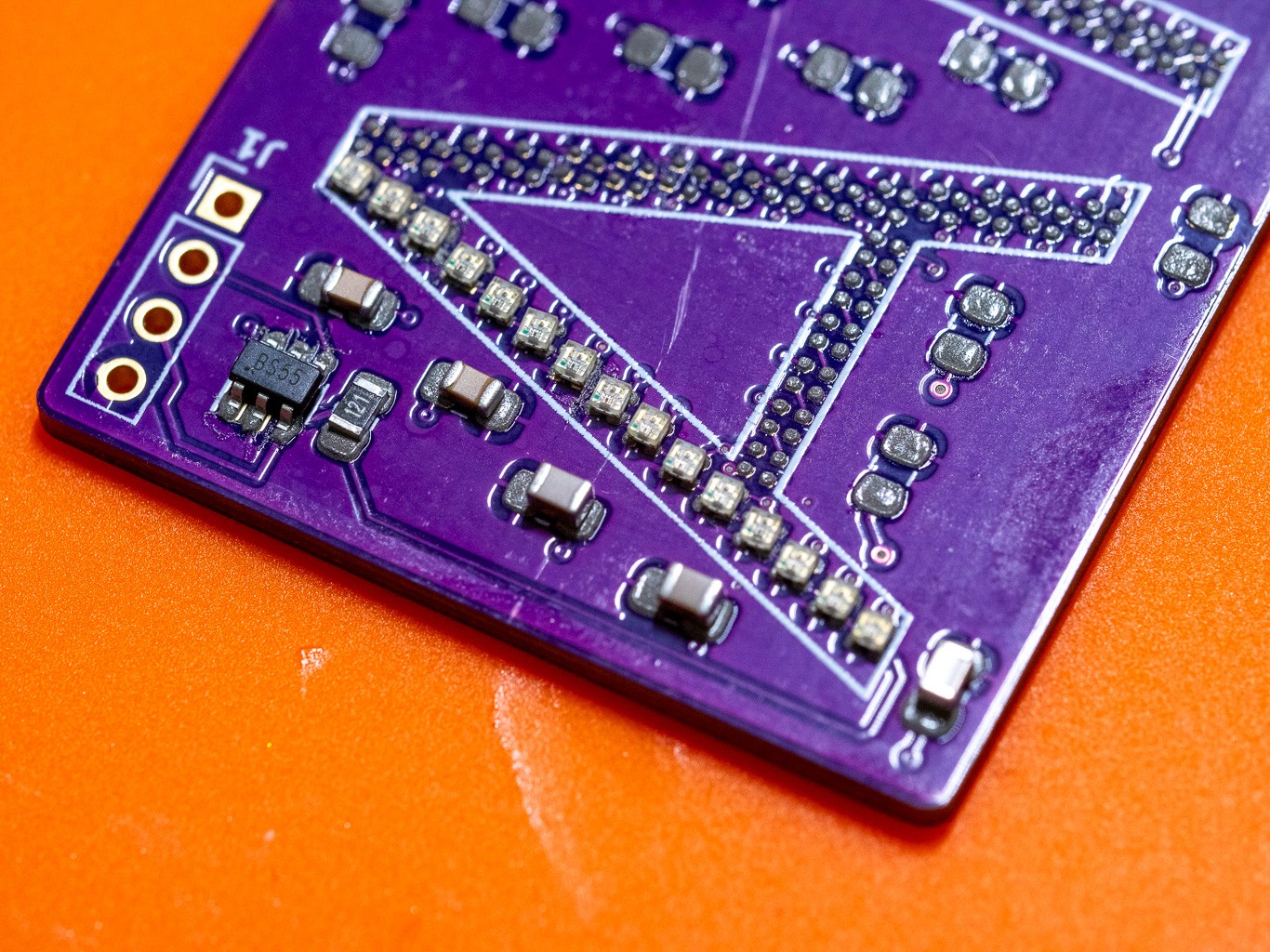
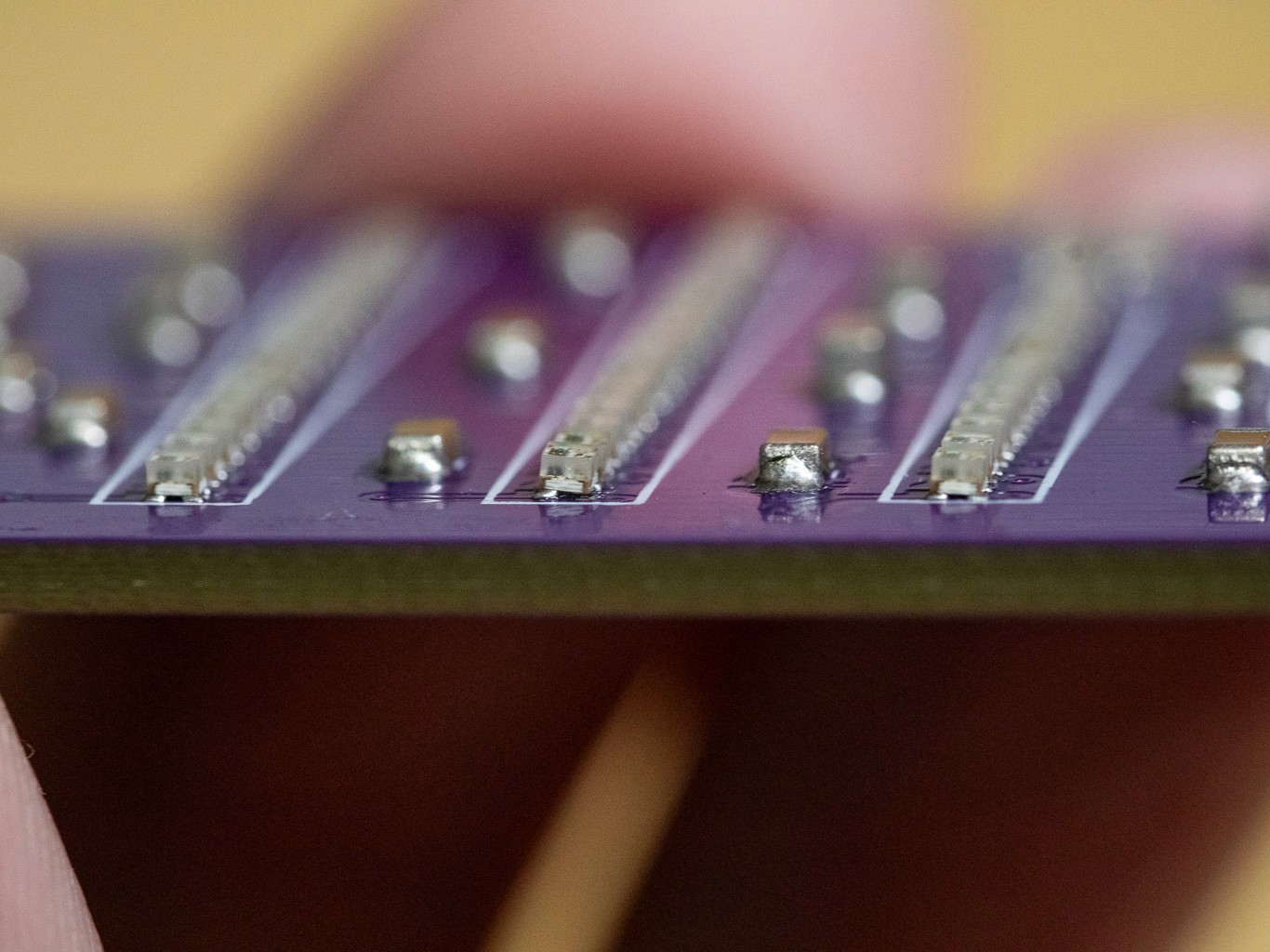
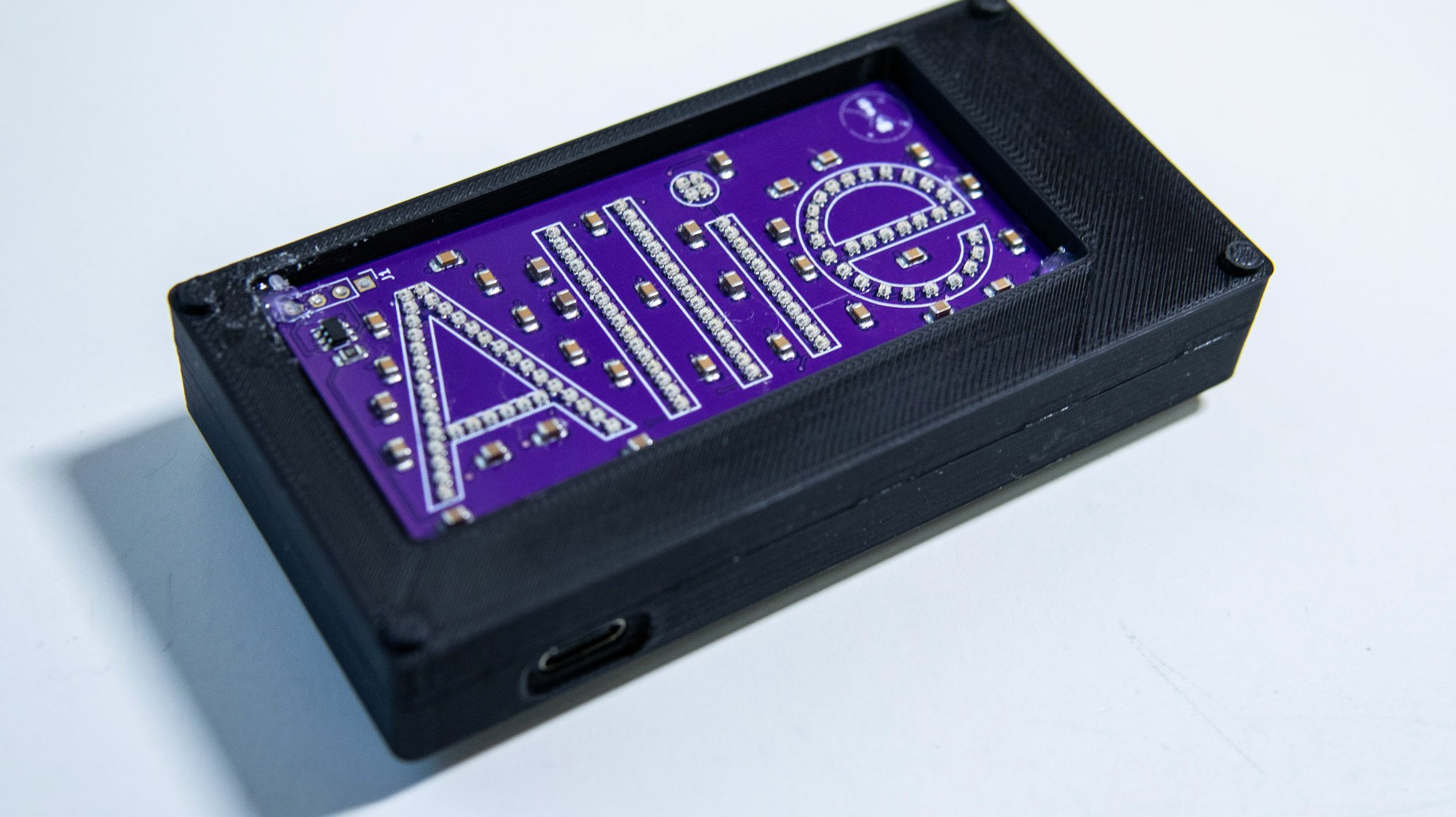
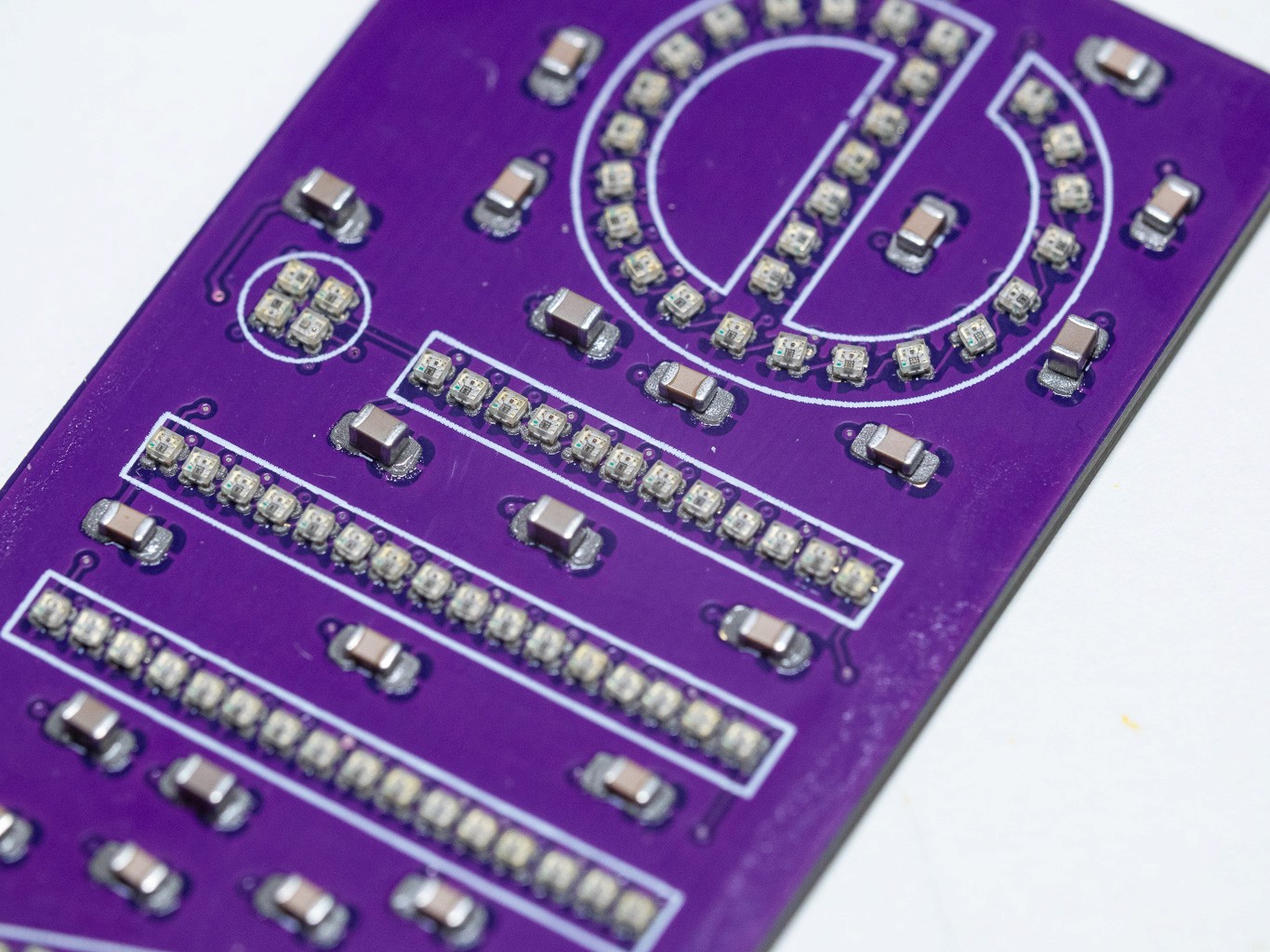
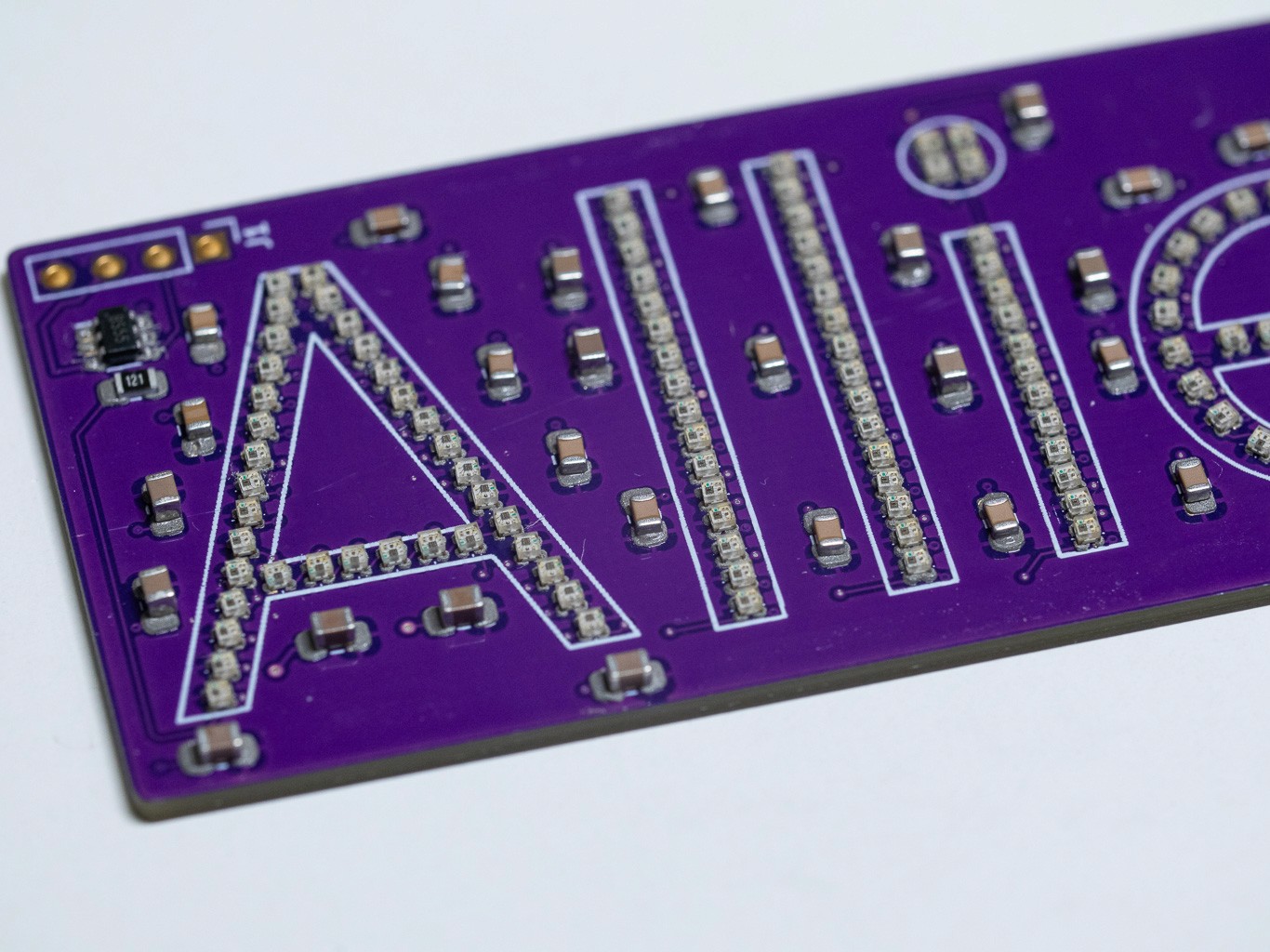
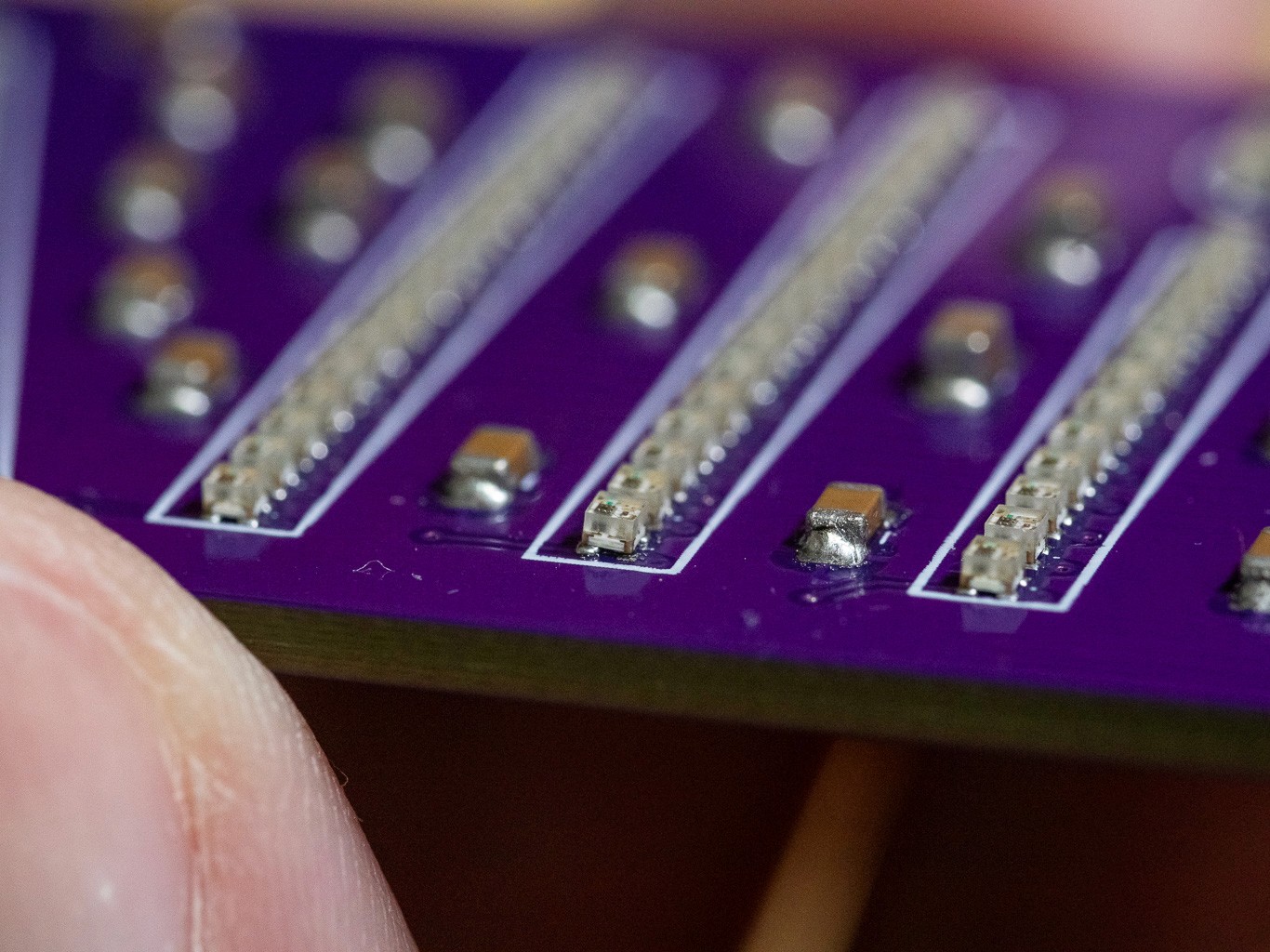
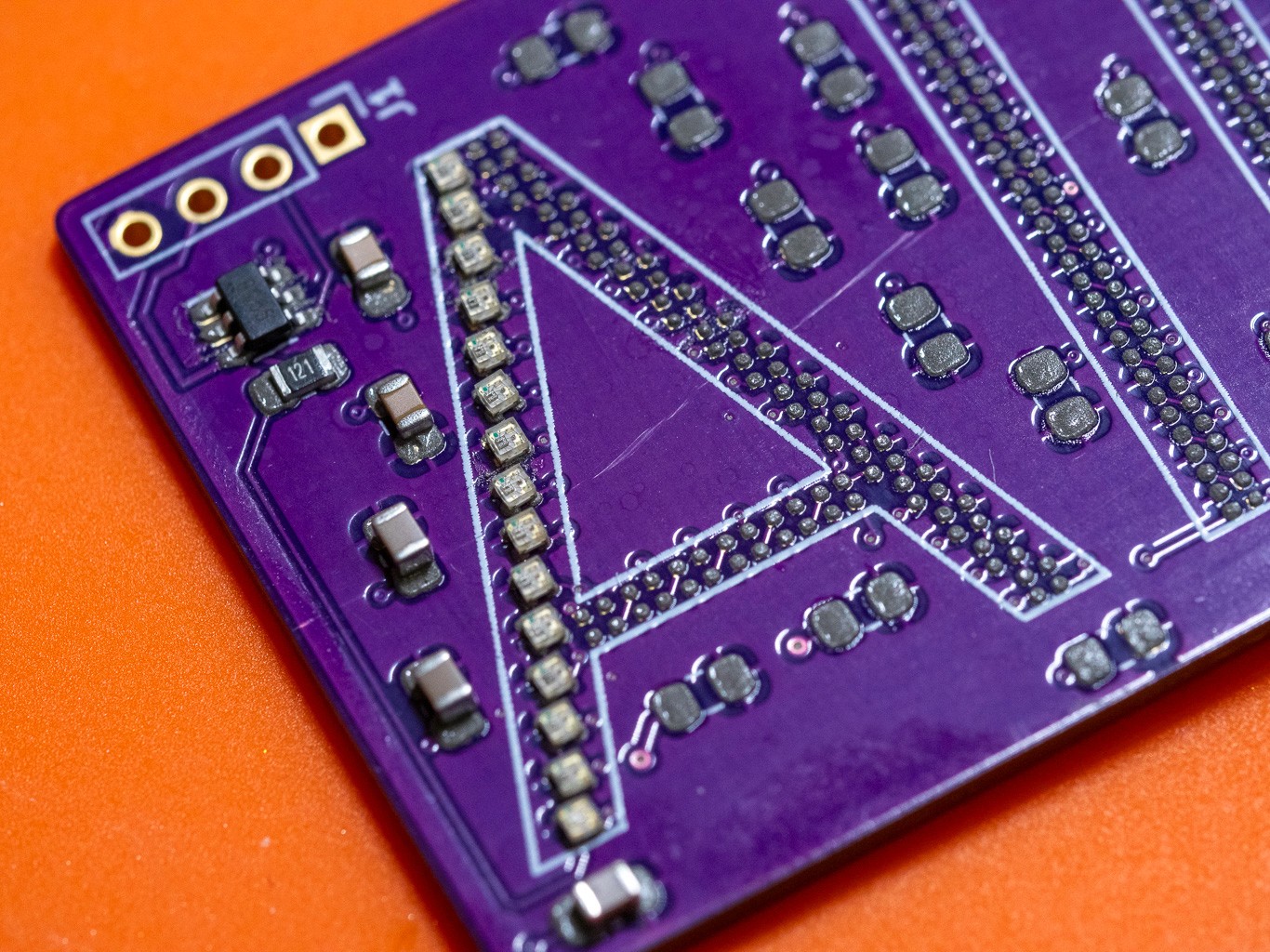
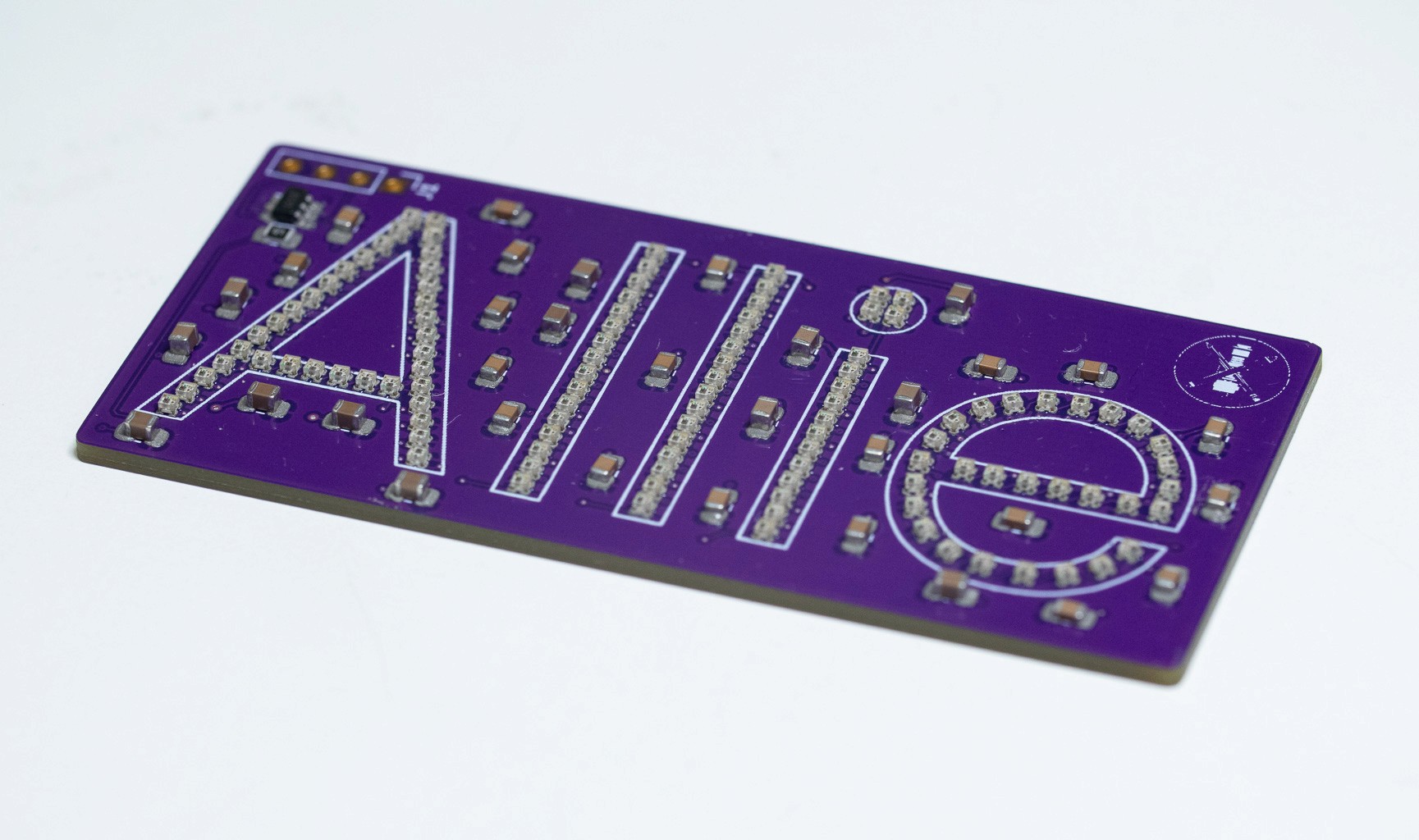
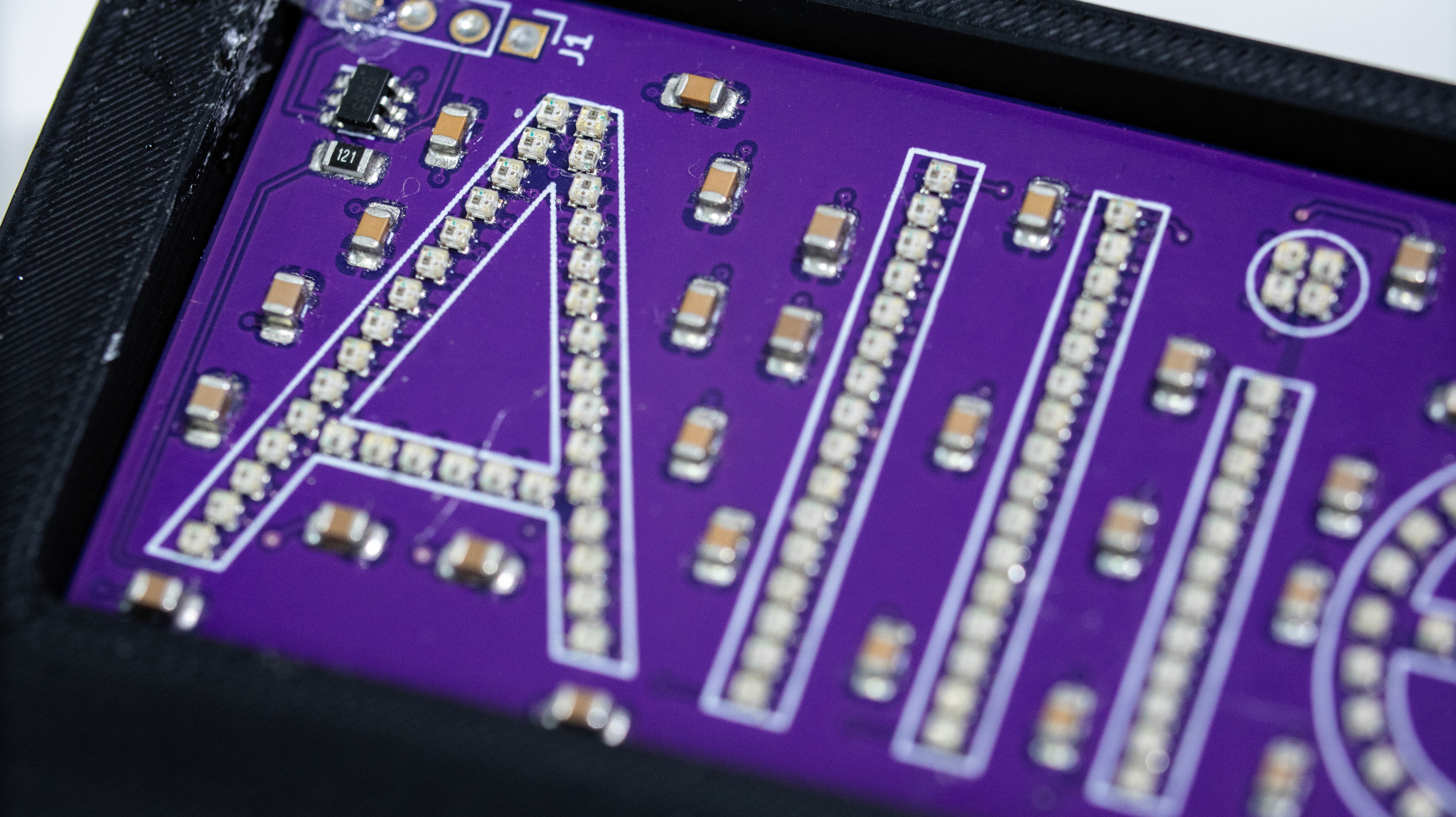
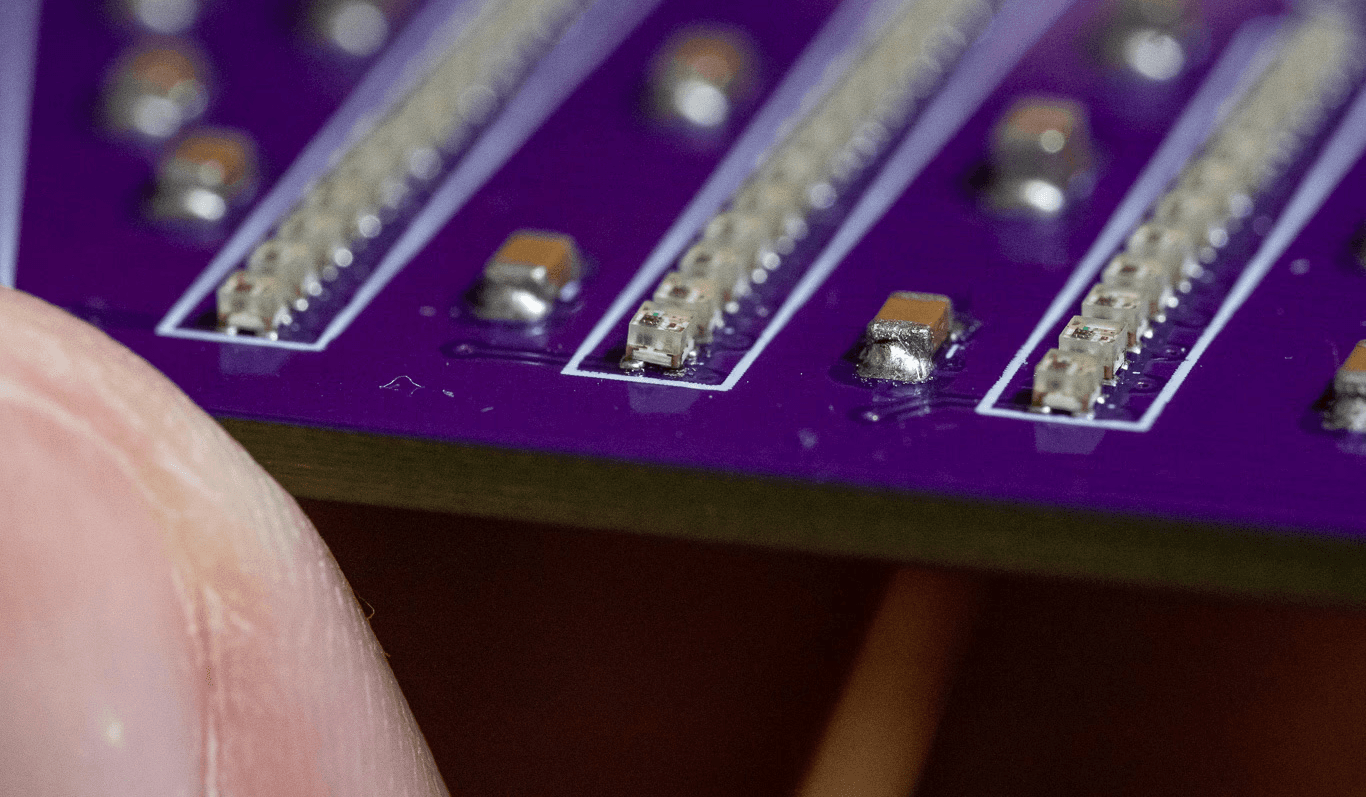
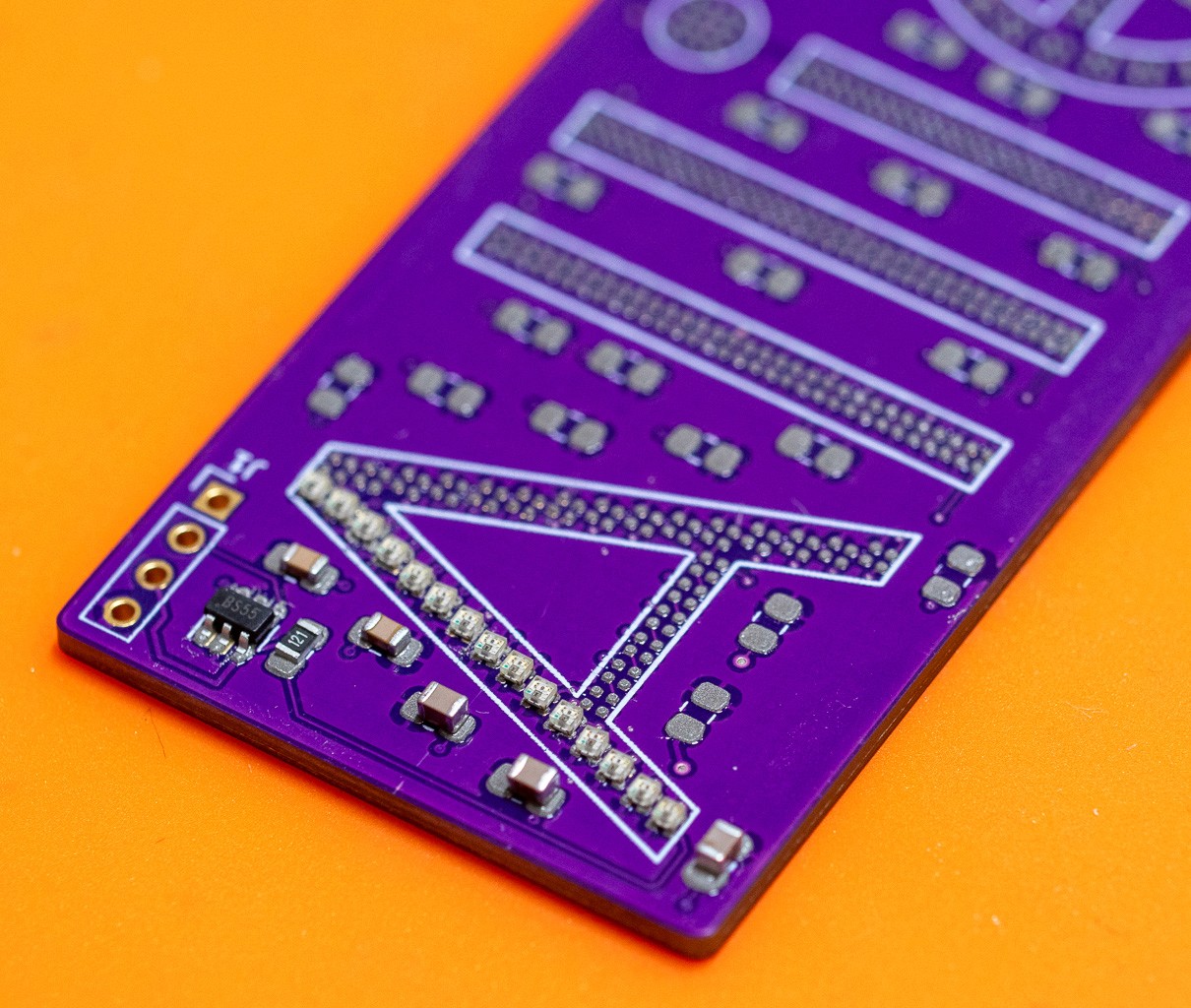
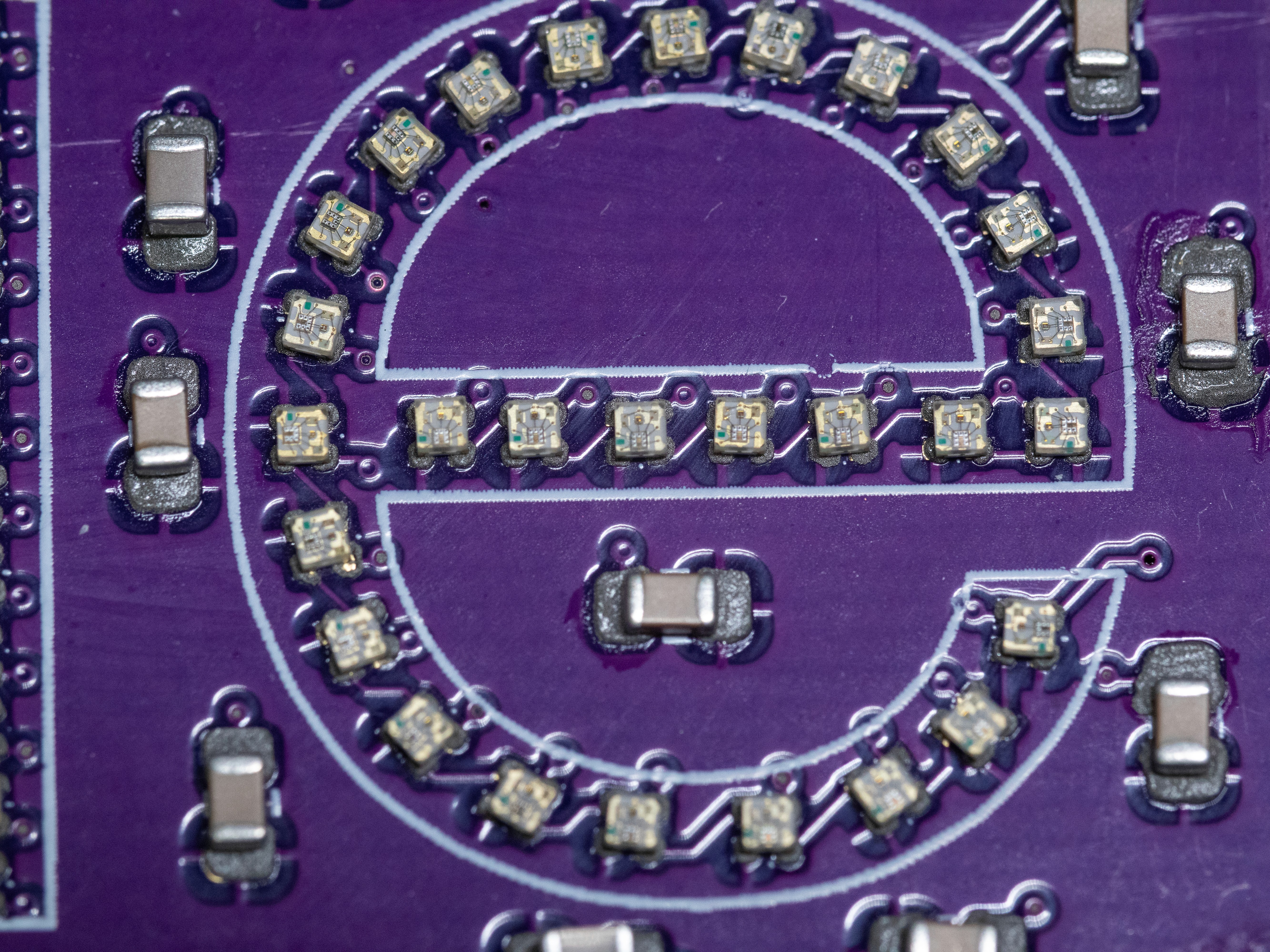
Custom PCB Design & Surface Mount Fabrication: Partnering with PCBWay, I designed my first custom printed circuit board for surface mount components. To maximize resolution, I selected Xinglight XL-1010RGBC-WS2812Bs—the smallest individually addressable LEDs available at the time.
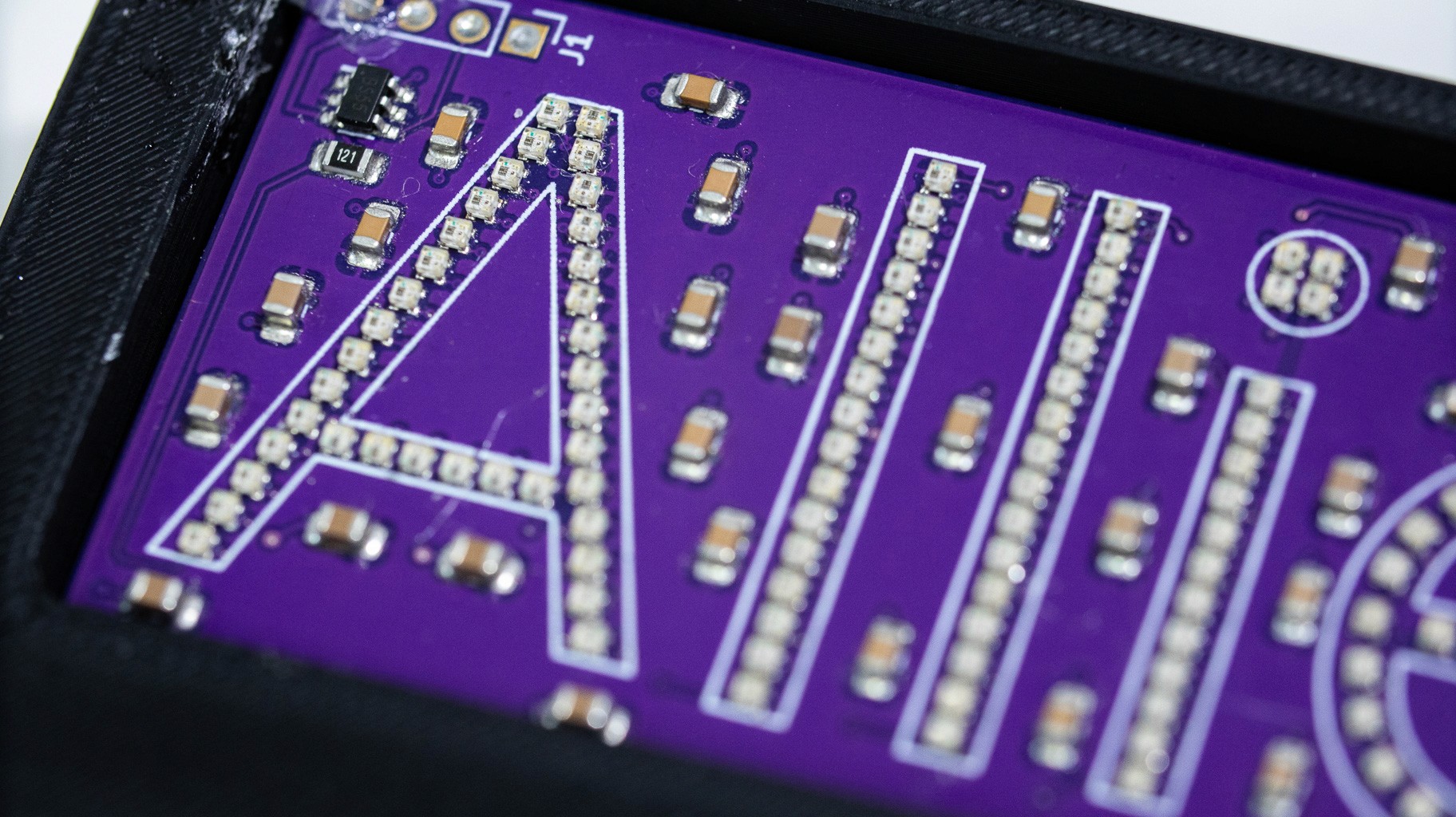
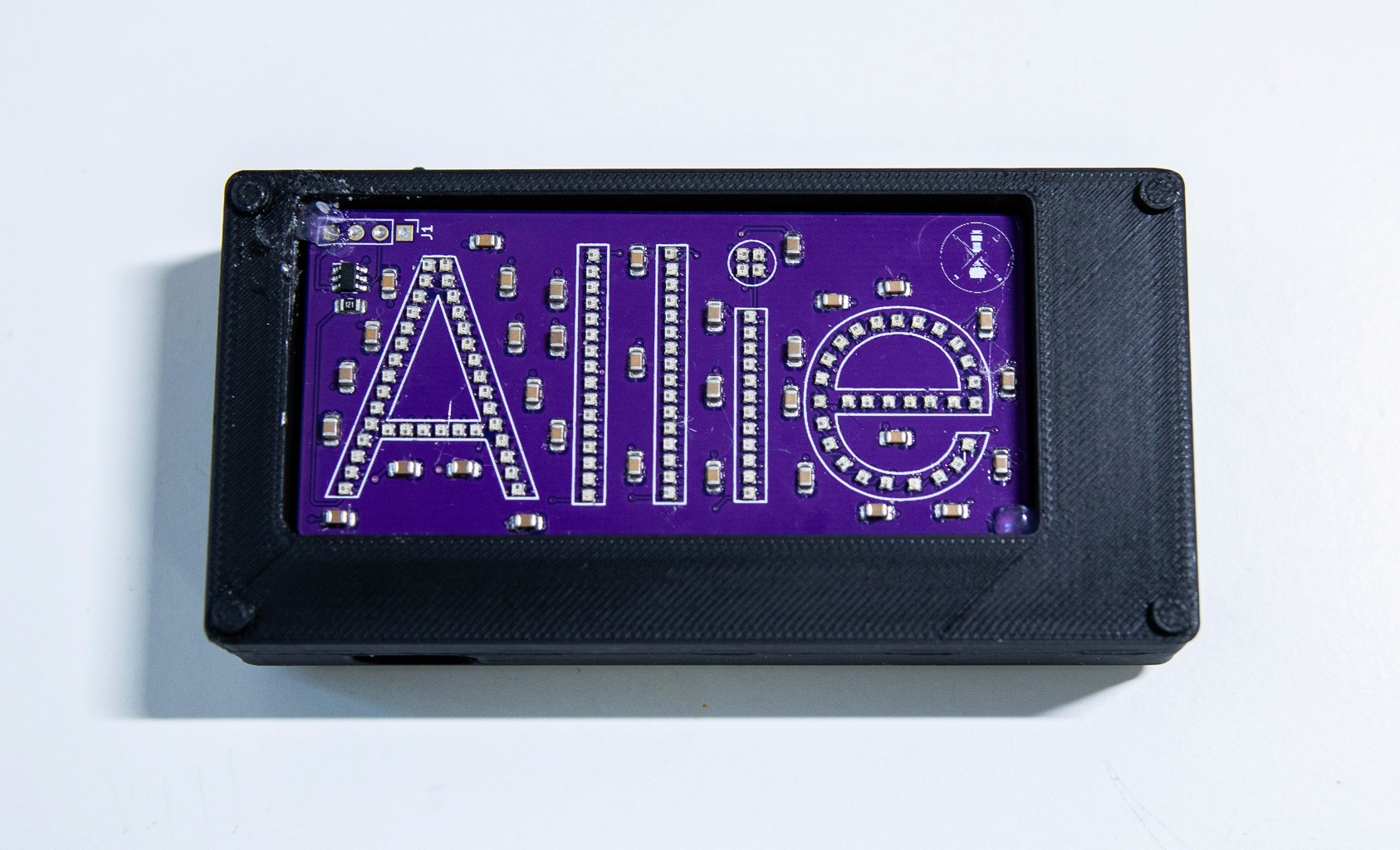
Fabrication: I hand-placed and surface-mount soldered all 112 one-millimeter LEDs onto the custom board, a massive undertaking that required intense precision.
The System: The board was designed to directly mount a Pixelblaze Pico microcontroller to the back, providing incredible animation capabilities and Wi-Fi control in a footprint barely larger than my pinky finger.
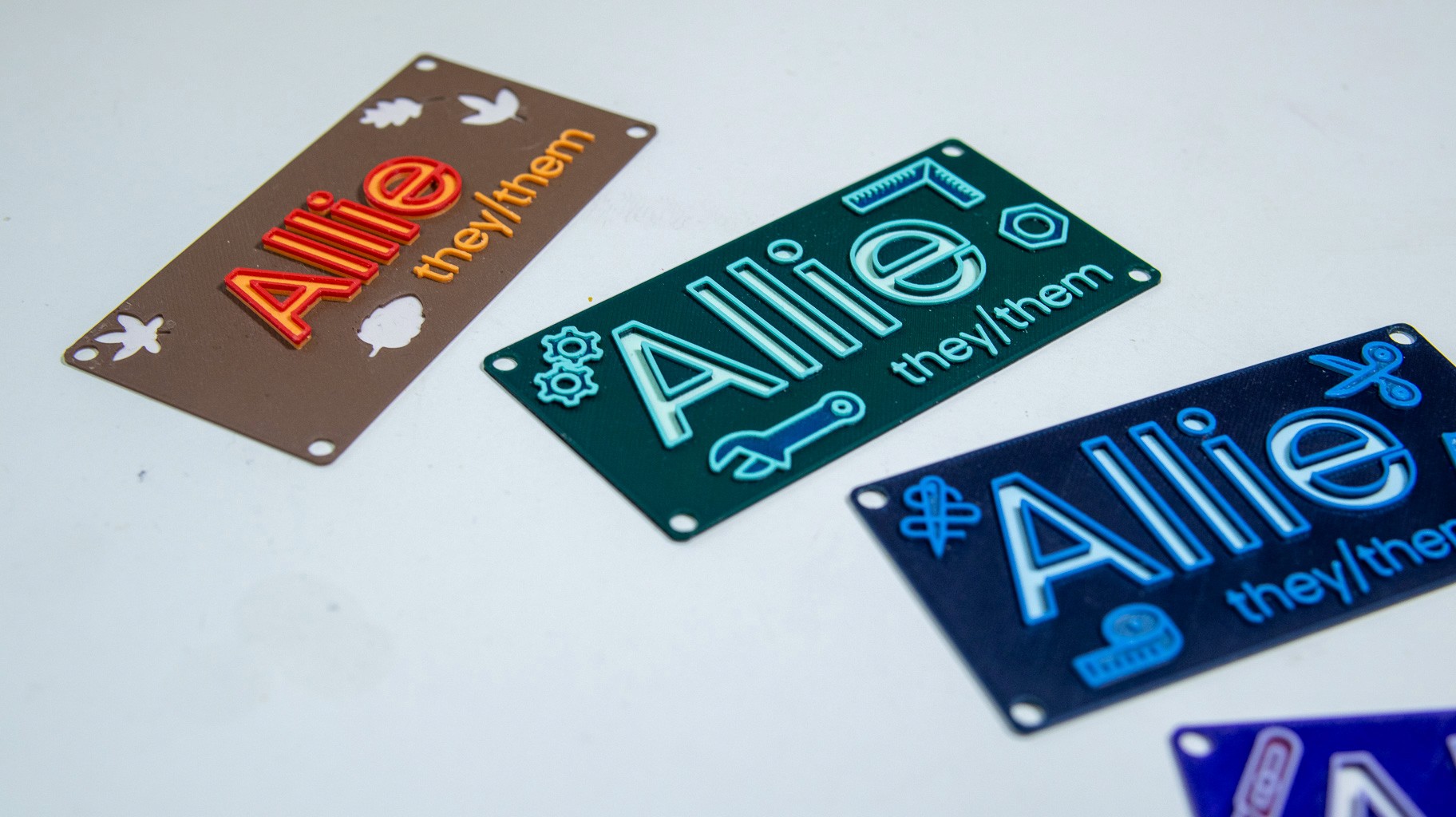
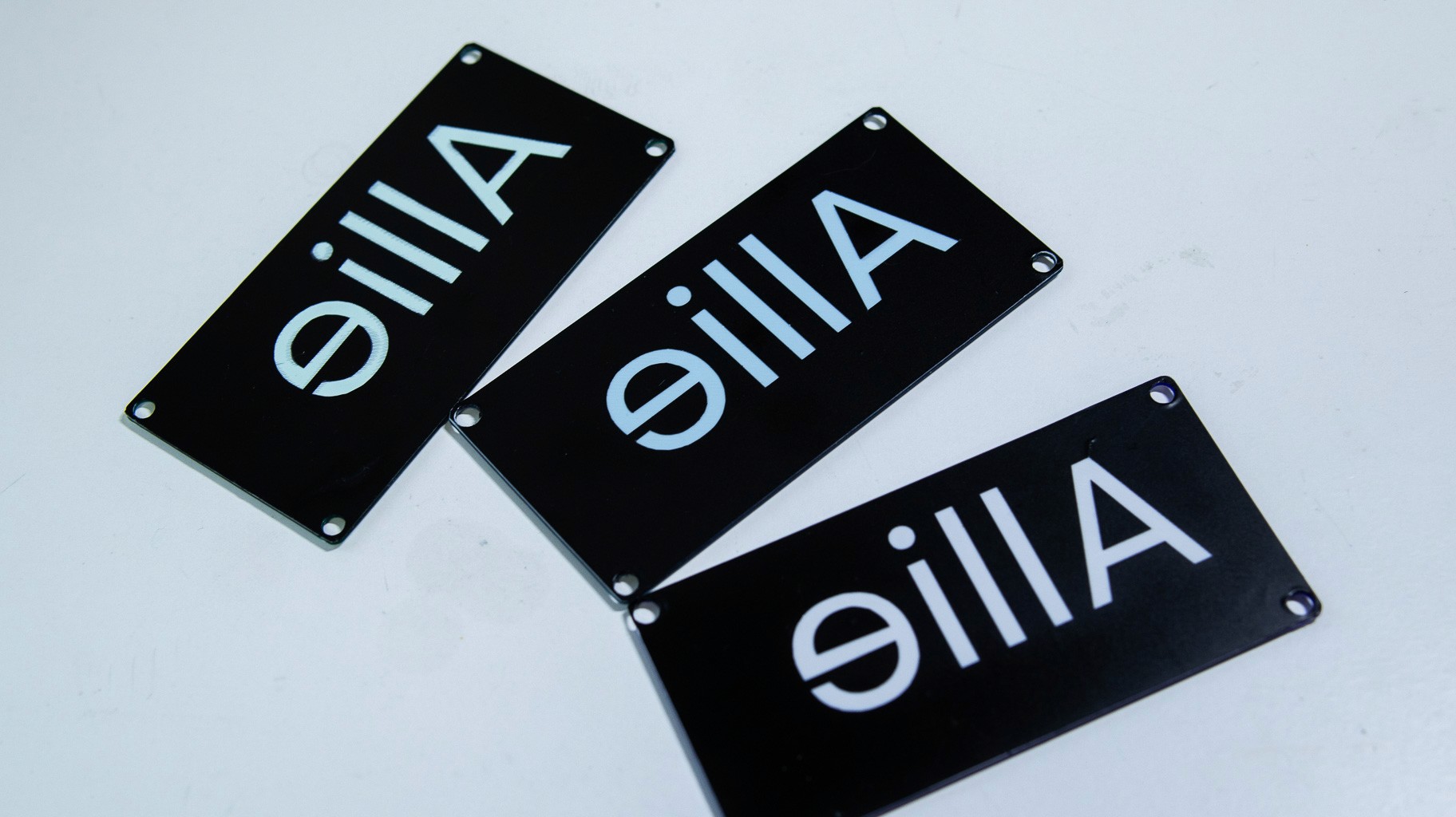
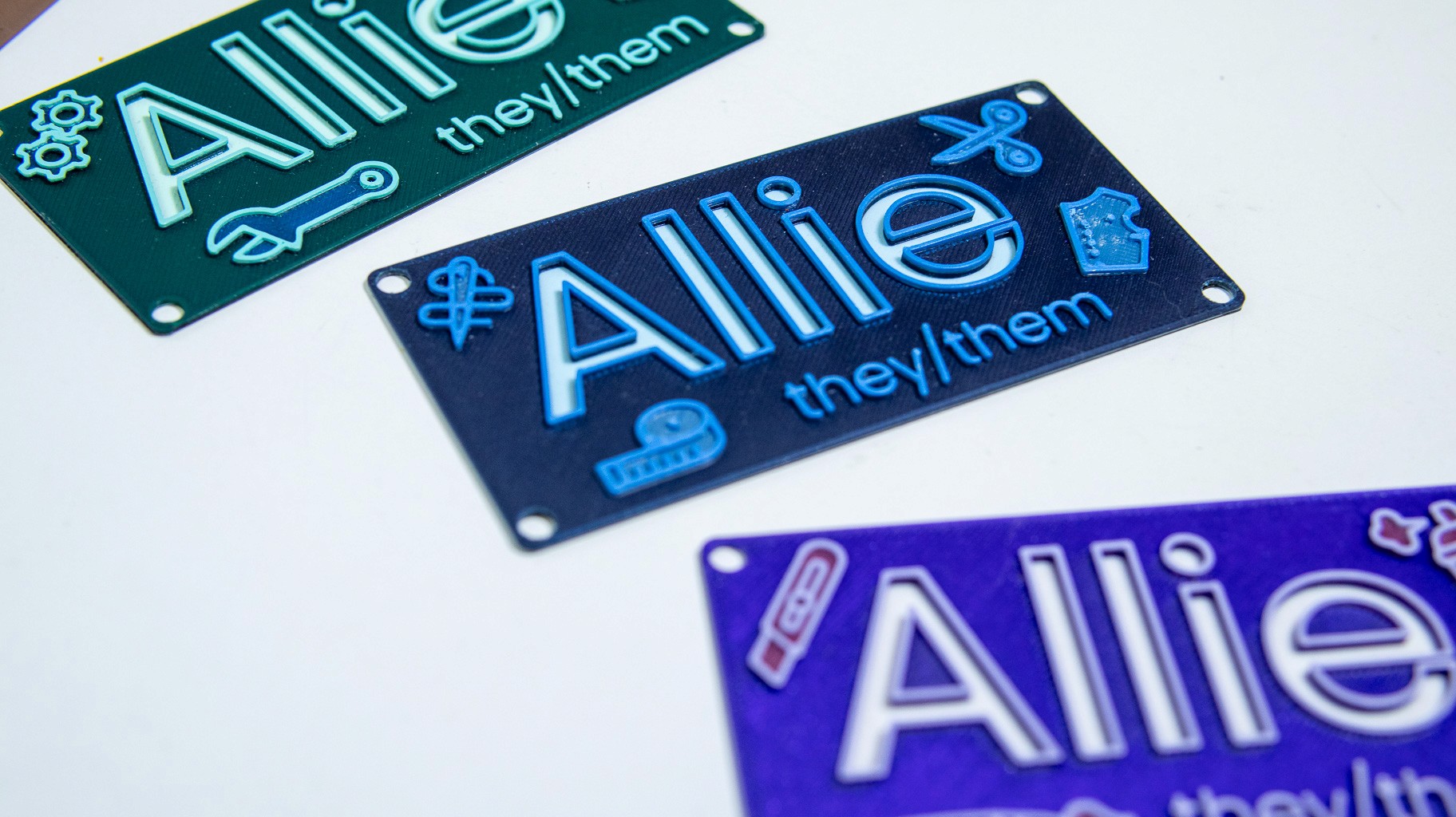
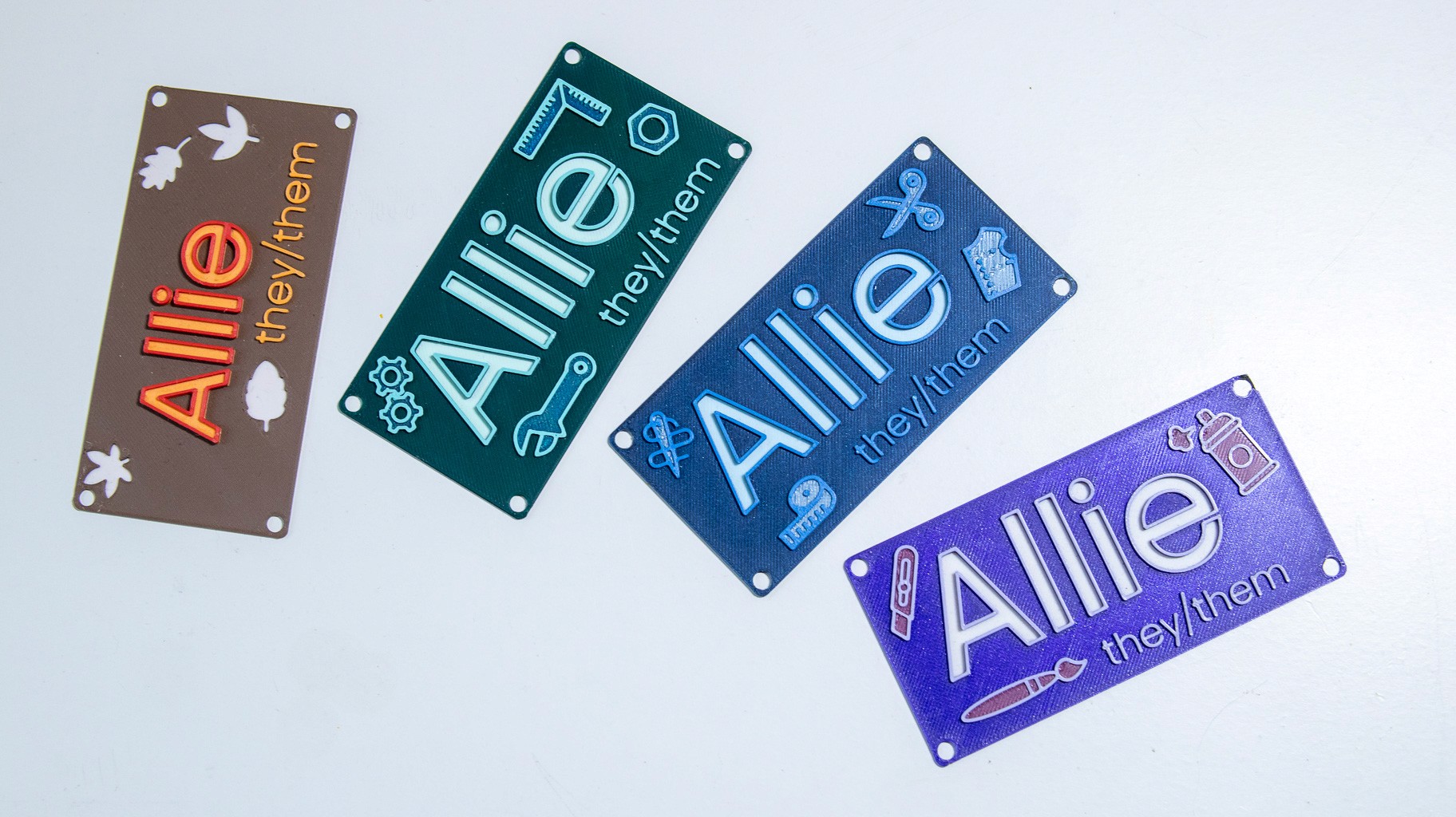
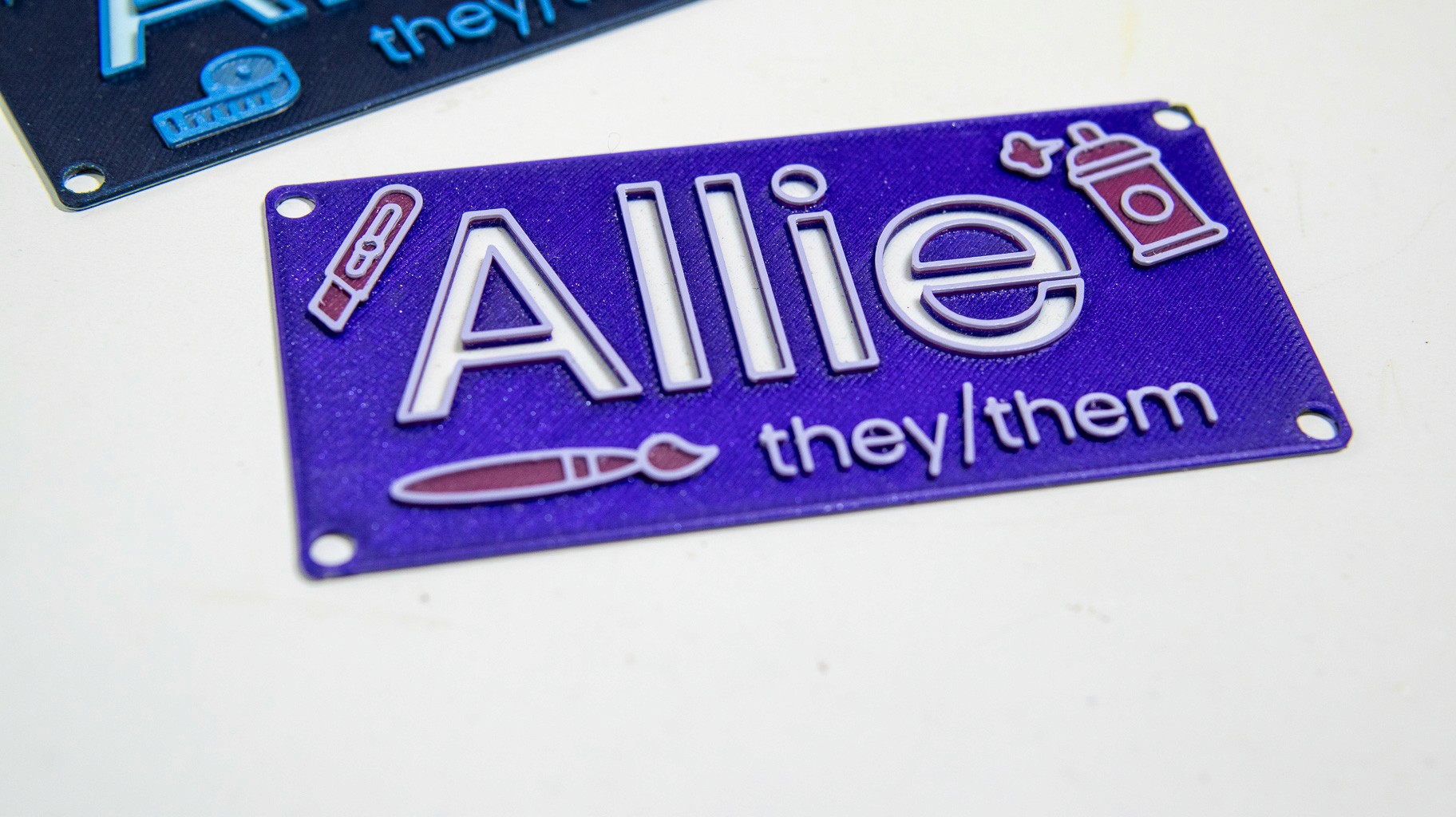
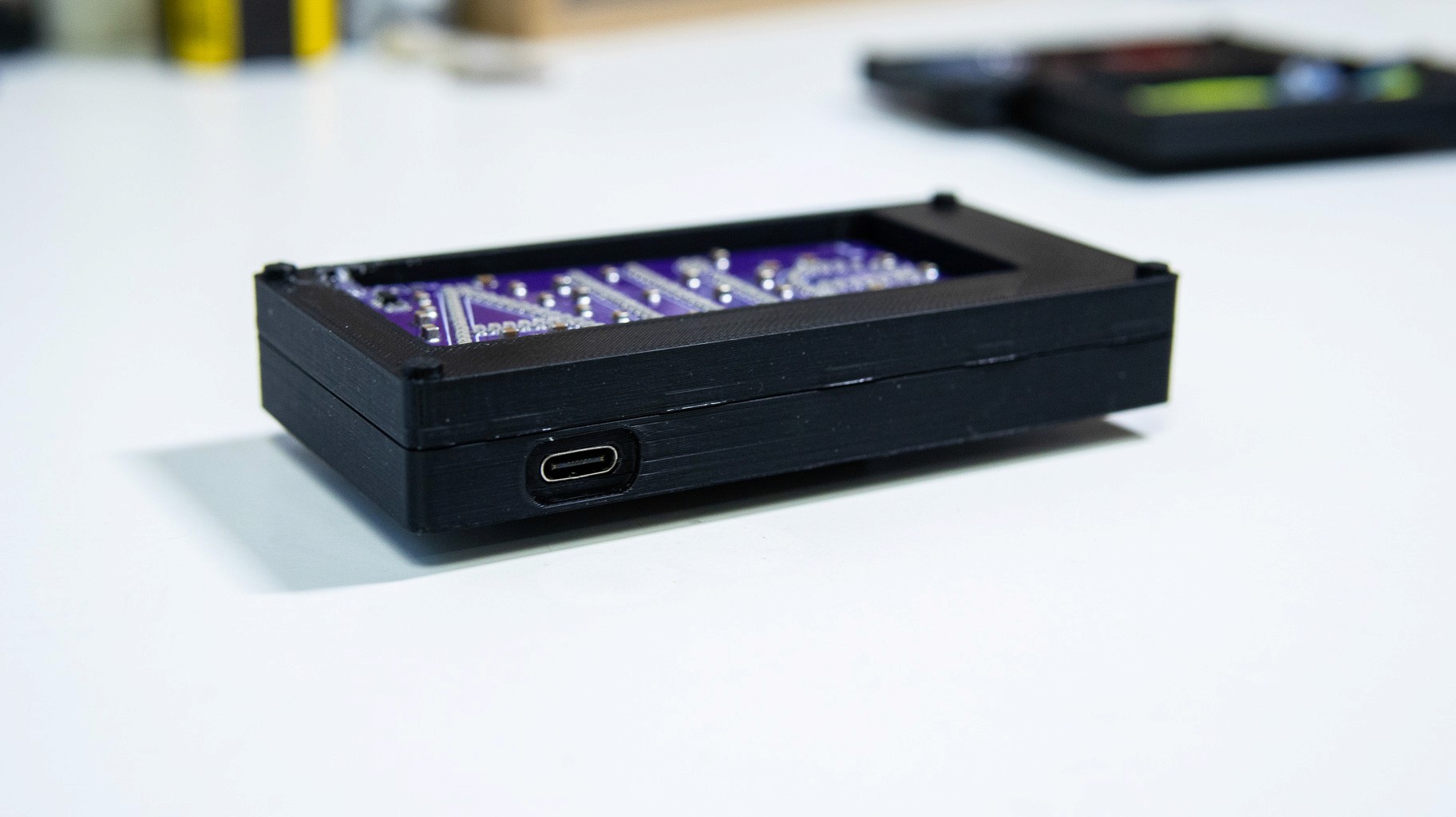
The Enclosure: The entire PCB assembly was engineered to slot perfectly into a sleek, custom-designed 3D-printed enclosure complete with customizable friction fit face plates, transforming the fragile circuitry into a durable, event-ready wearable that I now utilize regularly.
Early Iterations & Constraint Testing: The initial prototypes prioritized simplicity, utilizing Lilypad LEDs, LED noodles, and GlowStitch LEDs powered by coin-cell batteries. These early builds quickly revealed a bottleneck: while coin-cell batteries were ideal for user experience, they could not provide the necessary current for bright, sustained backlighting. I pivoted the design to utilize 3.7V lithium polymer (LiPo) batteries, trading a slight increase in thickness for vastly superior power output.
Manual Miniaturization: To achieve the resolution required to spell out a name, the LEDs needed to shrink. The intermediate iterations utilized pre-wired 1206 and 0805 LEDs, temporarily stabilized in Blu-tak while I painstakingly stripped and soldered microscopic wires by hand. While the result was visually successful, the manual labor was unsustainable and highly prone to failure, signaling the need for a better manufacturing approach.
Custom PCB Design & Surface Mount Fabrication: Partnering with PCBWay, I designed my first custom printed circuit board for surface mount components. To maximize resolution, I selected Xinglight XL-1010RGBC-WS2812Bs—the smallest individually addressable LEDs available at the time.
Fabrication: I hand-placed and surface-mount soldered all 112 one-millimeter LEDs onto the custom board, a massive undertaking that required intense precision.
The System: The board was designed to directly mount a Pixelblaze Pico microcontroller to the back, providing incredible animation capabilities and Wi-Fi control in a footprint barely larger than my pinky finger.
The Enclosure: The entire PCB assembly was engineered to slot perfectly into a sleek, custom-designed 3D-printed enclosure complete with customizable friction fit face plates, transforming the fragile circuitry into a durable, event-ready wearable that I now utilize regularly.
Additional Photos