Interactive Audio Axe Bass
Interactive Audio Axe Bass
A life-size, fully modular electromechanical prop featuring an embedded Raspberry Pi, hidden touchscreen, and a custom 30W audio system.
A life-size, fully modular electromechanical prop featuring an embedded Raspberry Pi, hidden touchscreen, and a custom 30W audio system.
Project Type
Interactive Hardware & Embedded Systems
Interactive Hardware & Embedded Systems
Key Skills
Parametric CAD Design, Electromechanical Integration, Programming (Python), Mechanical Modularity, Advanced Post-Processing & Finishing
Parametric CAD Design, Electromechanical Integration, Programming (Python), Mechanical Modularity, Advanced Post-Processing & Finishing
Primary Tools
Autodesk Fusion 360, Raspberry Pi 5, Dayton Audio Amplifiers & Speakers, CNC Machined Aluminum
Autodesk Fusion 360, Raspberry Pi 5, Dayton Audio Amplifiers & Speakers, CNC Machined Aluminum
Project Overview
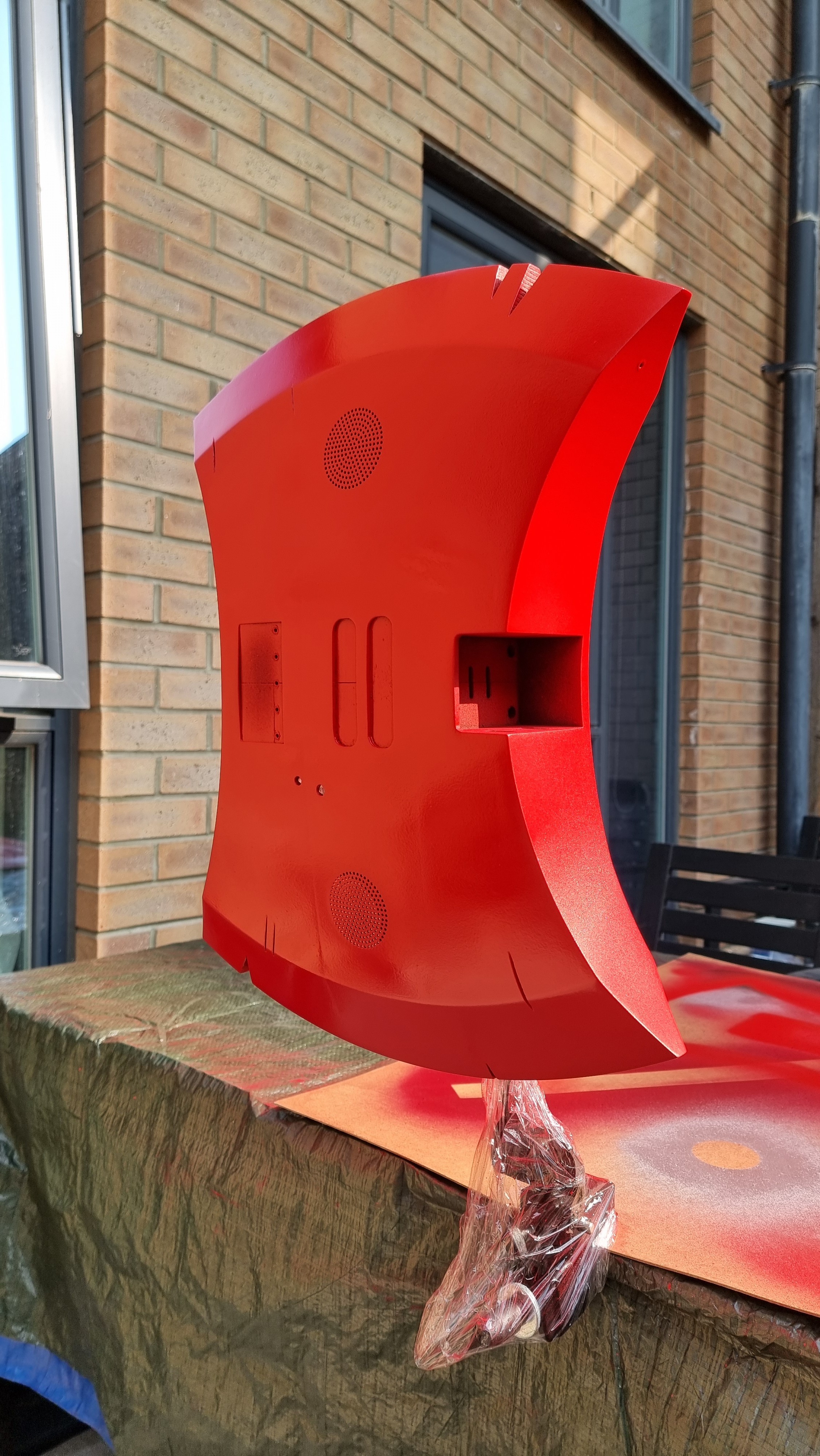
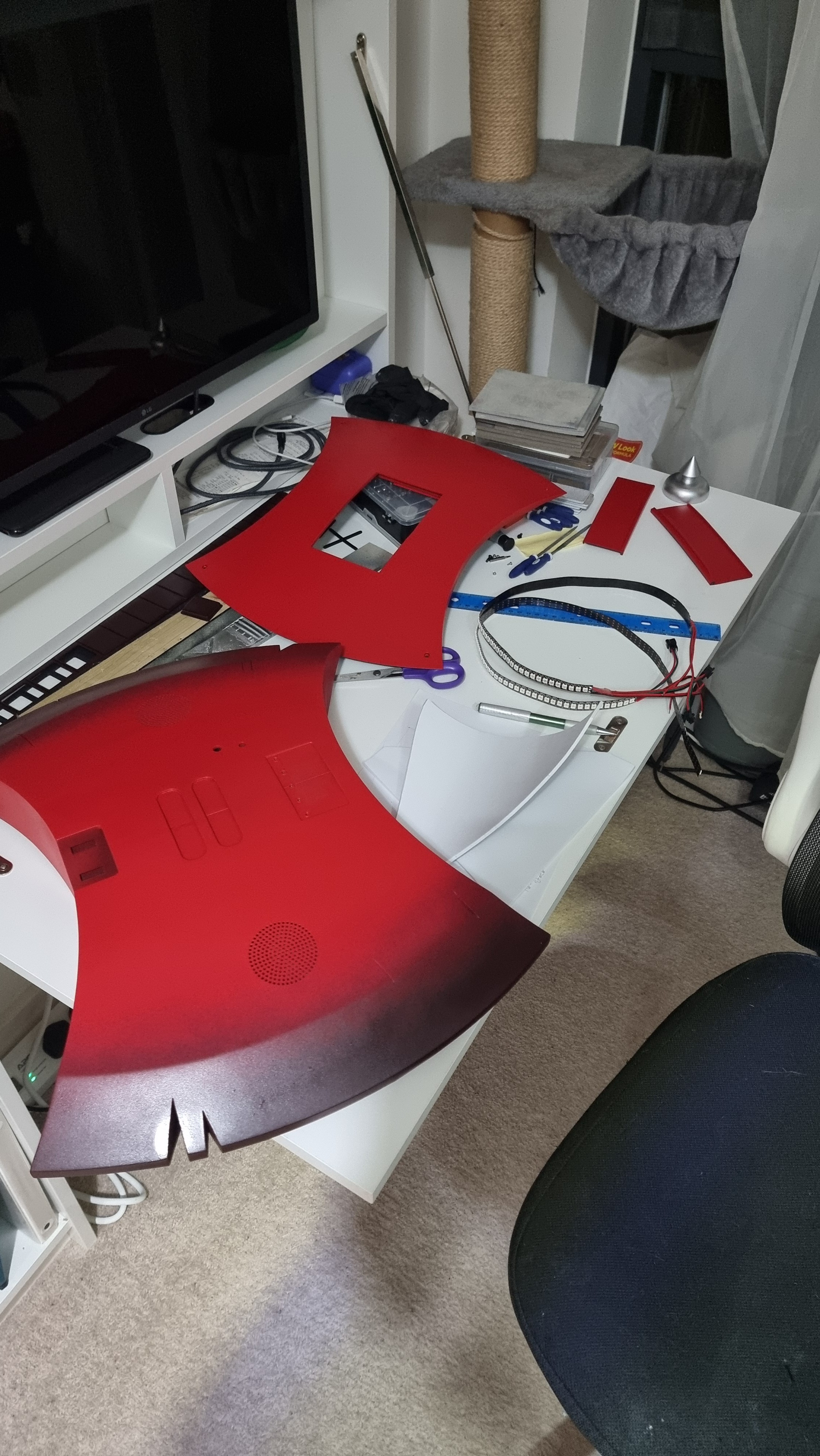
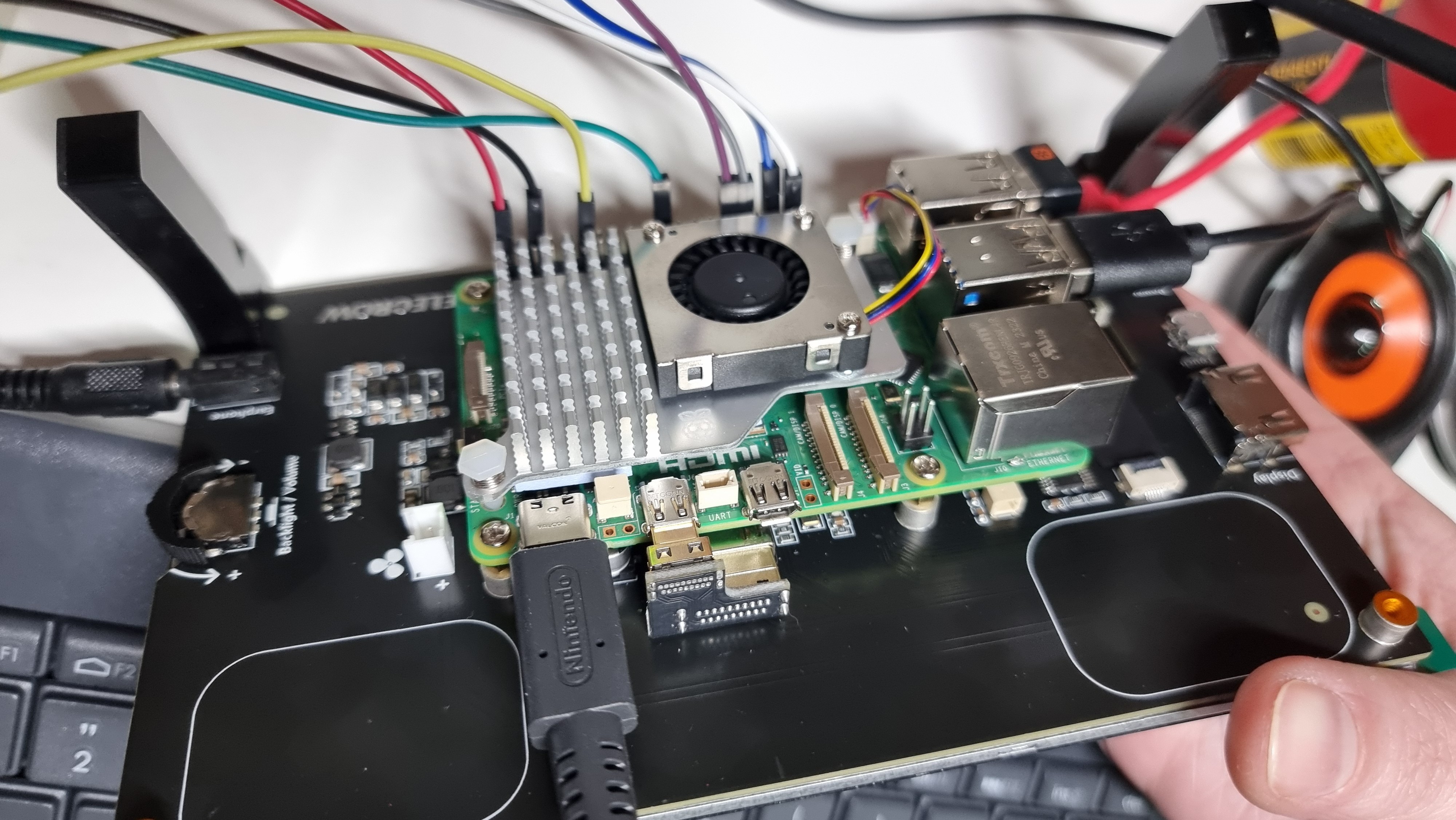
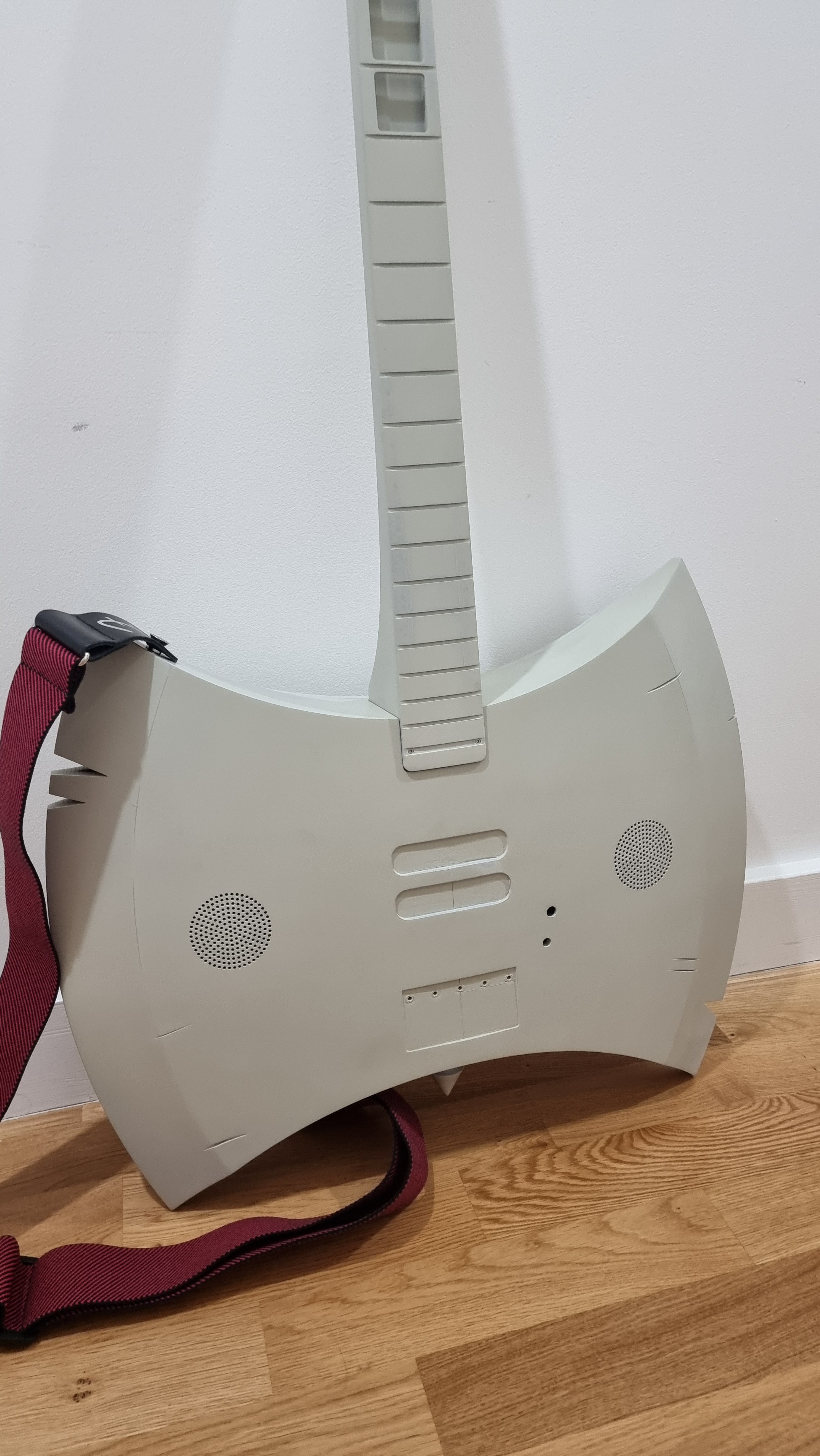
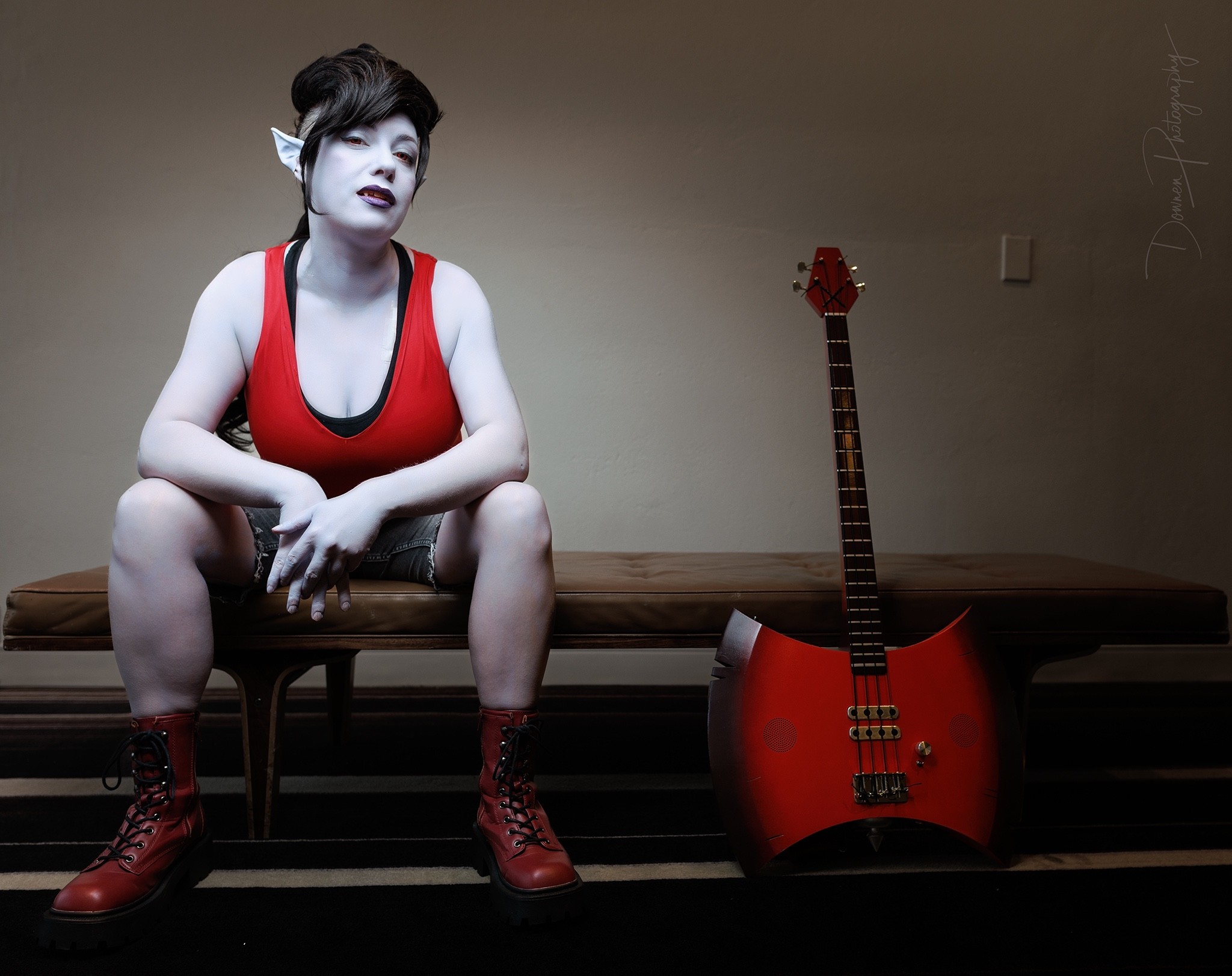
Built as a personal engineering challenge and companion piece for a cosplay of Marceline from Adventure Time, this project is a life-size, fully custom adaptation of the iconic red Axe Bass from the popular TV show. However, rather than a static prop, it is a fully functional, wearable Linux computer and high-powered audio system, styled to appear as a working bass guitar. It houses a Raspberry Pi 5, dual 15W speakers, a touchscreen display hidden behind a custom sliding mechanical panel, and a functional button matrix built into the fretboard to trigger music and audio cues on demand.
Built as a personal engineering challenge and companion piece for a cosplay of Marceline from Adventure Time, this project is a life-size, fully custom adaptation of the iconic red Axe Bass from the popular TV show. However, rather than a static prop, it is a fully functional, wearable Linux computer and high-powered audio system, styled to appear as a working bass guitar. It houses a Raspberry Pi 5, dual 15W speakers, a touchscreen display hidden behind a custom sliding mechanical panel, and a functional button matrix built into the fretboard to trigger music and audio cues on demand.


The Challenges
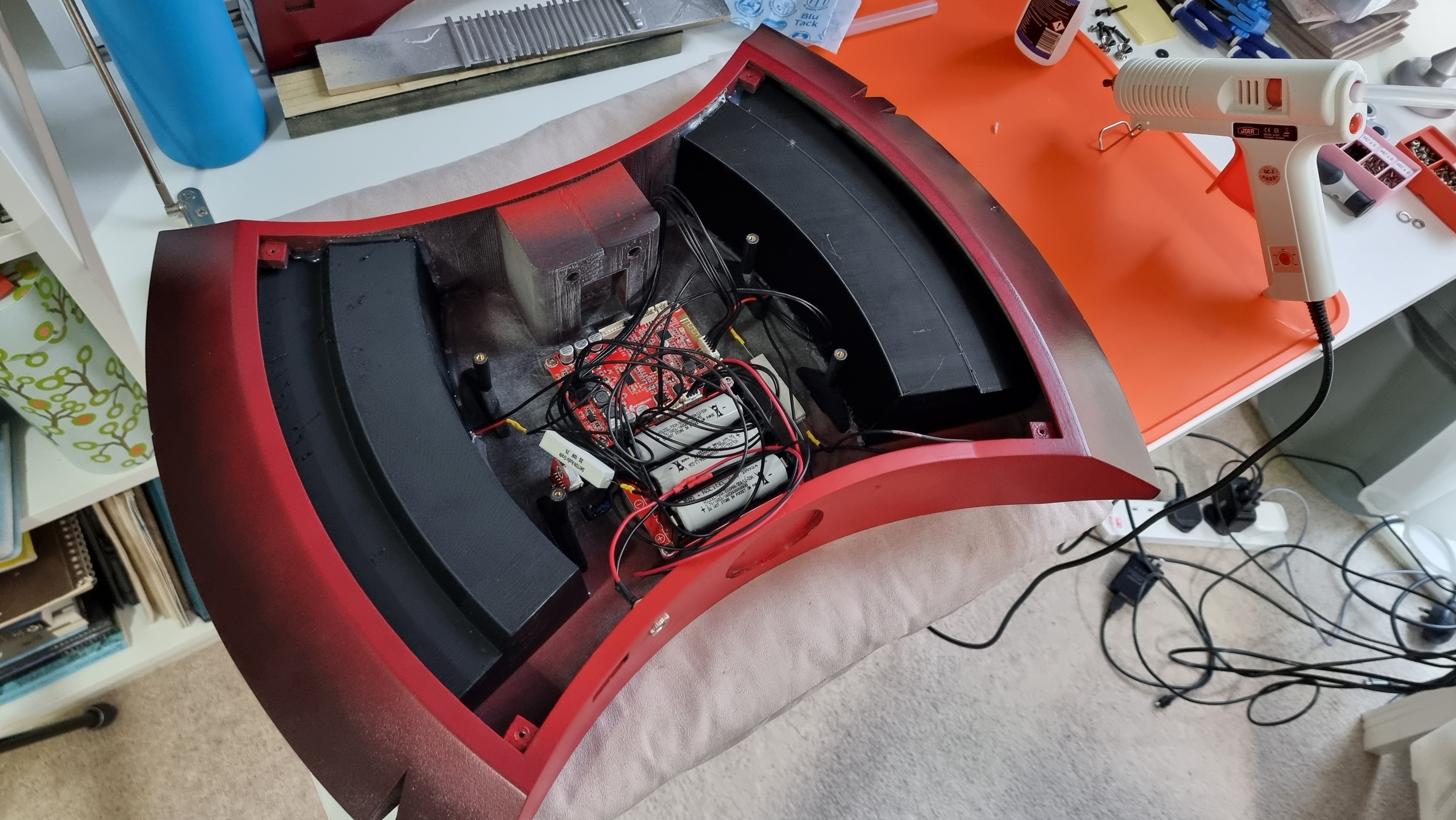
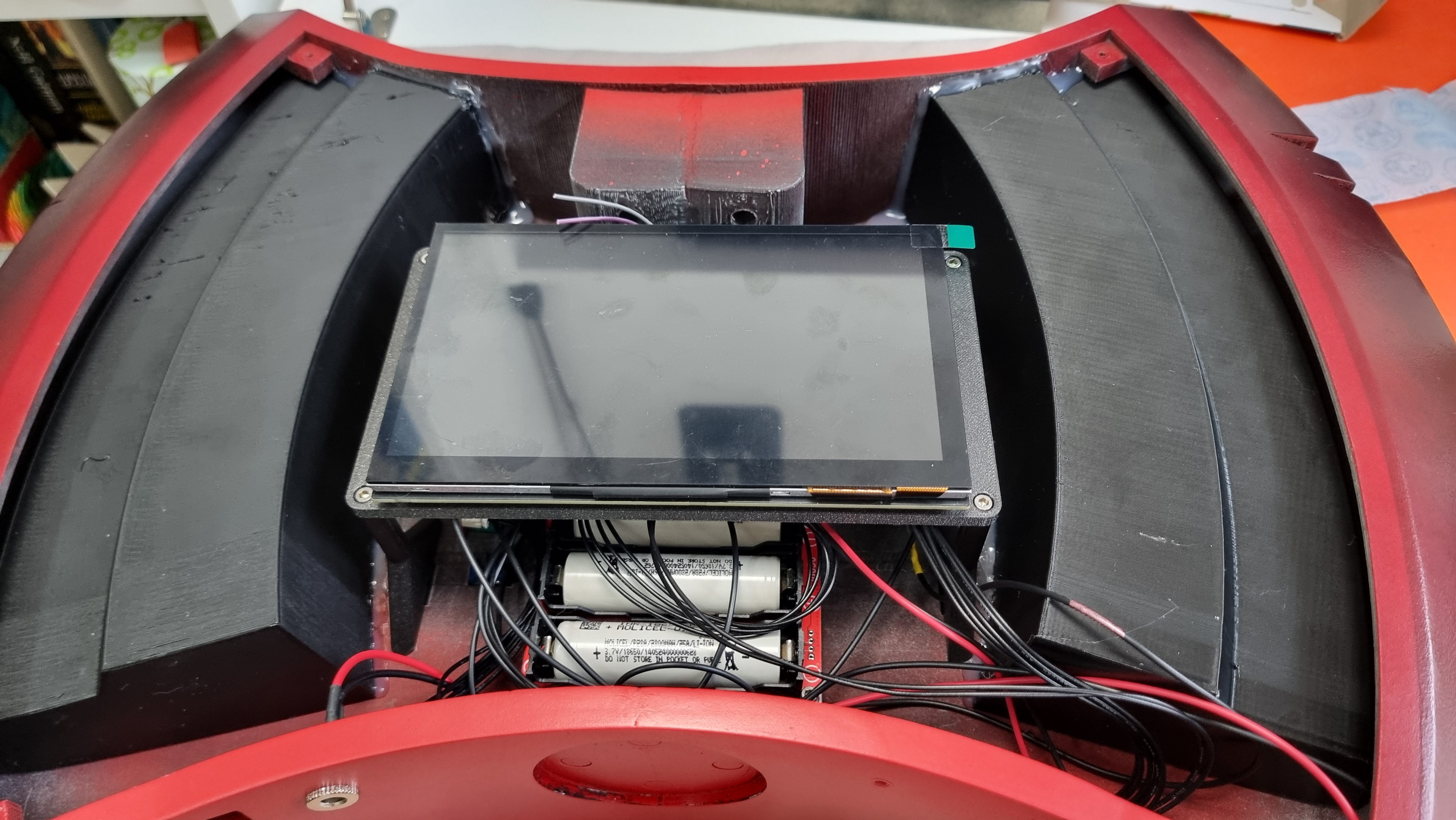
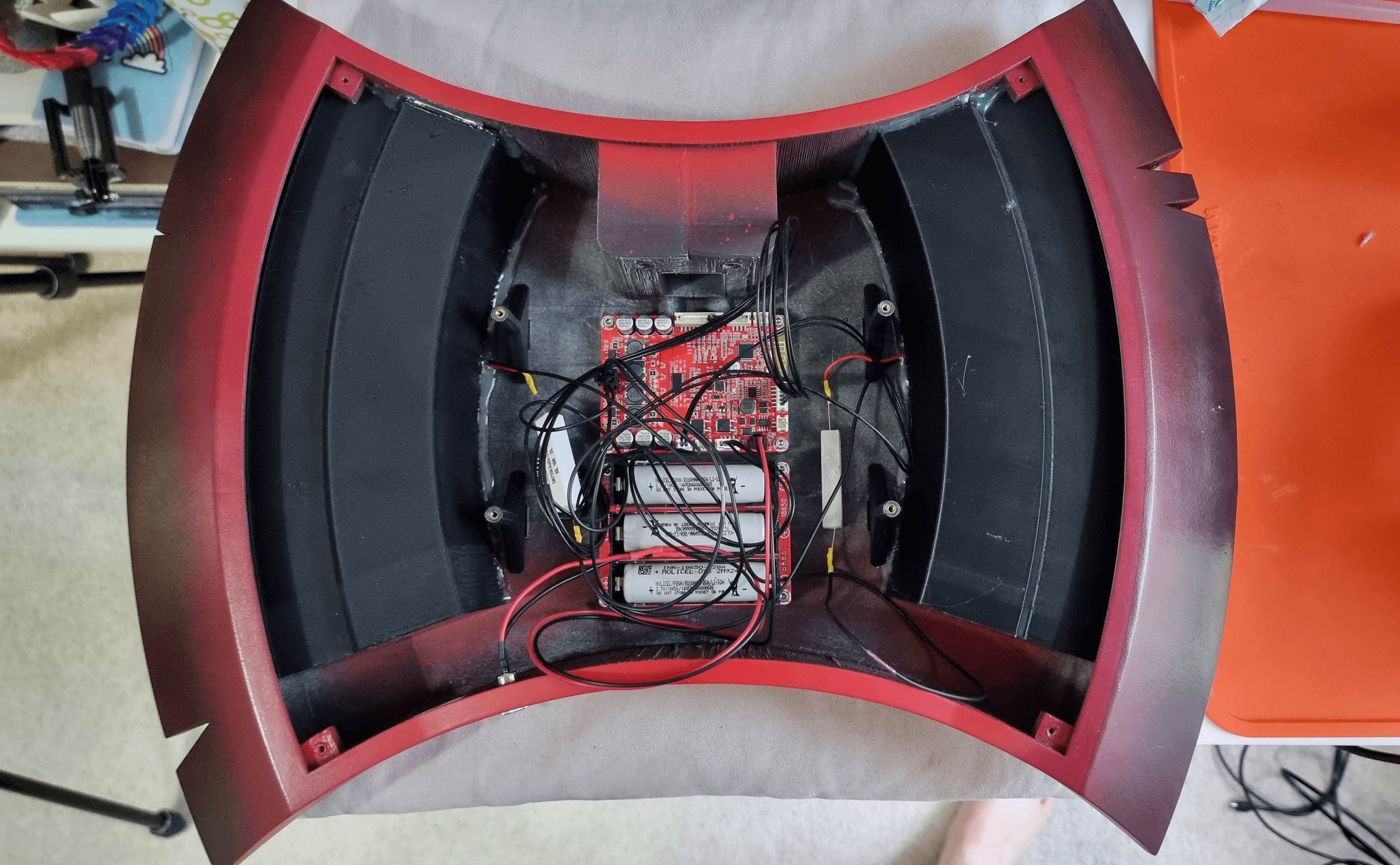
Acoustic & Spatial Engineering: Packaging a Pi 5, a 30W amplifier, a battery board, and dual speakers into a slim guitar body, while ensuring the speakers had an airtight enclosure and enough internal air volume to produce loud, high-quality audio.
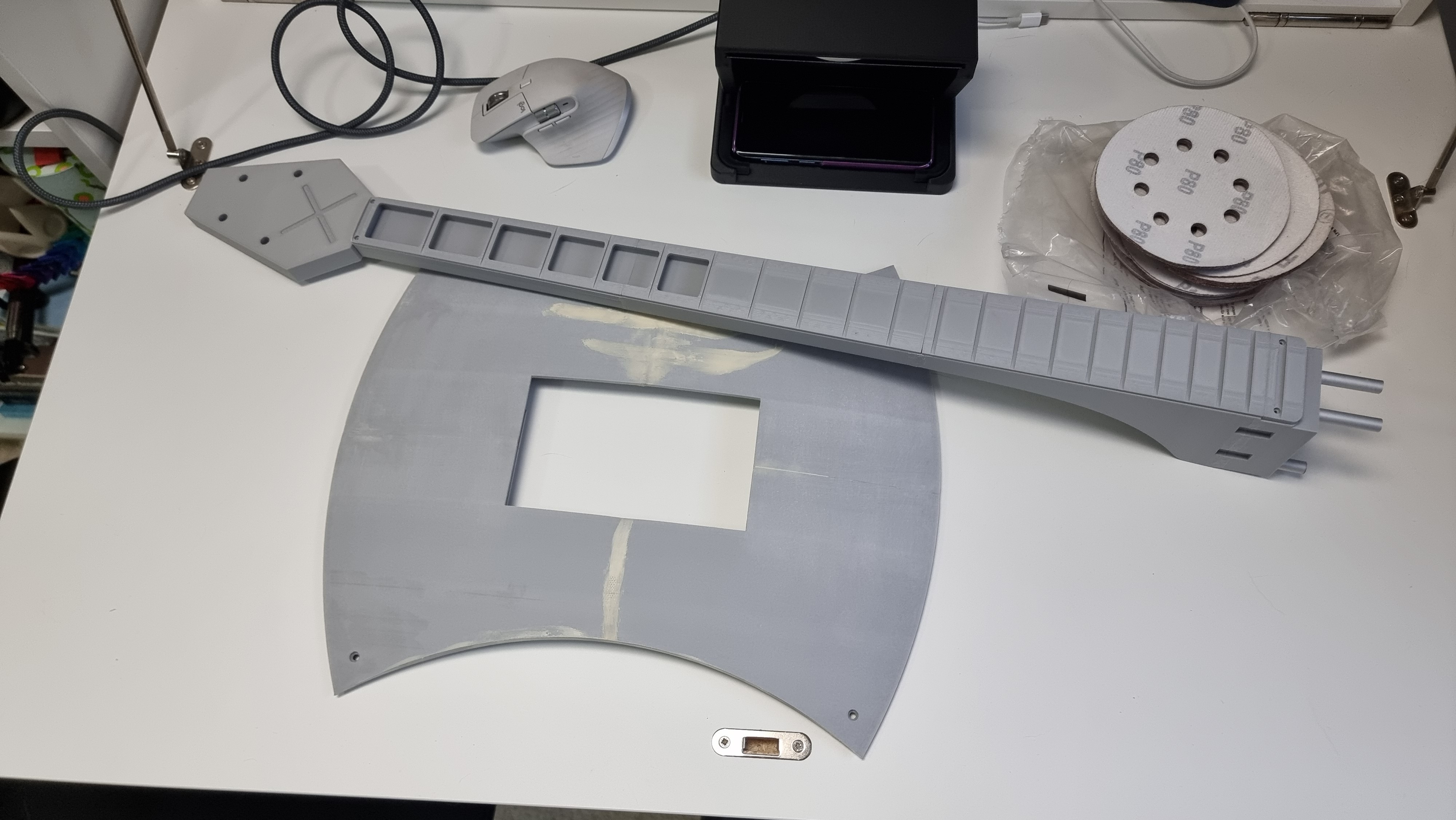
Mechanical Tolerances: Engineering a flush, fully FDM 3D printable sliding back-panel mechanism to hide the touchscreen. Because the enclosure required intense sanding and painting, the door could not be printed-in-place; it had to be assembled post-paint without binding or falling out.
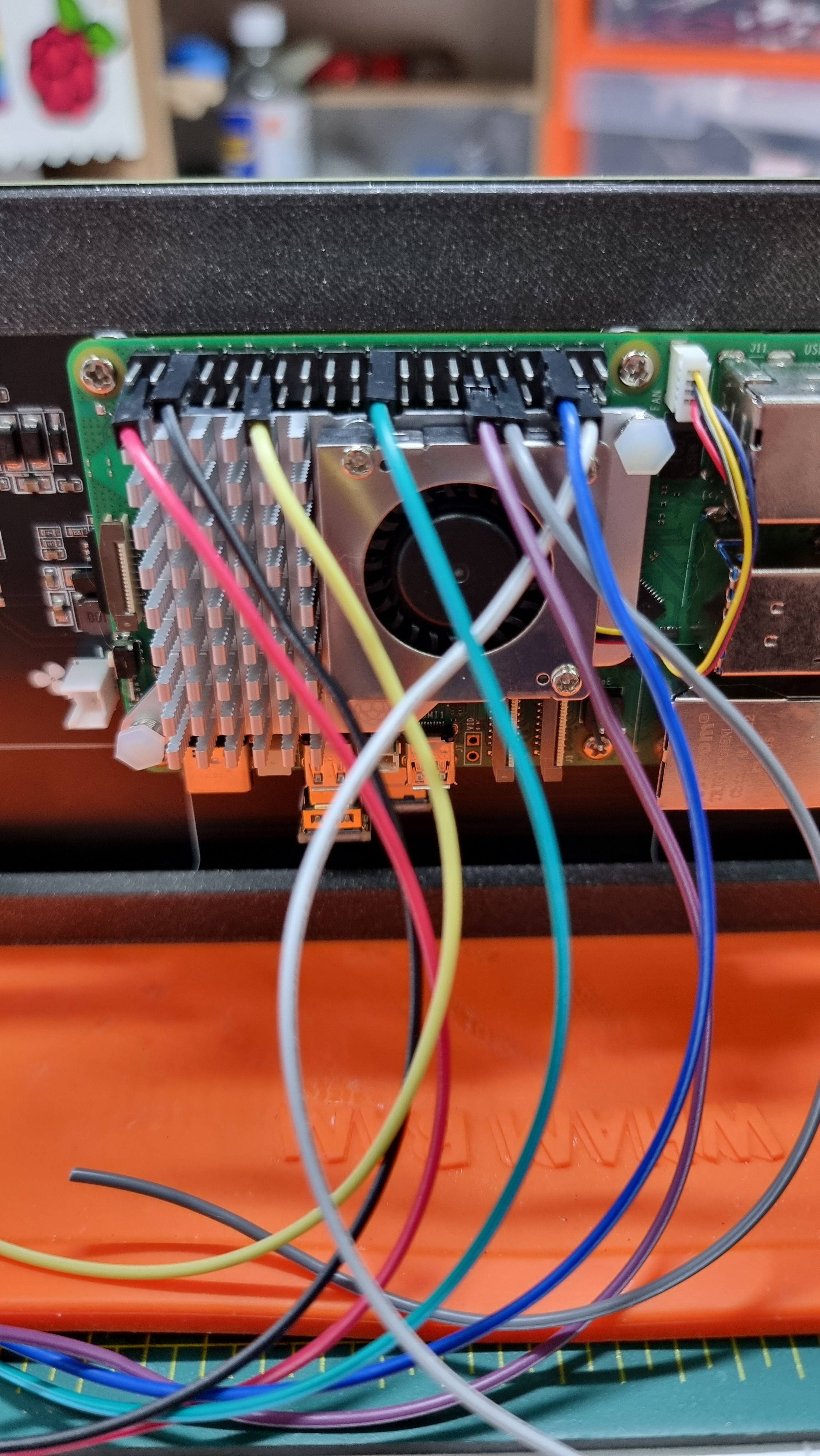
Modular Connectivity: The prop needed to be life-size but fully modular for international travel. This meant the electrical connection between the fretboard buttons and the Pi's GPIO pins in the main body had to be severable, reliable, and perfectly repeatable.
Acoustic & Spatial Engineering: Packaging a Pi 5, a 30W amplifier, a battery board, and dual speakers into a slim guitar body, while ensuring the speakers had an airtight enclosure and enough internal air volume to produce loud, high-quality audio.
Mechanical Tolerances: Engineering a flush, fully FDM 3D printable sliding back-panel mechanism to hide the touchscreen. Because the enclosure required intense sanding and painting, the door could not be printed-in-place; it had to be assembled post-paint without binding or falling out.
Modular Connectivity: The prop needed to be life-size but fully modular for international travel. This meant the electrical connection between the fretboard buttons and the Pi's GPIO pins in the main body had to be severable, reliable, and perfectly repeatable.
Solution and Process
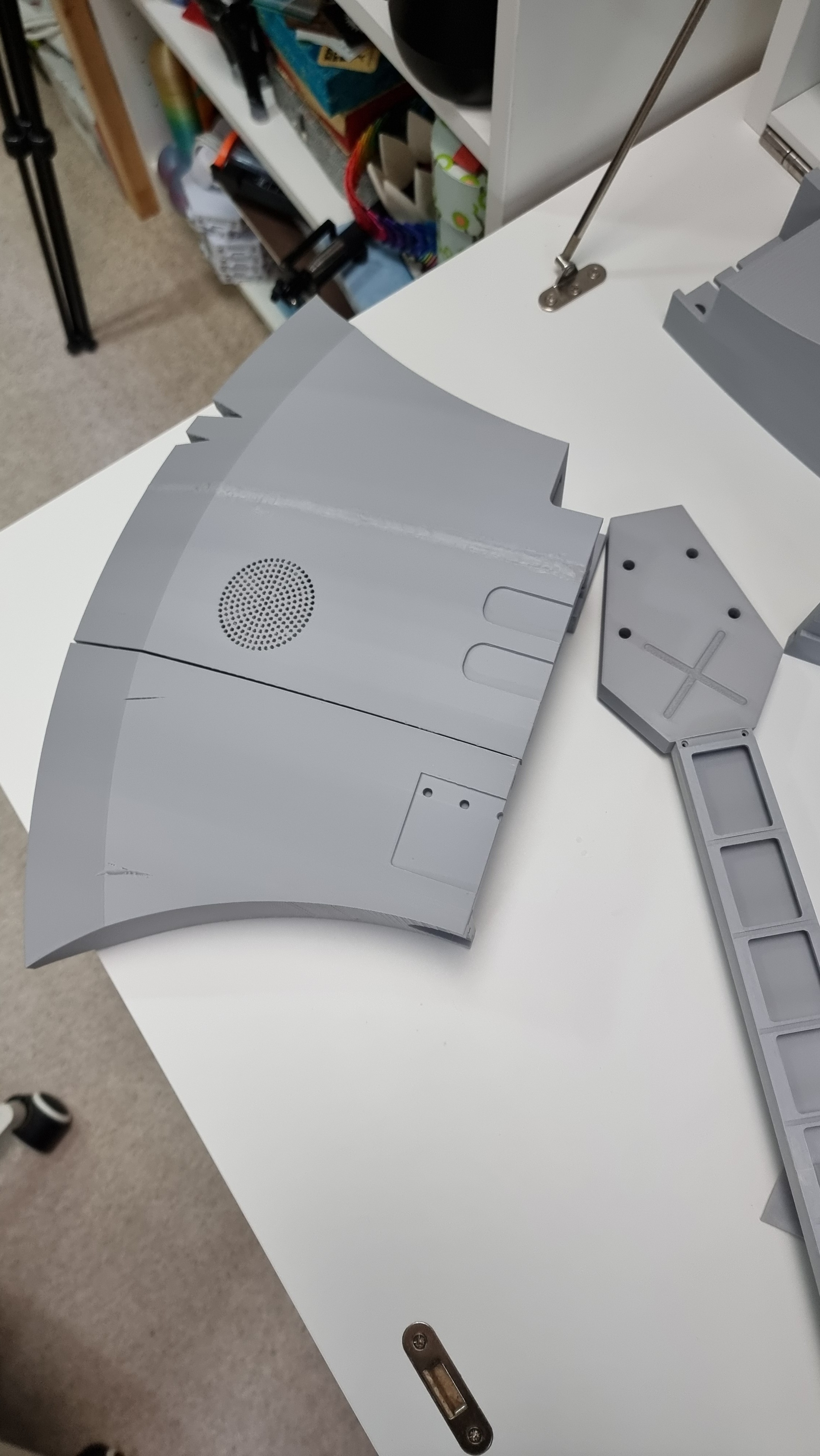
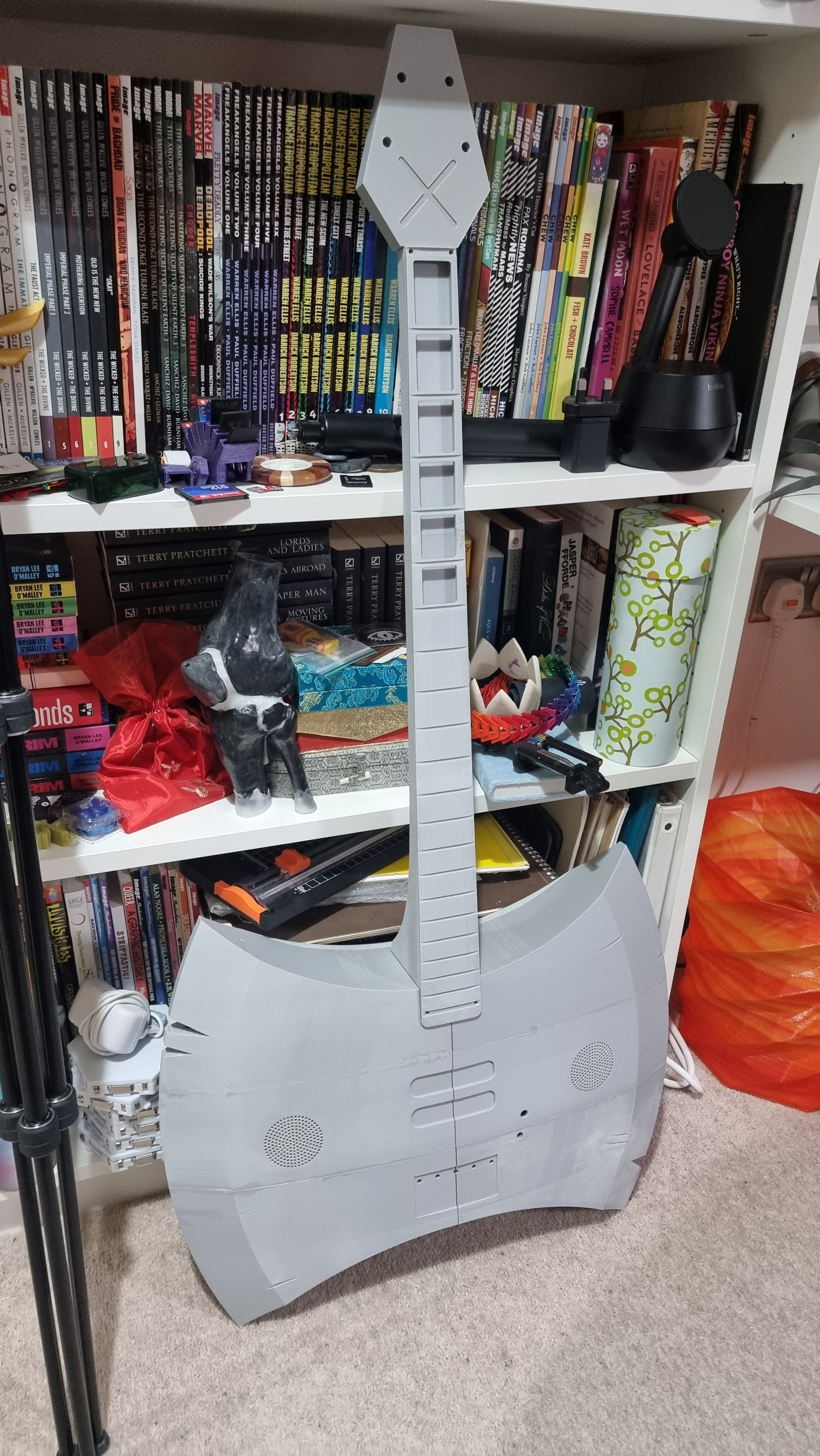
Modular Hardware Architecture: To solve the travel constraint without relying on fragile, manual wire harnesses, the neck was engineered to attach to the body using magnetic pogo pin connectors. This approach allows the neck (which houses the custom-wired tactile button matrix) to snap seamlessly into the body, recreating a perfect electrical connection to the Raspberry Pi's GPIO pins every single time.
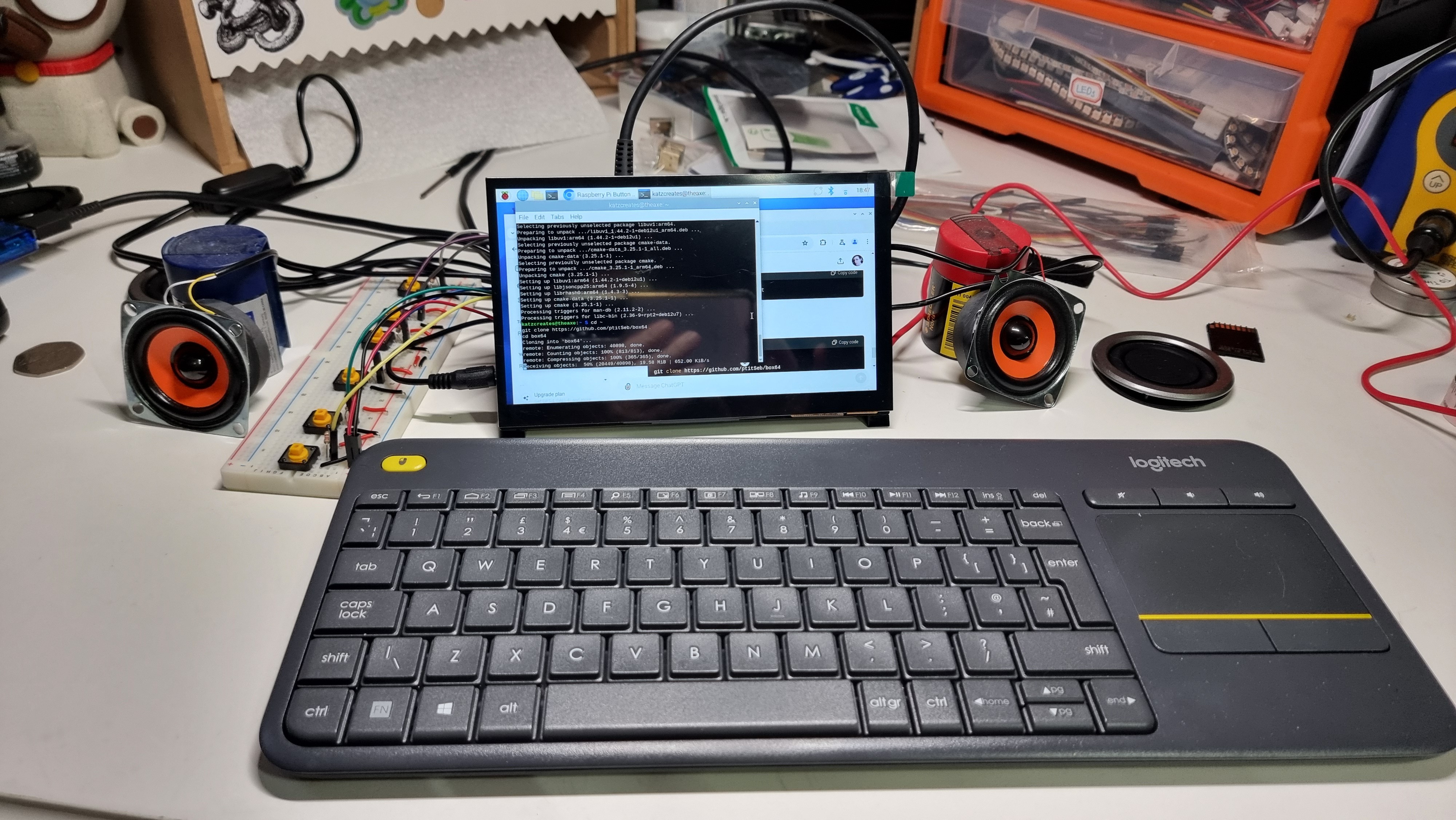
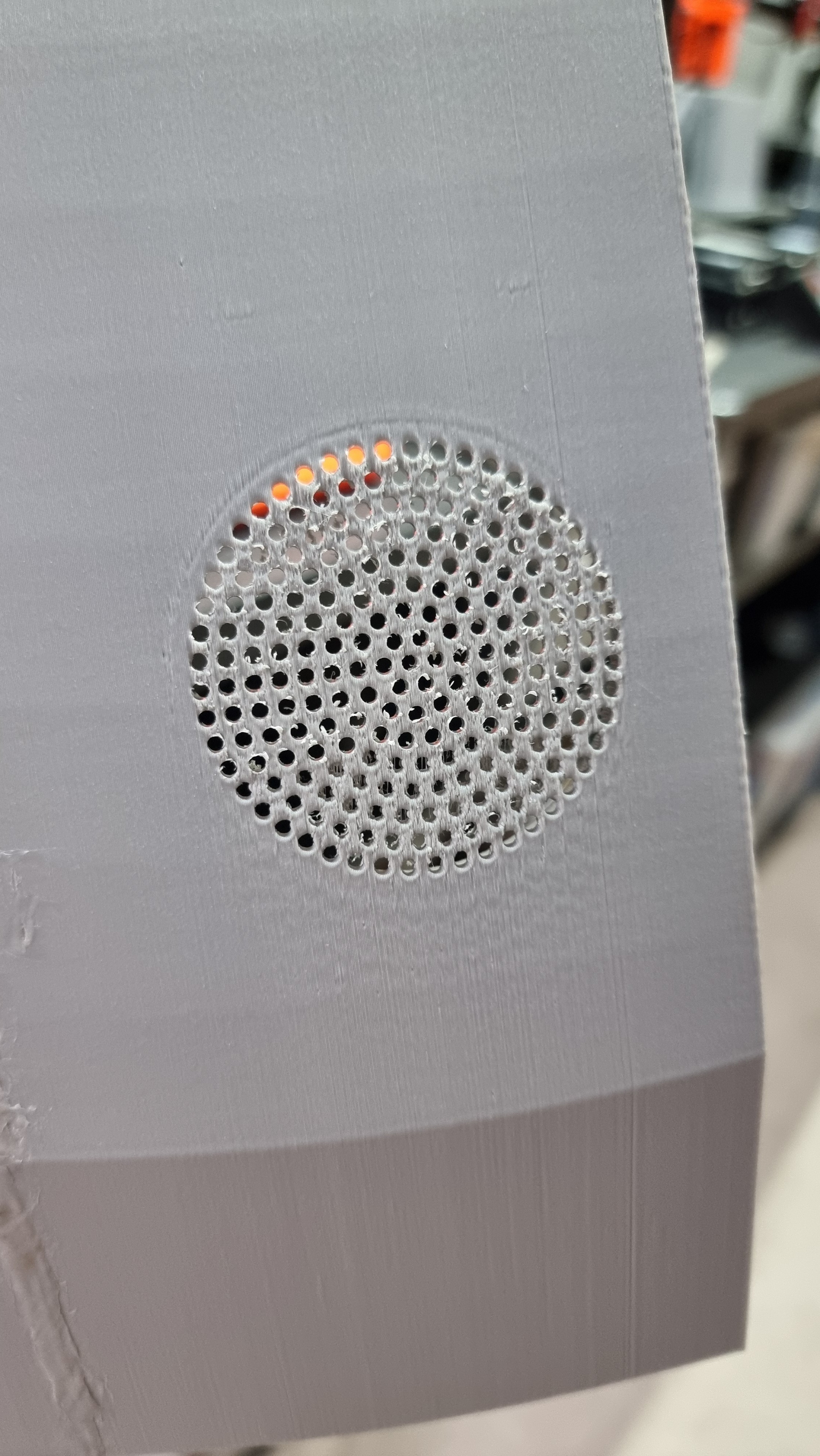
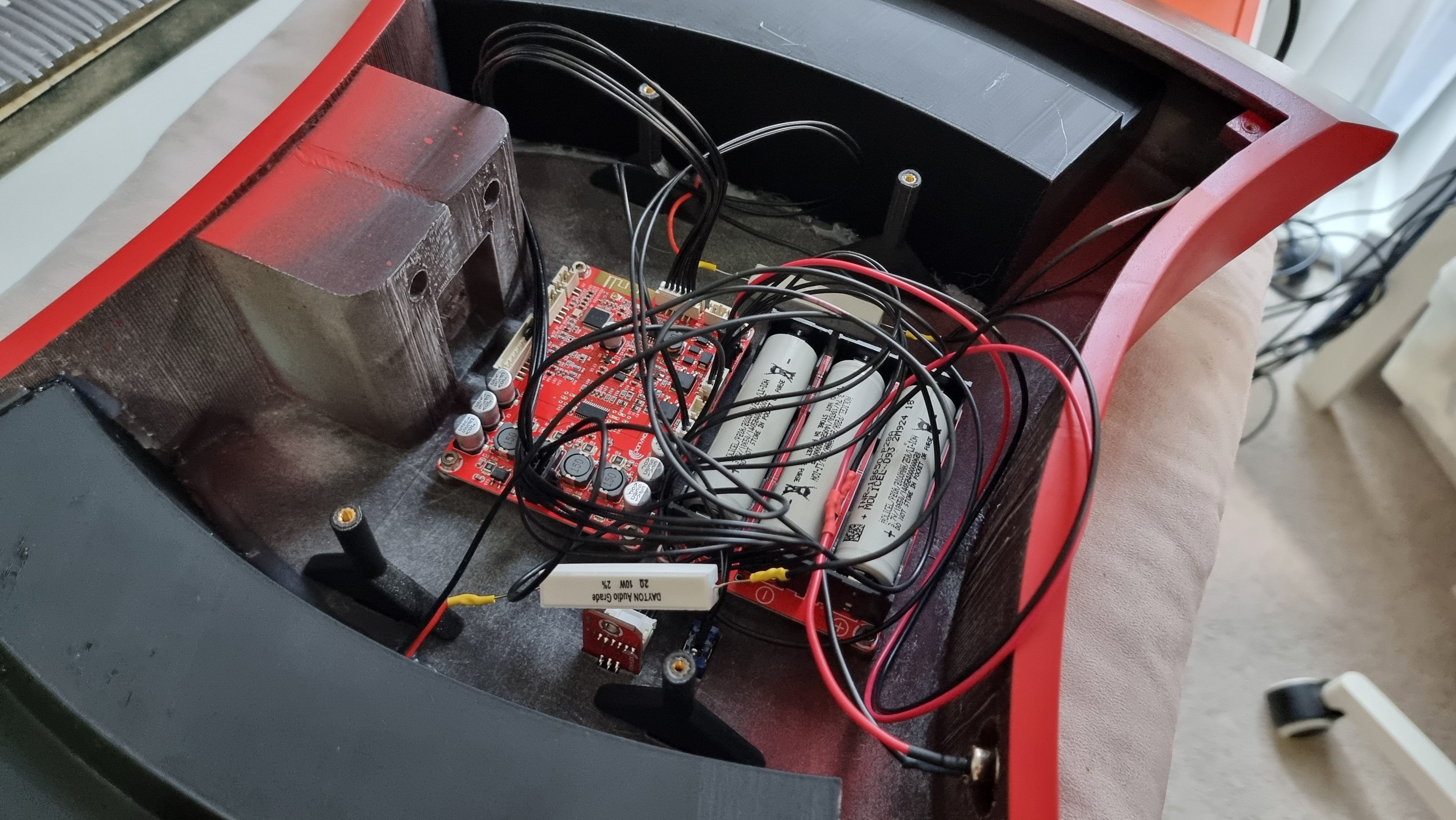
Acoustic Design & Power Management: Early prototyping revealed that standard 5V USB speakers drew too much power, causing the Pi 5 to brown out at high volumes. To solve this, the audio architecture was overhauled using a 30W Dayton Audio dual-channel amplifier and a dedicated piggyback battery board. This isolated the audio power draw and vastly increased the volume. Custom speaker enclosures were CAD-modeled, lined with acoustic wadding, and sealed inside the Axe body to maximize resonance in crowded event spaces.
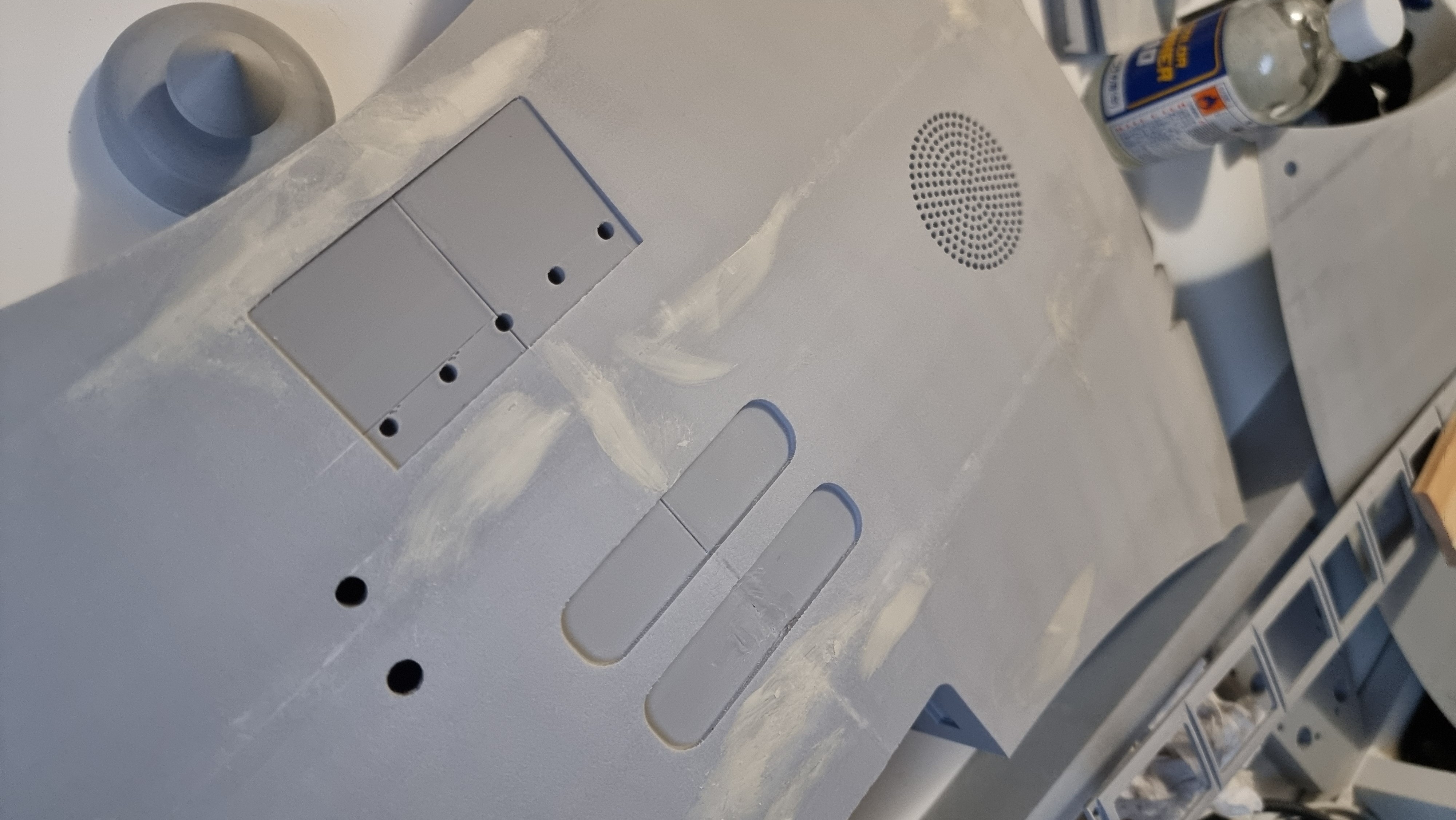
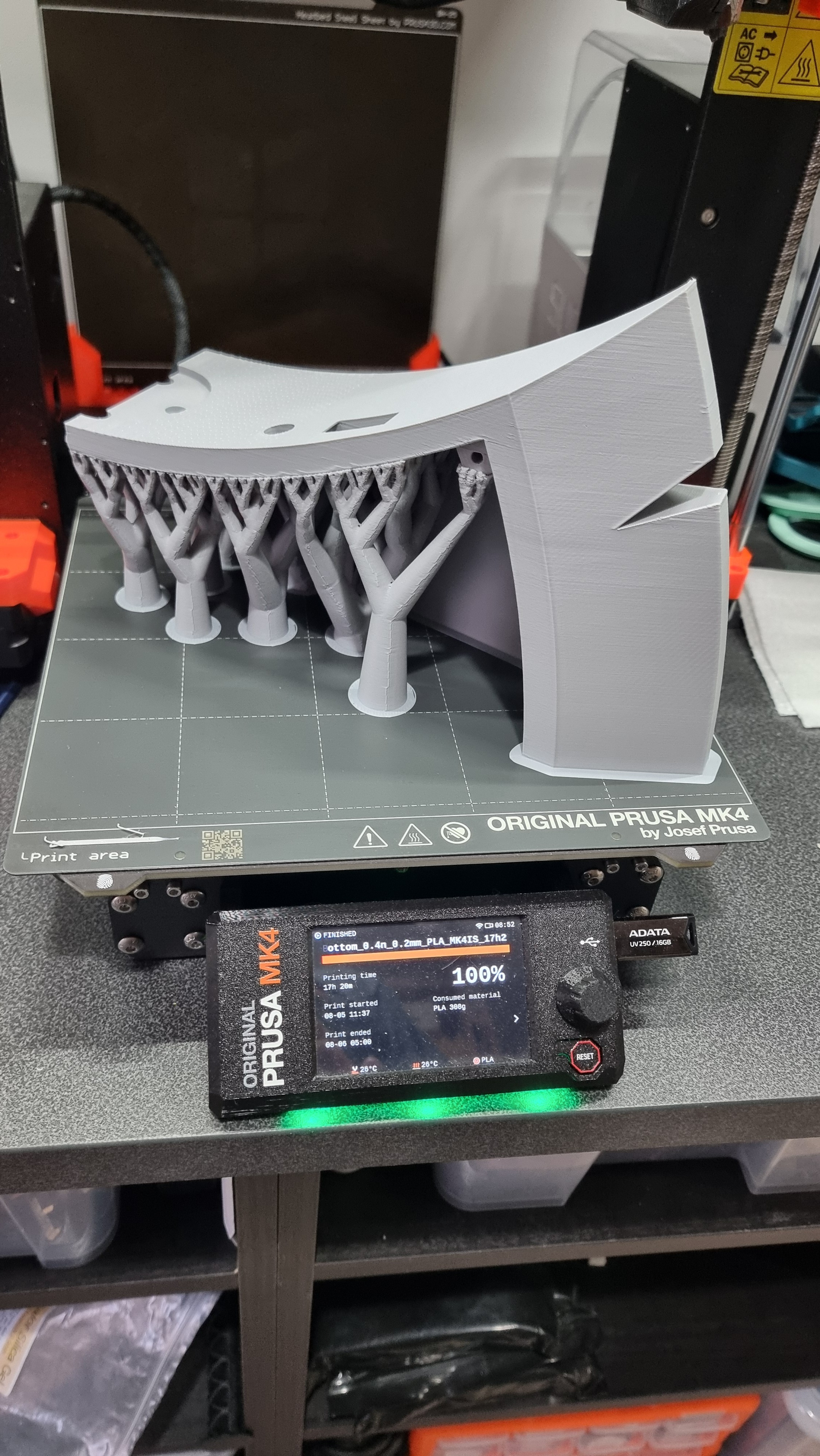
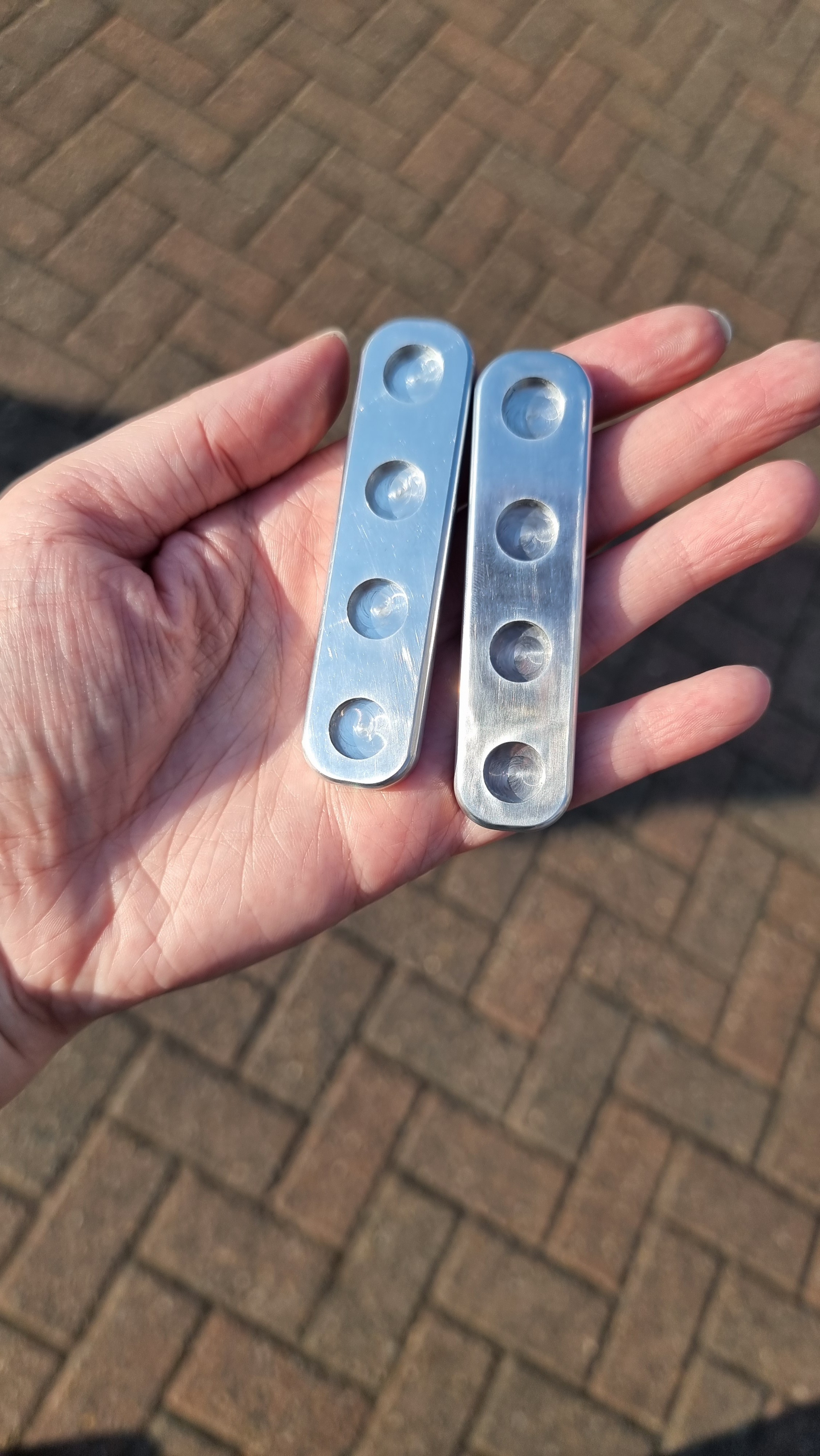
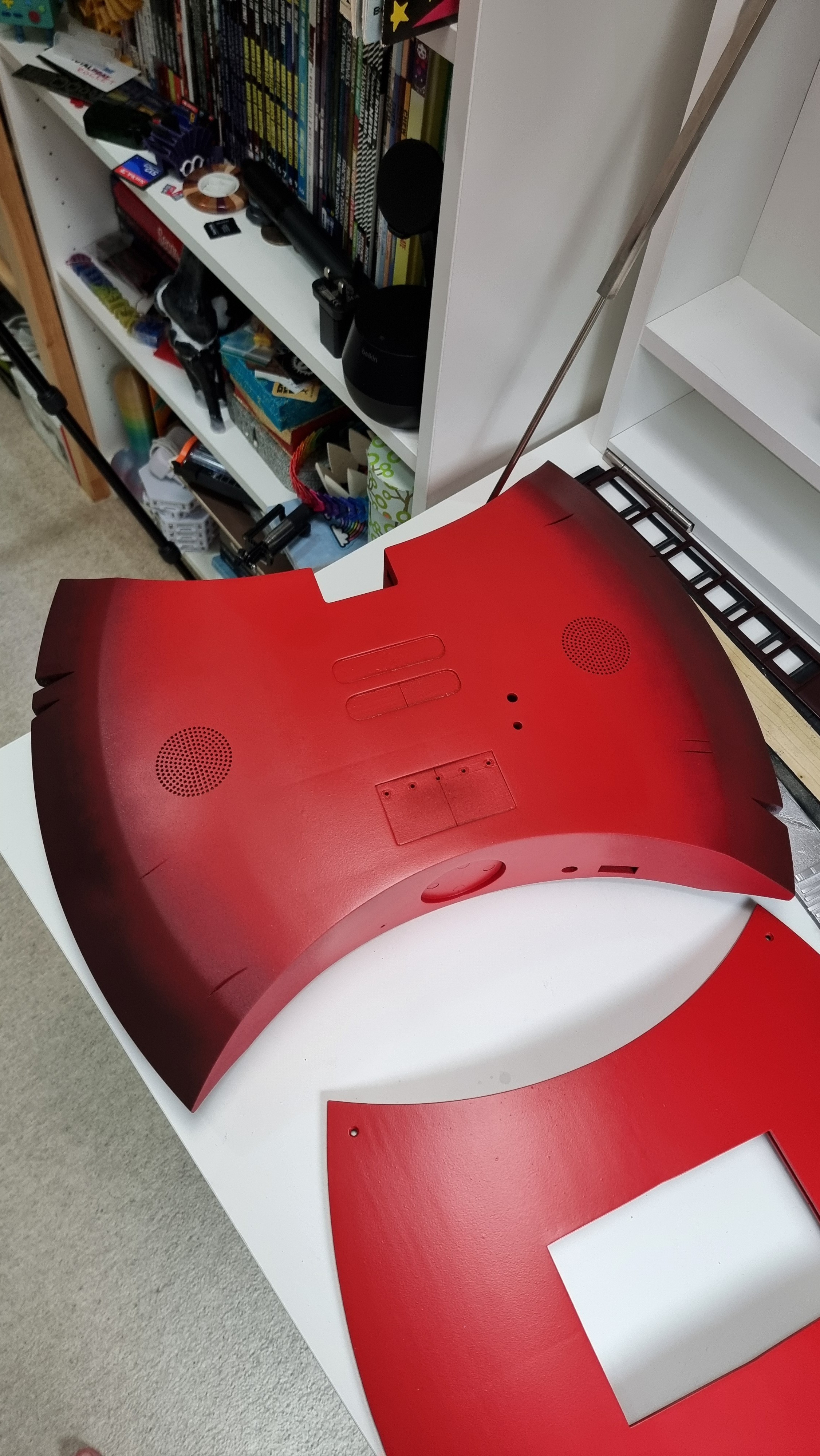
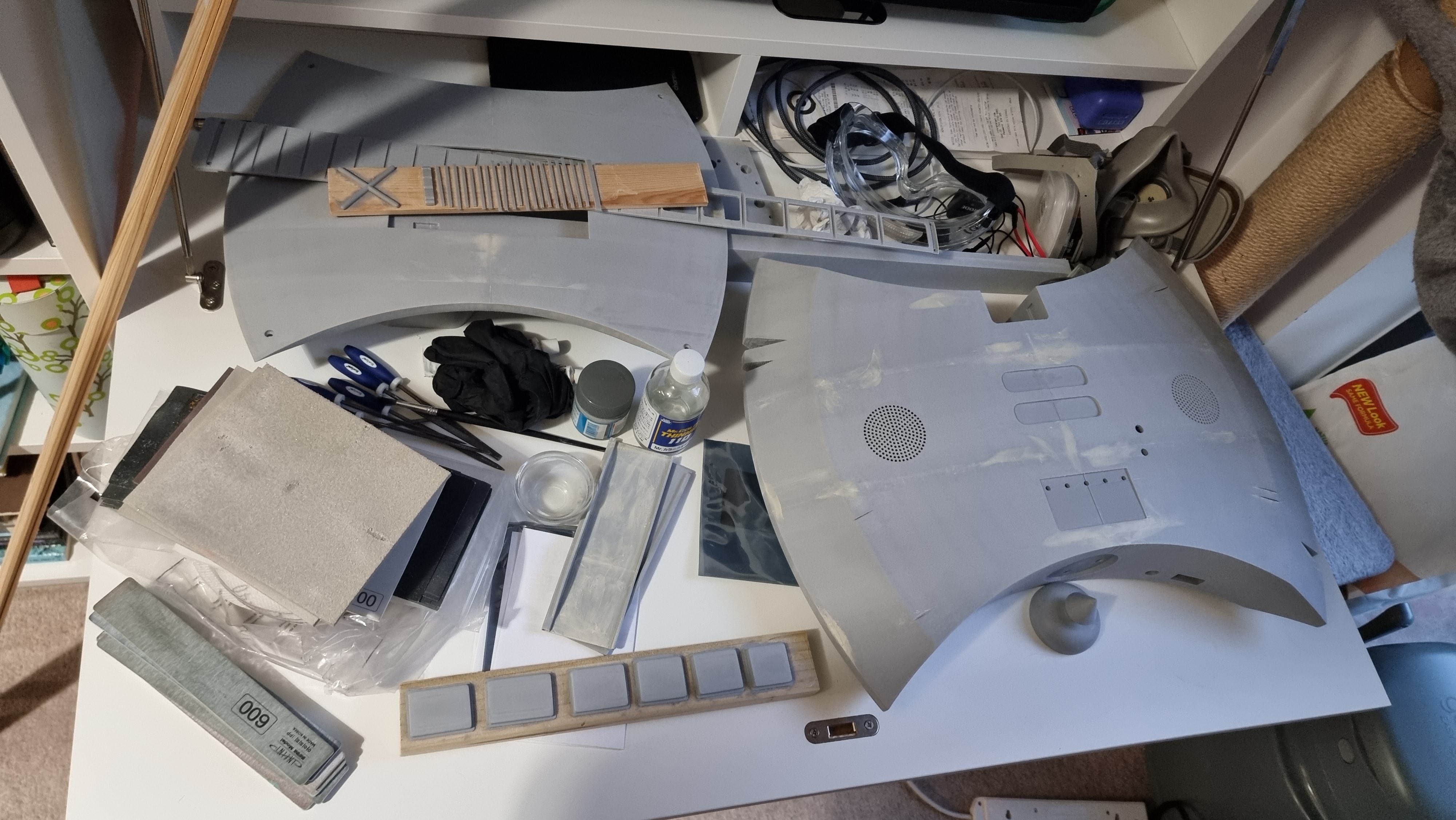
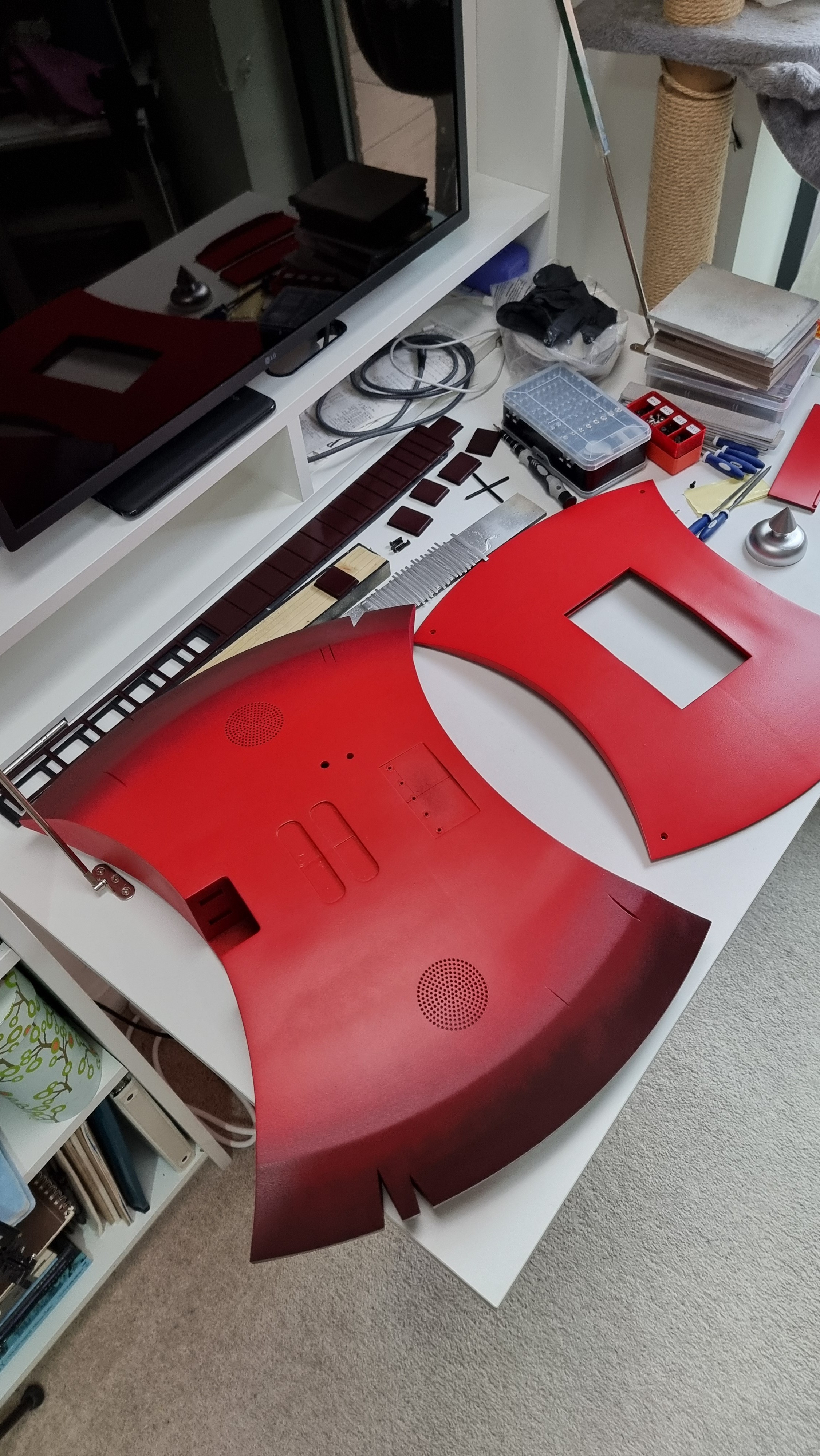
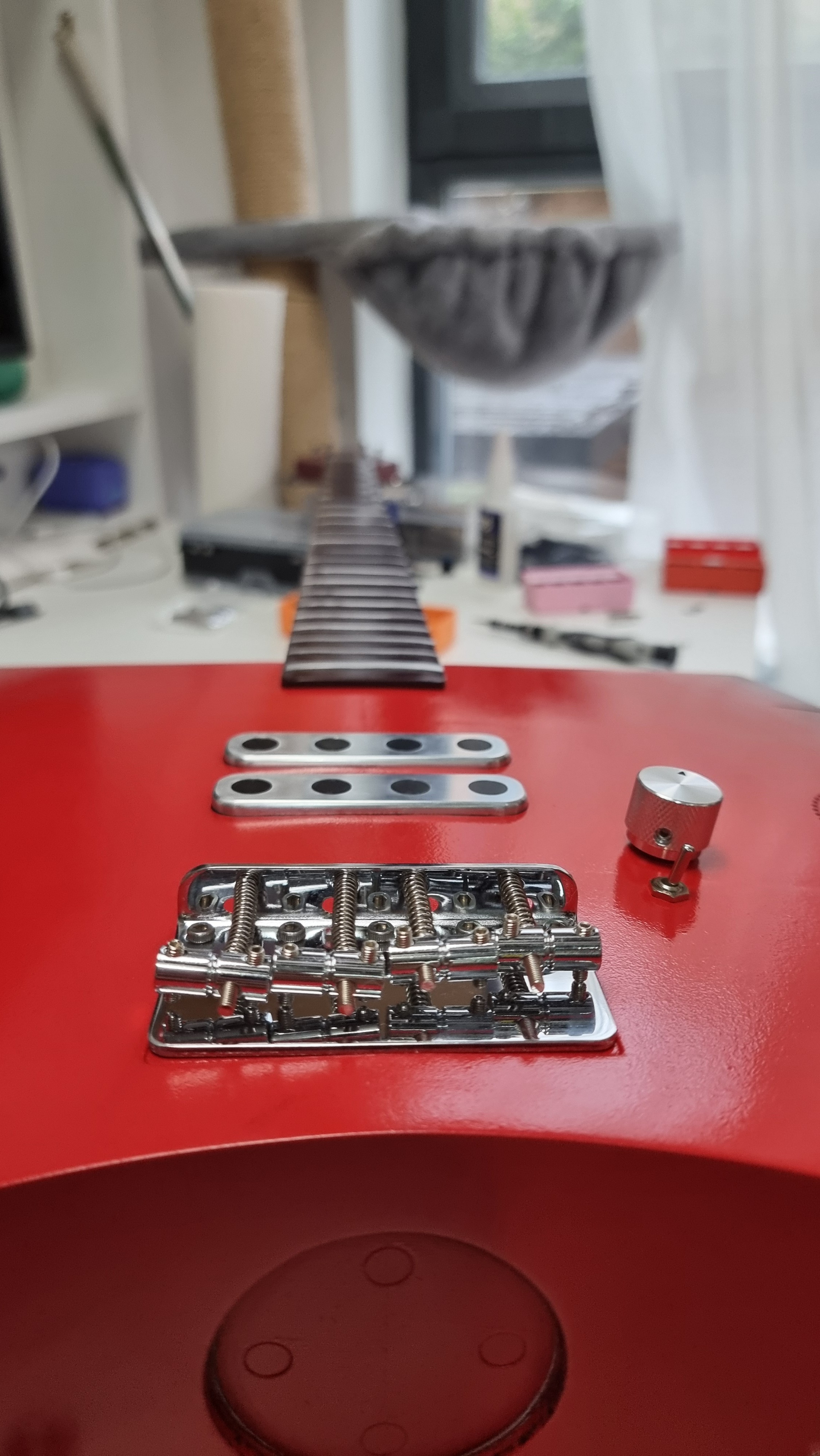
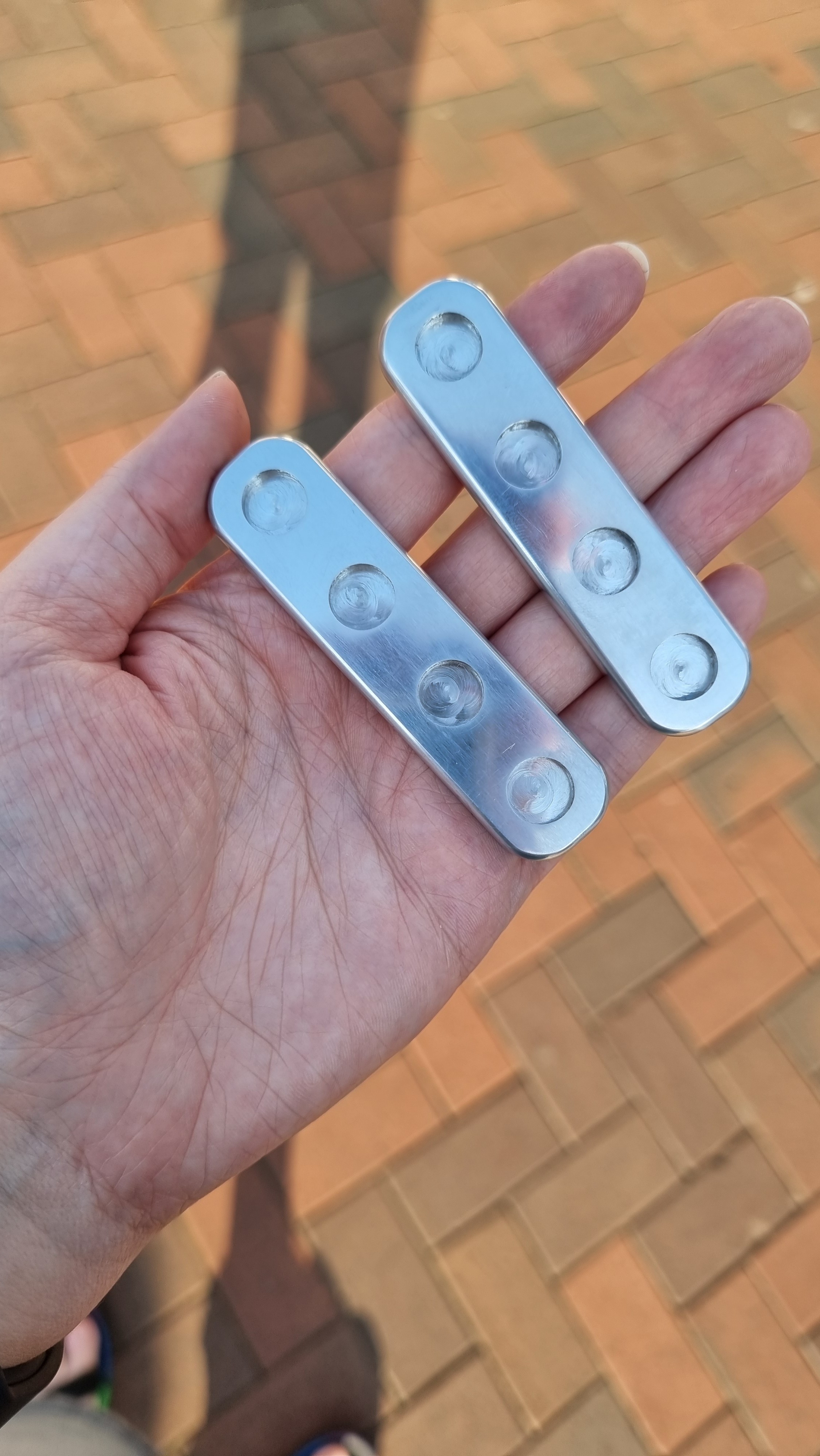
Parametric Modeling & Finishing: The massive body was designed from scratch in Autodesk Fusion 360. To solve the sliding panel issue, the mechanism went through intense CAD iteration to ensure it could be slotted together after the final paint job. The physical prop was FDM 3D printed, reinforced with threaded inserts, and finished to an impeccable standard. Combined with CNC-machined aluminum pickups and real bass guitar hardware, the final surface finish completely hides its 3D-printed origins, resulting in a piece that functions as both a standalone Bluetooth speaker and a flawless visual replica.
Modular Hardware Architecture: To solve the travel constraint without relying on fragile, manual wire harnesses, the neck was engineered to attach to the body using magnetic pogo pin connectors. This approach allows the neck (which houses the custom-wired tactile button matrix) to snap seamlessly into the body, recreating a perfect electrical connection to the Raspberry Pi's GPIO pins every single time.
Acoustic Design & Power Management: Early prototyping revealed that standard 5V USB speakers drew too much power, causing the Pi 5 to brown out at high volumes. To solve this, the audio architecture was overhauled using a 30W Dayton Audio dual-channel amplifier and a dedicated piggyback battery board. This isolated the audio power draw and vastly increased the volume. Custom speaker enclosures were CAD-modeled, lined with acoustic wadding, and sealed inside the Axe body to maximize resonance in crowded event spaces.
Parametric Modeling & Finishing: The massive body was designed from scratch in Autodesk Fusion 360. To solve the sliding panel issue, the mechanism went through intense CAD iteration to ensure it could be slotted together after the final paint job. The physical prop was FDM 3D printed, reinforced with threaded inserts, and finished to an impeccable standard. Combined with CNC-machined aluminum pickups and real bass guitar hardware, the final surface finish completely hides its 3D-printed origins, resulting in a piece that functions as both a standalone Bluetooth speaker and a flawless visual replica.
Additional Photos