Apocynum Chrysochys
Apocynum Chrysochys
A fine art jewelry wearable featuring a hidden thermal camera and mechatronic systems that respond in real time to human proximity.
A fine art jewelry wearable featuring a hidden thermal camera and mechatronic systems that respond in real time to human proximity.
Project Type
Wearable Technology & Interactive Hardware
Wearable Technology & Interactive Hardware
Key Skills
Parametric & Sculptural CAD, 3D Resin Printing, Lost-Wax Casting, Embedded Electronics, Micro-Mechatronics, Team Leadership
Parametric & Sculptural CAD, 3D Resin Printing, Lost-Wax Casting, Embedded Electronics, Micro-Mechatronics, Team Leadership
Primary Tools
Autodesk Fusion 360, ZBrush, Formlabs SLA Printers, Arduino IDE, Arduino Nano 33 BLE, IR Thermal Camera, Metal Gear Micro Servos, WS2812 (NeopIxel) LEDs, Specialty Casting and Flexible SLA resins
Autodesk Fusion 360, ZBrush, Formlabs SLA Printers, Arduino IDE, Arduino Nano 33 BLE, IR Thermal Camera, Metal Gear Micro Servos, WS2812 (NeopIxel) LEDs, Specialty Casting and Flexible SLA resins
Project Overview
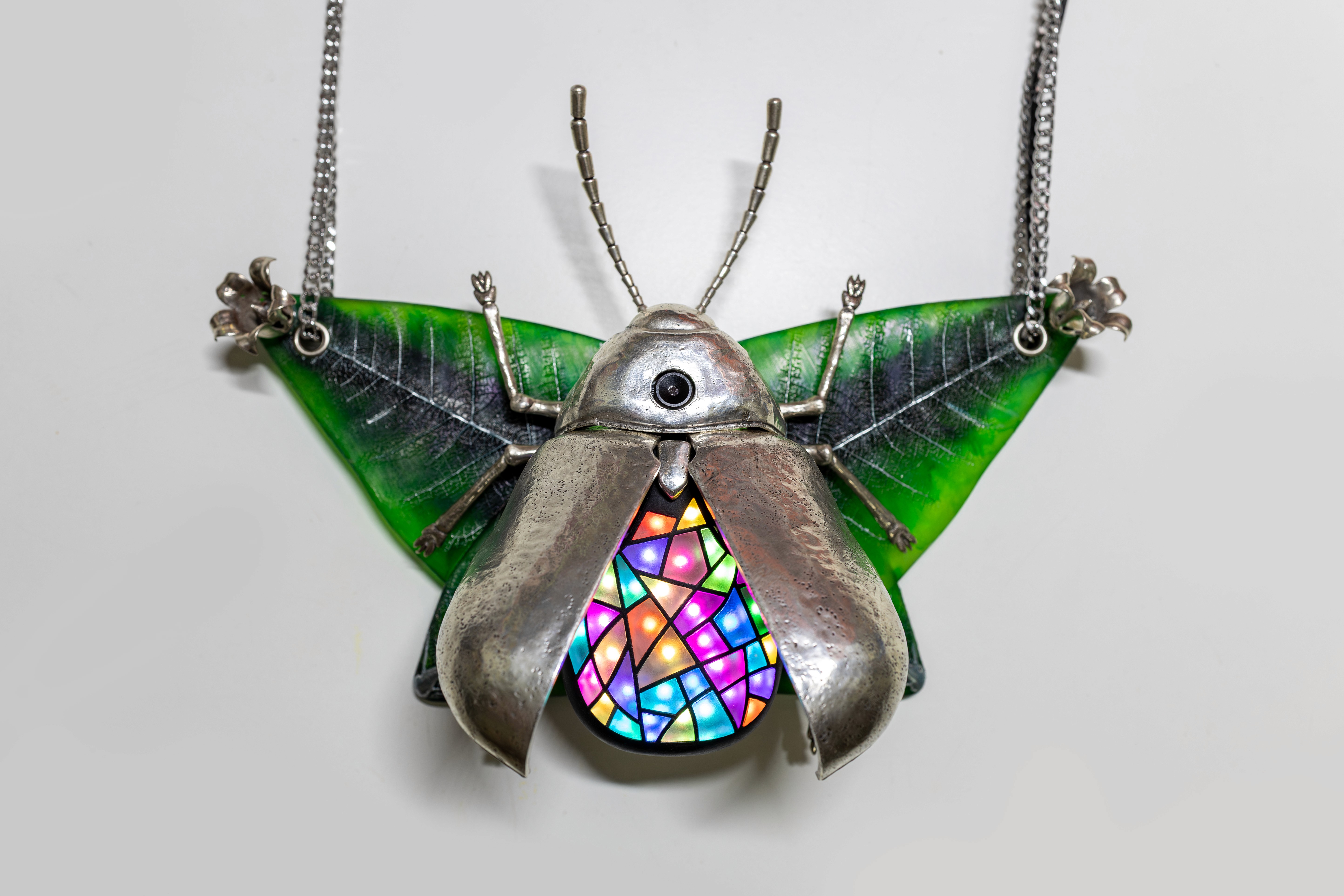
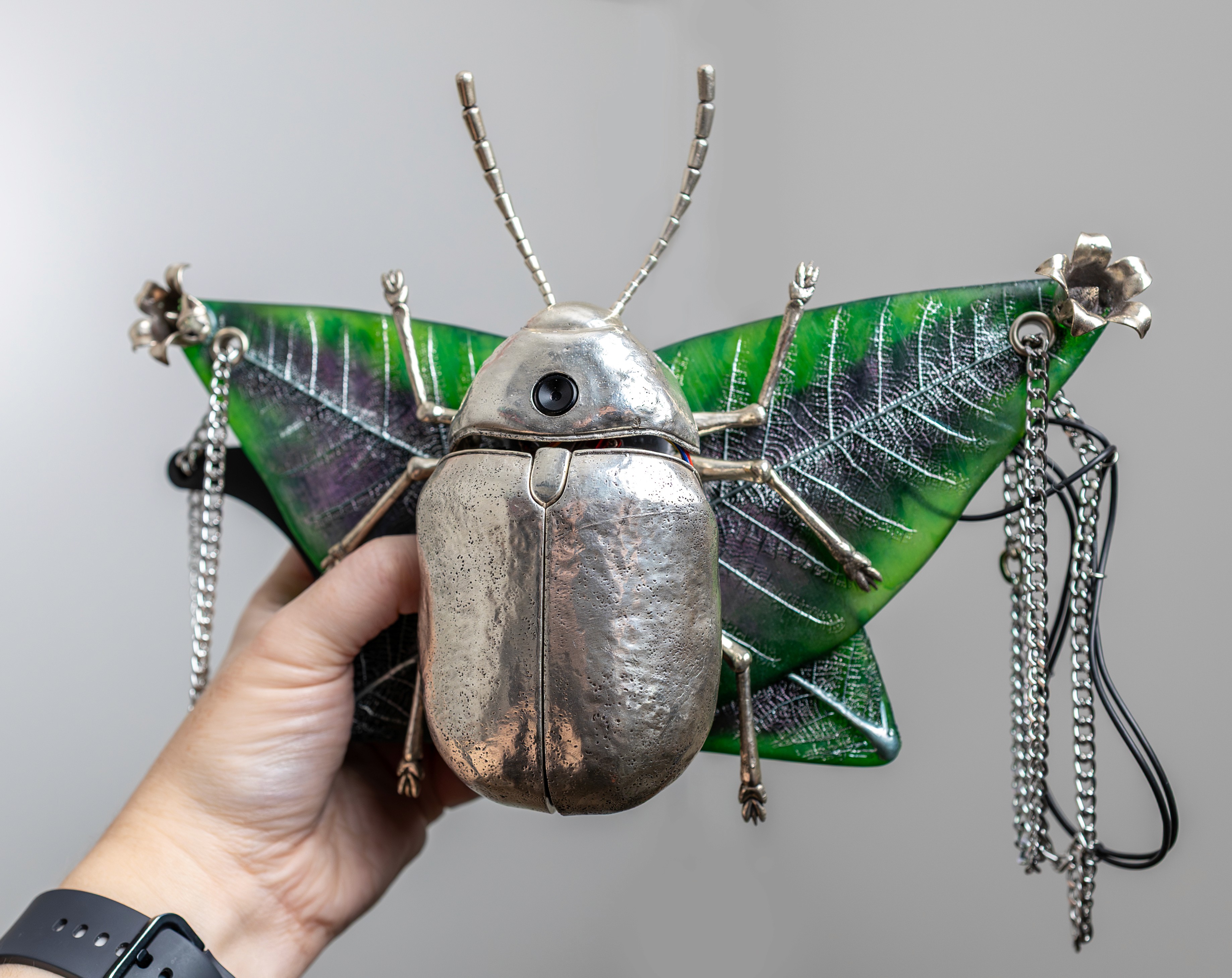
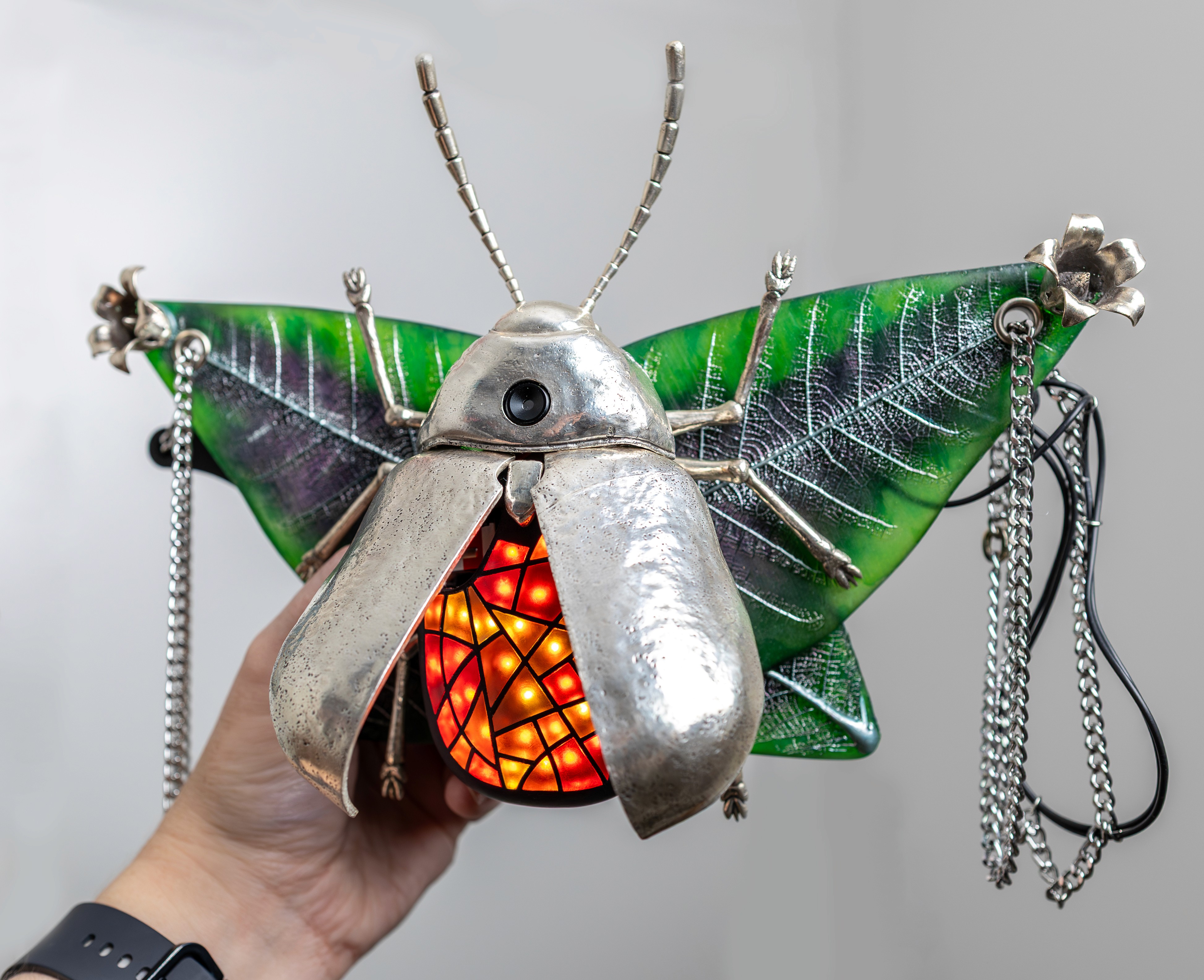
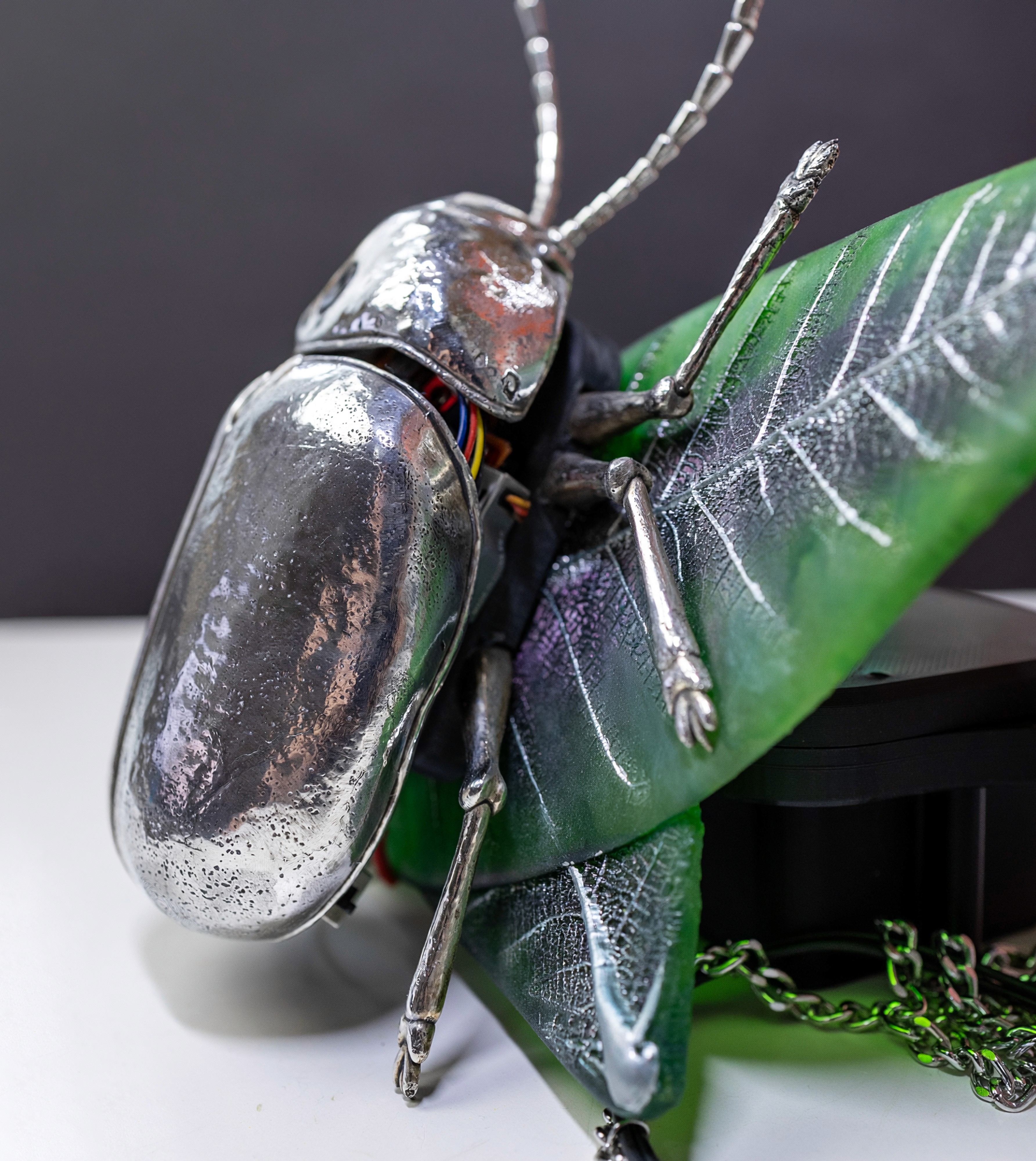
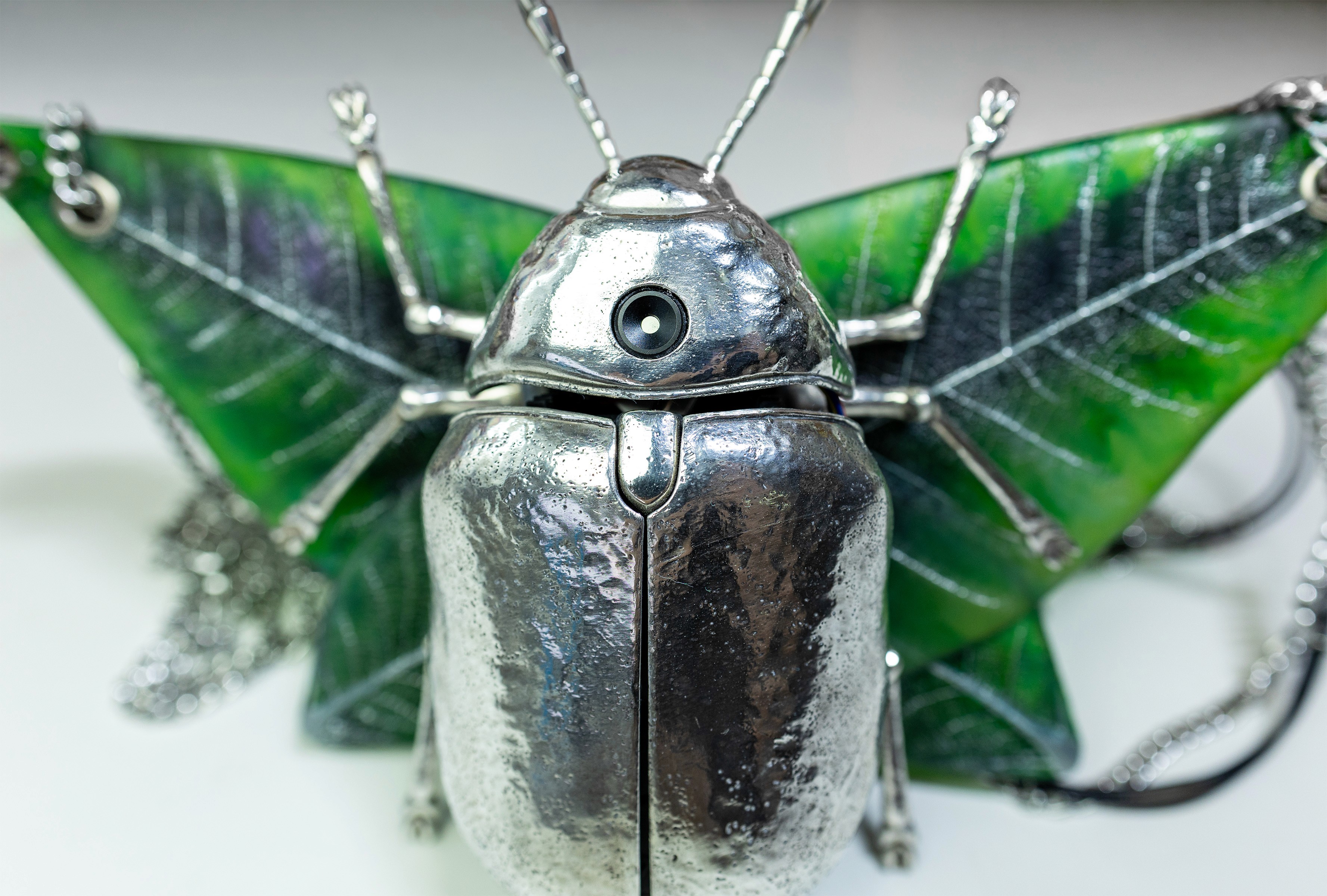
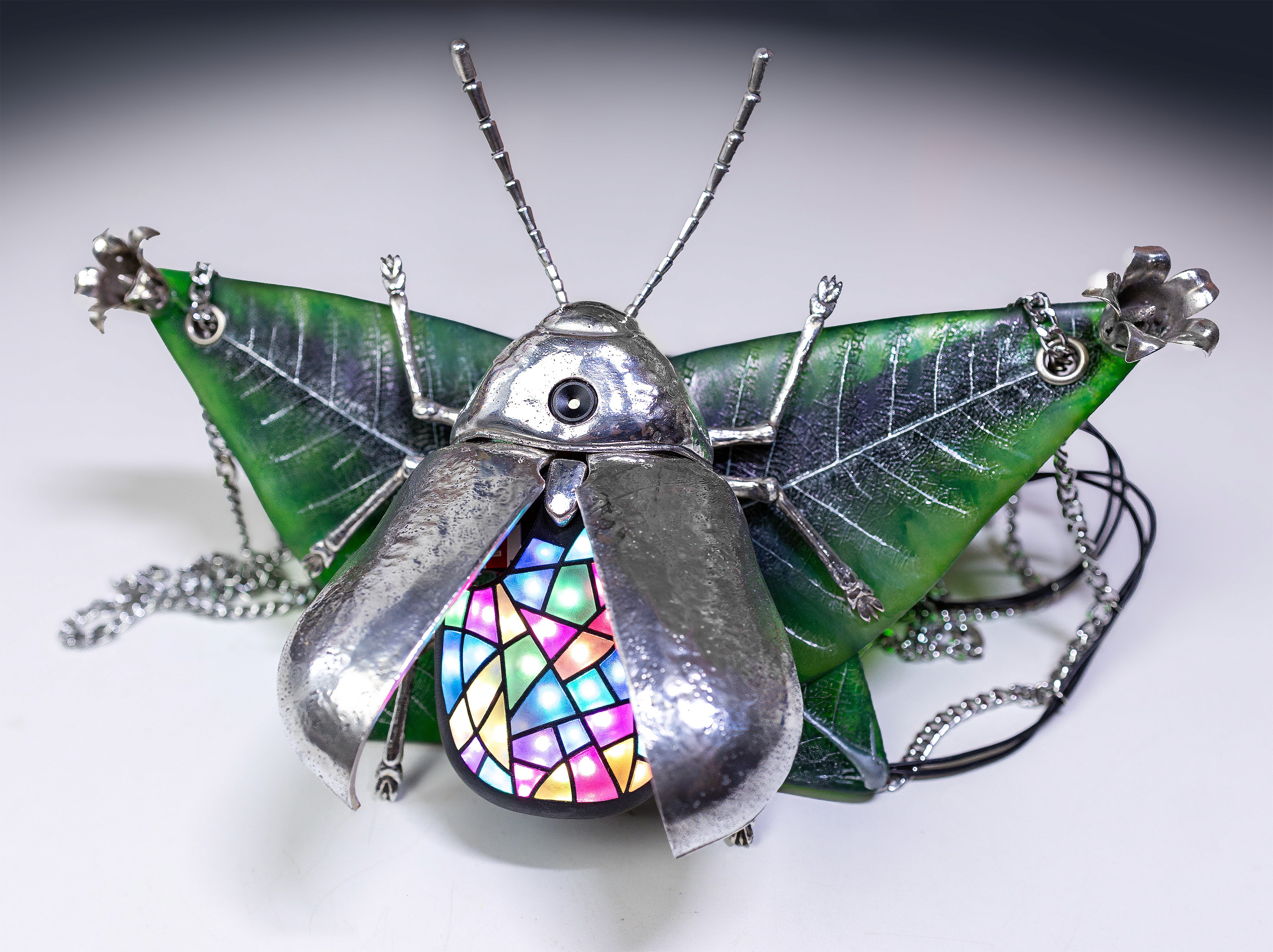
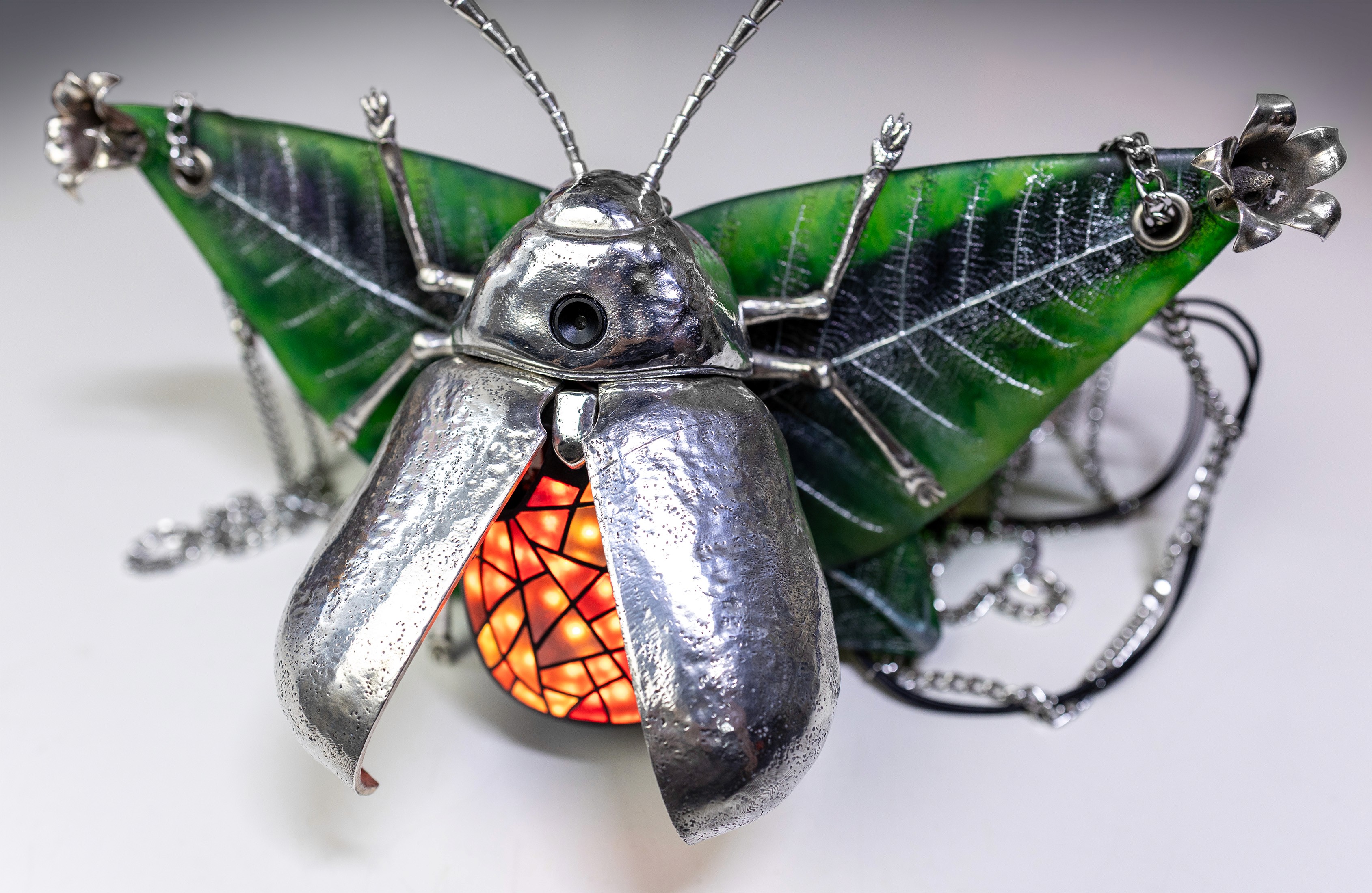
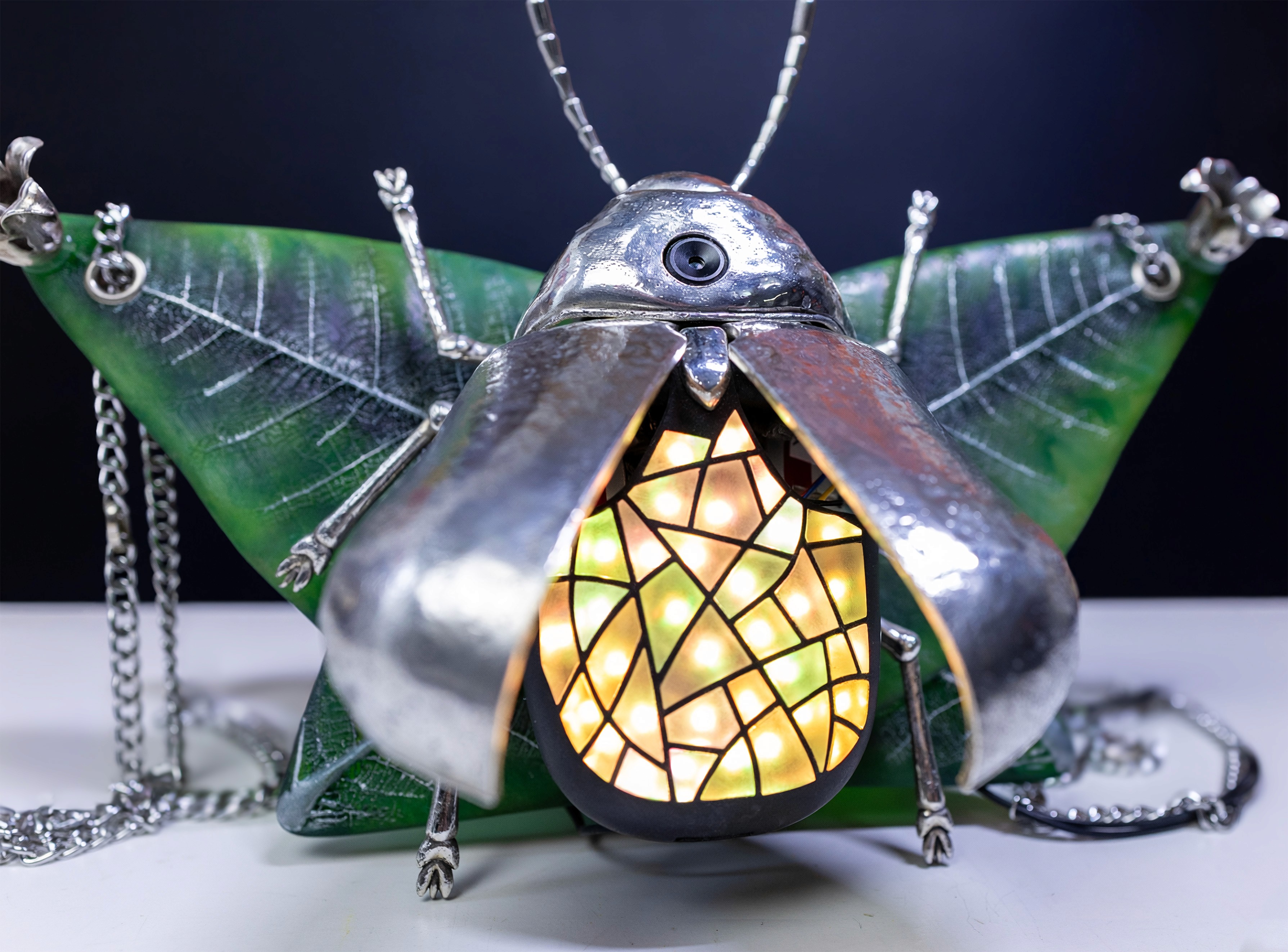
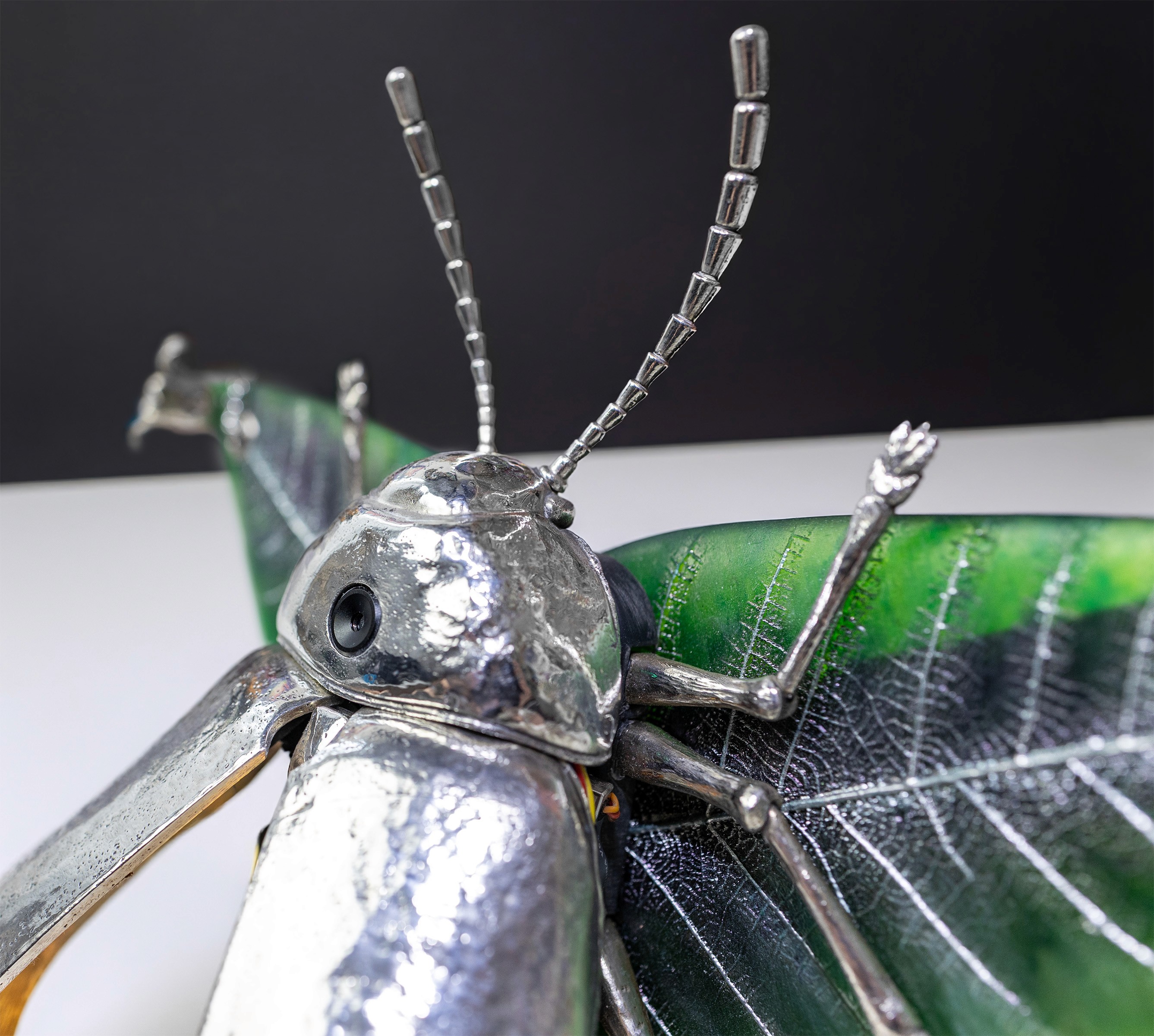
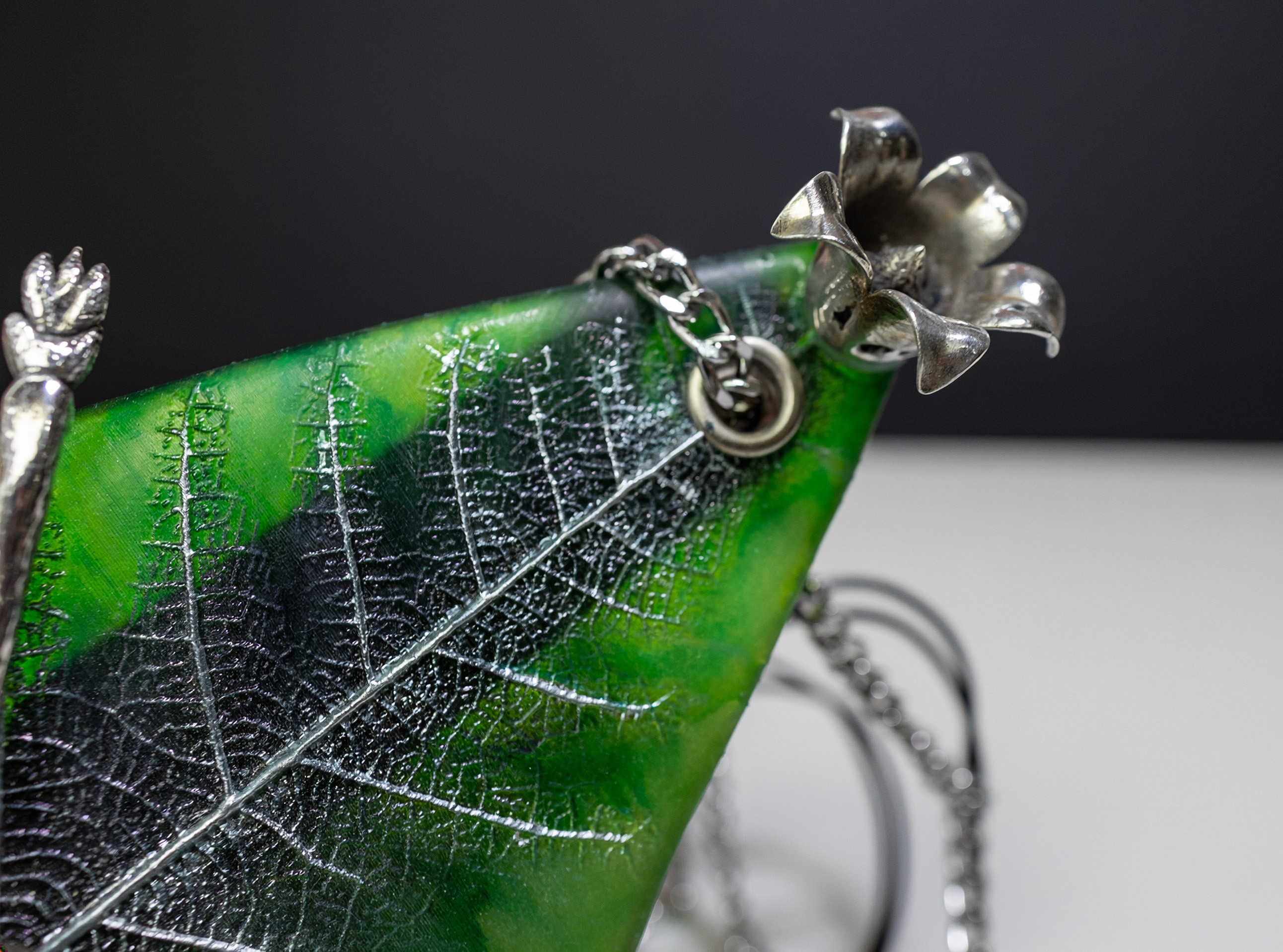
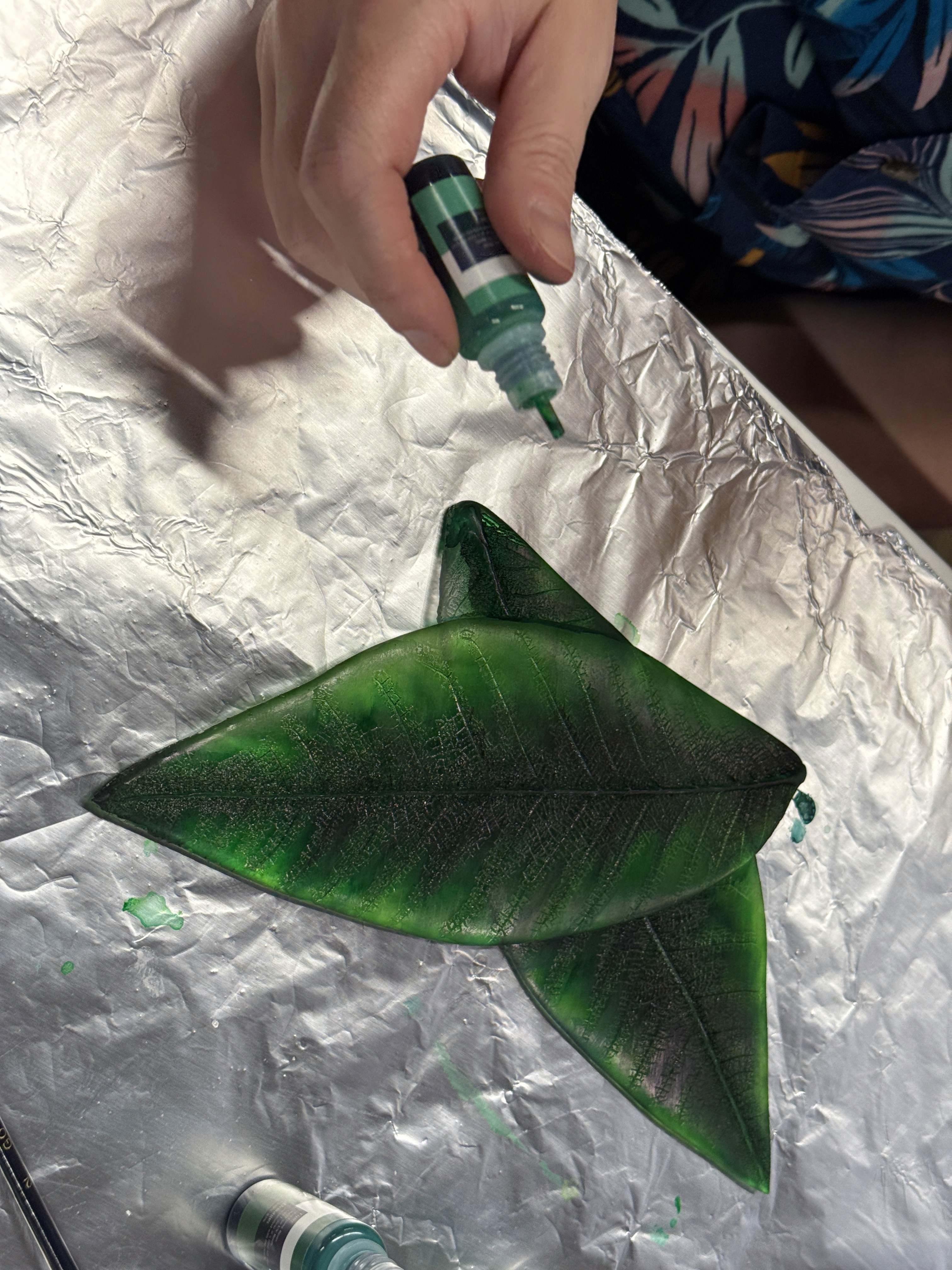
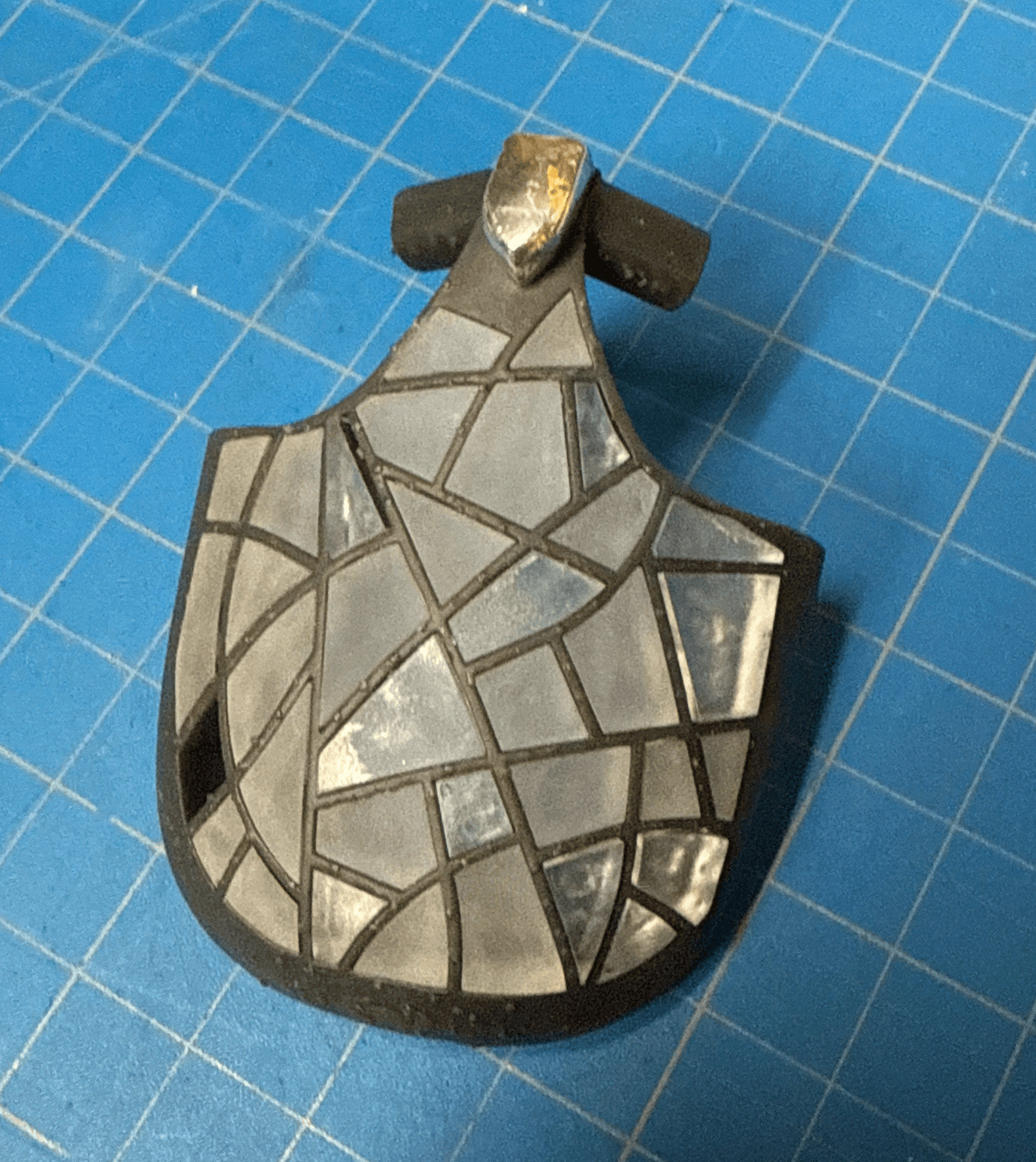
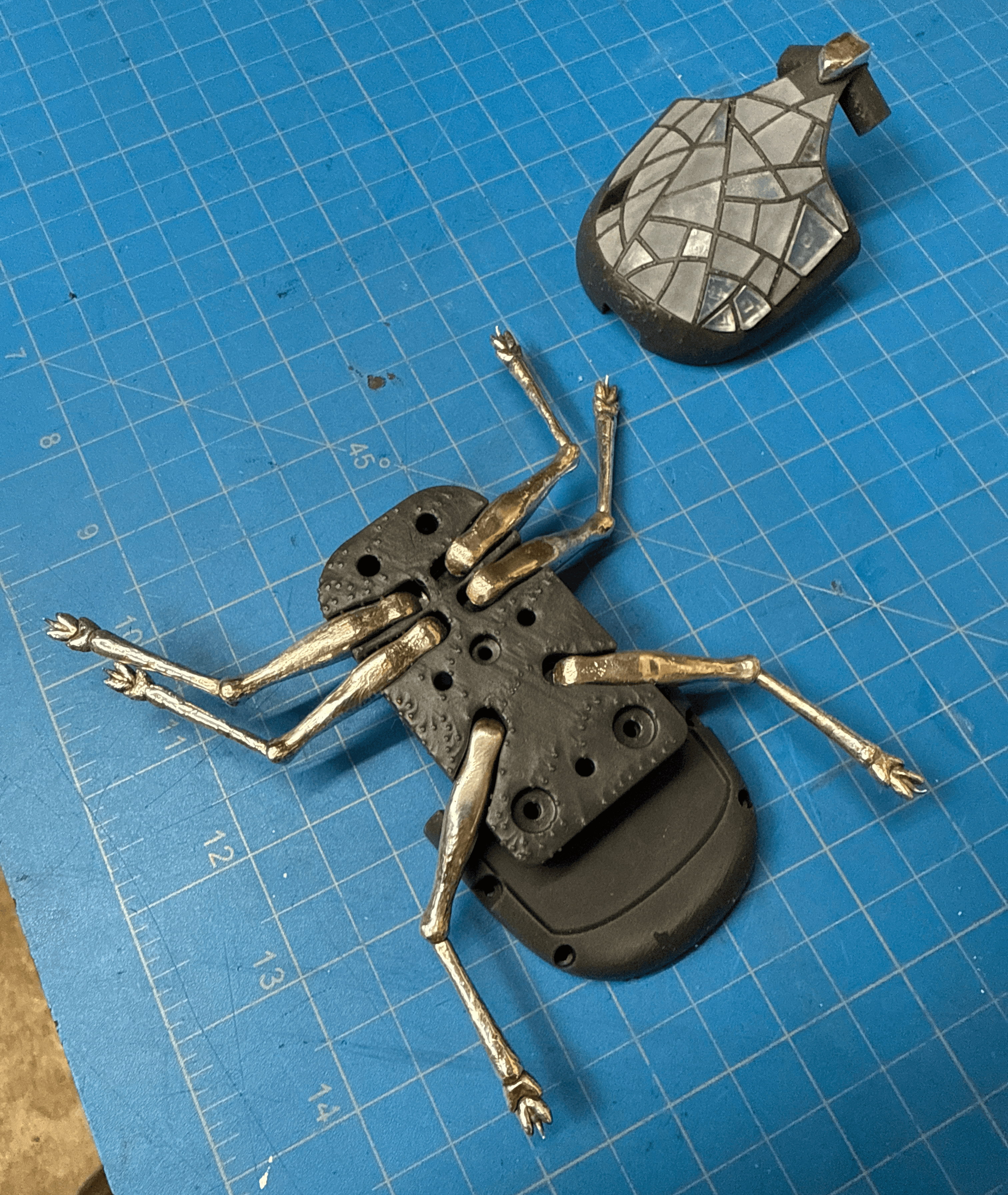
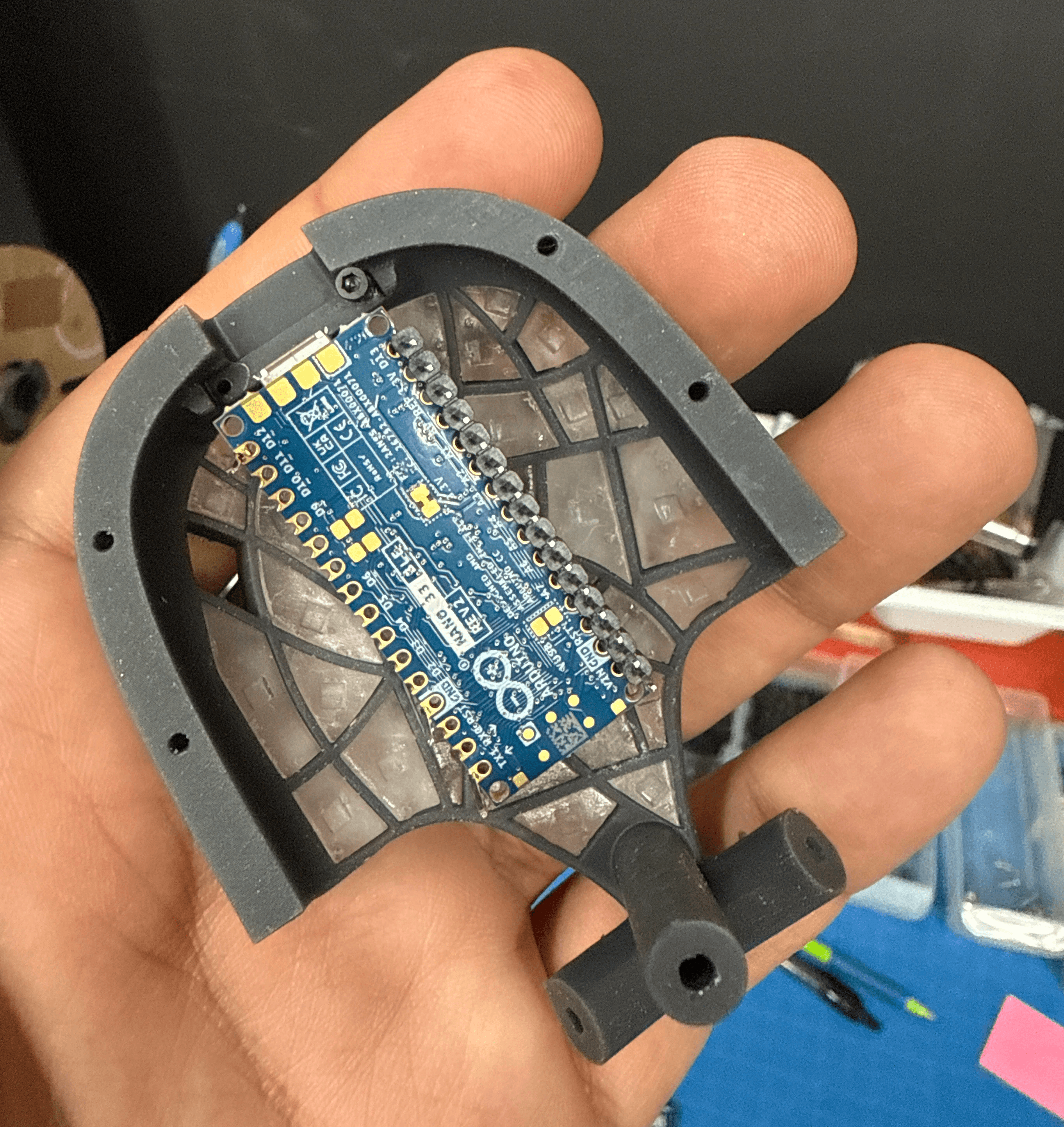
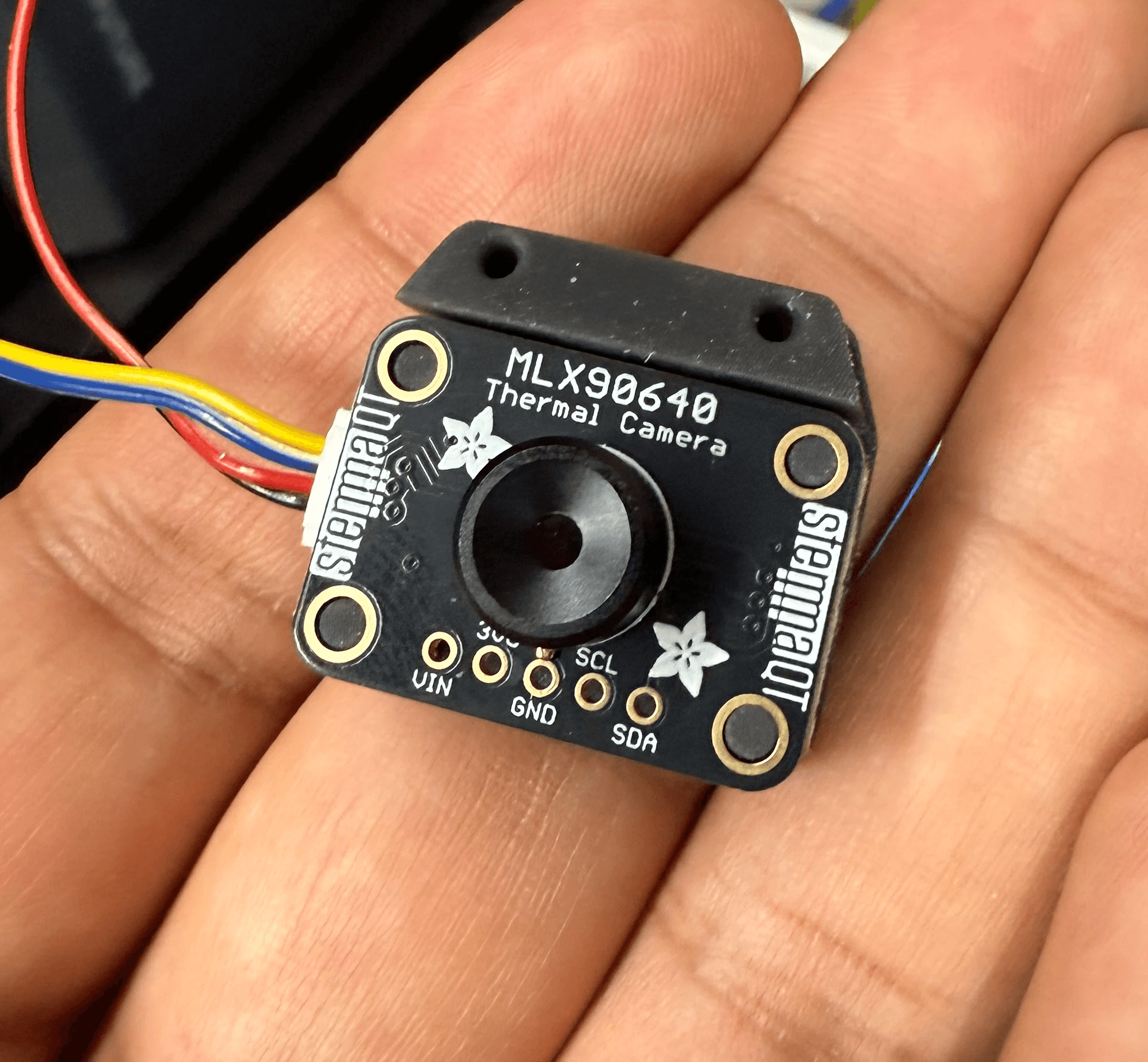
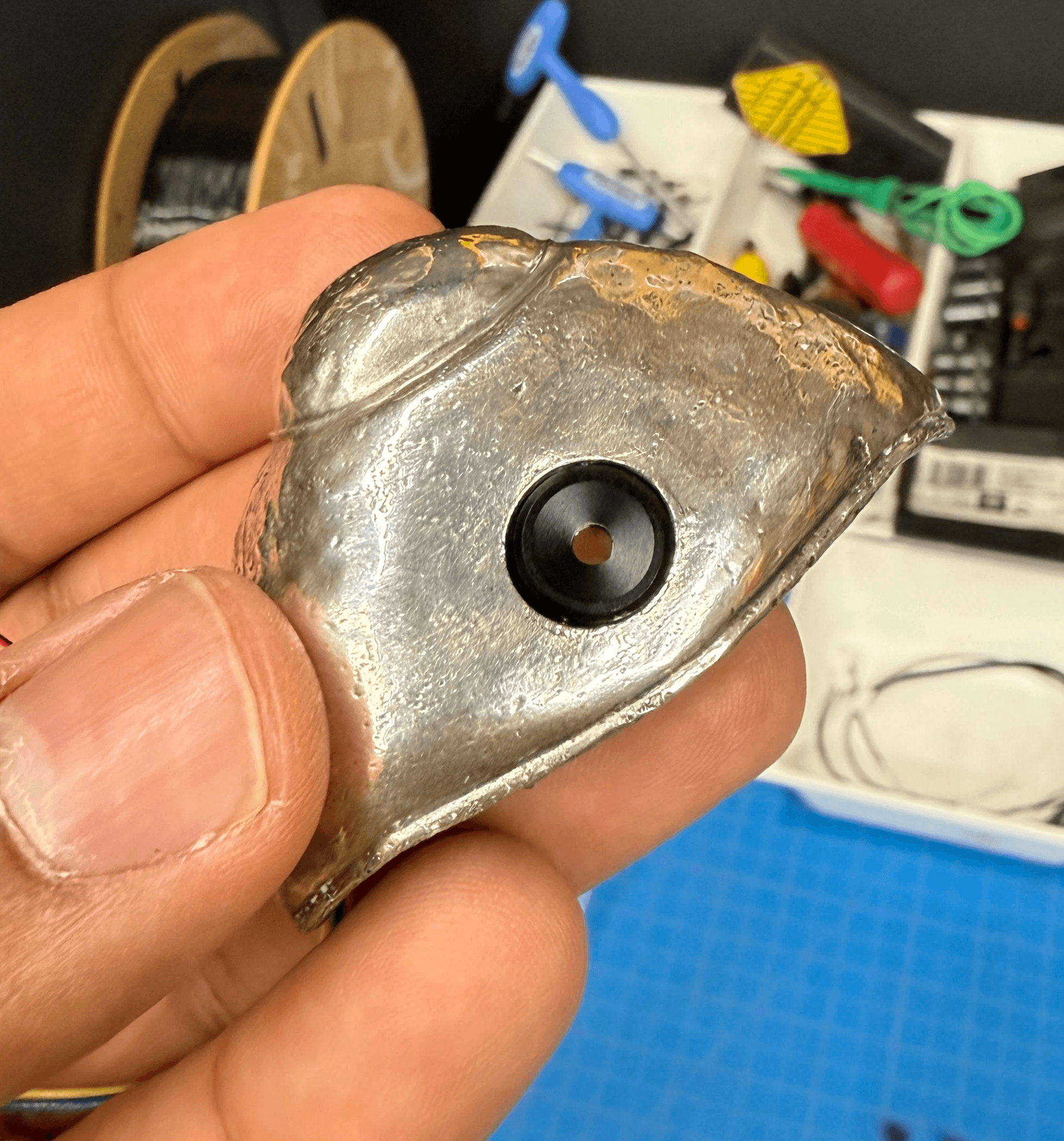
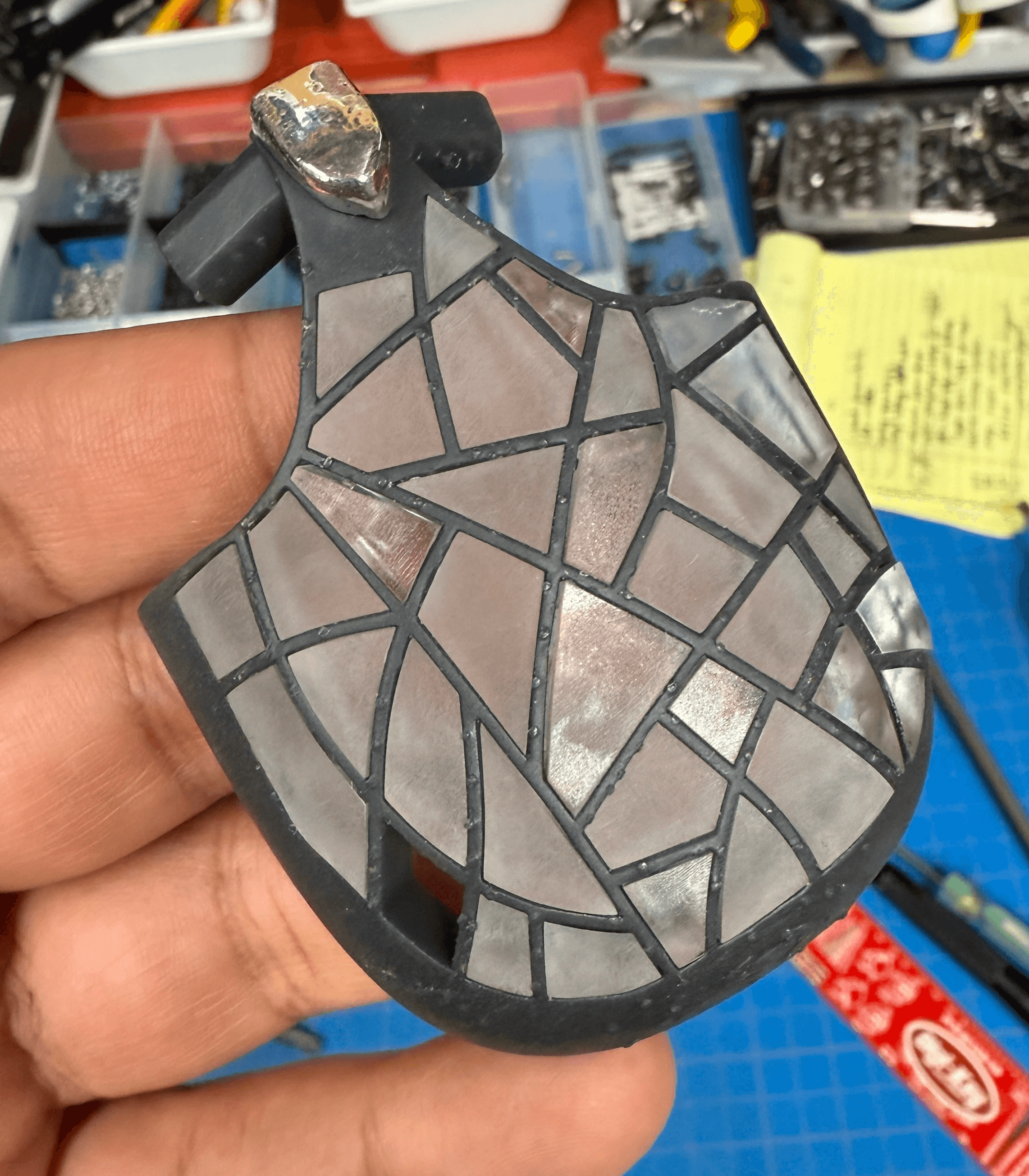
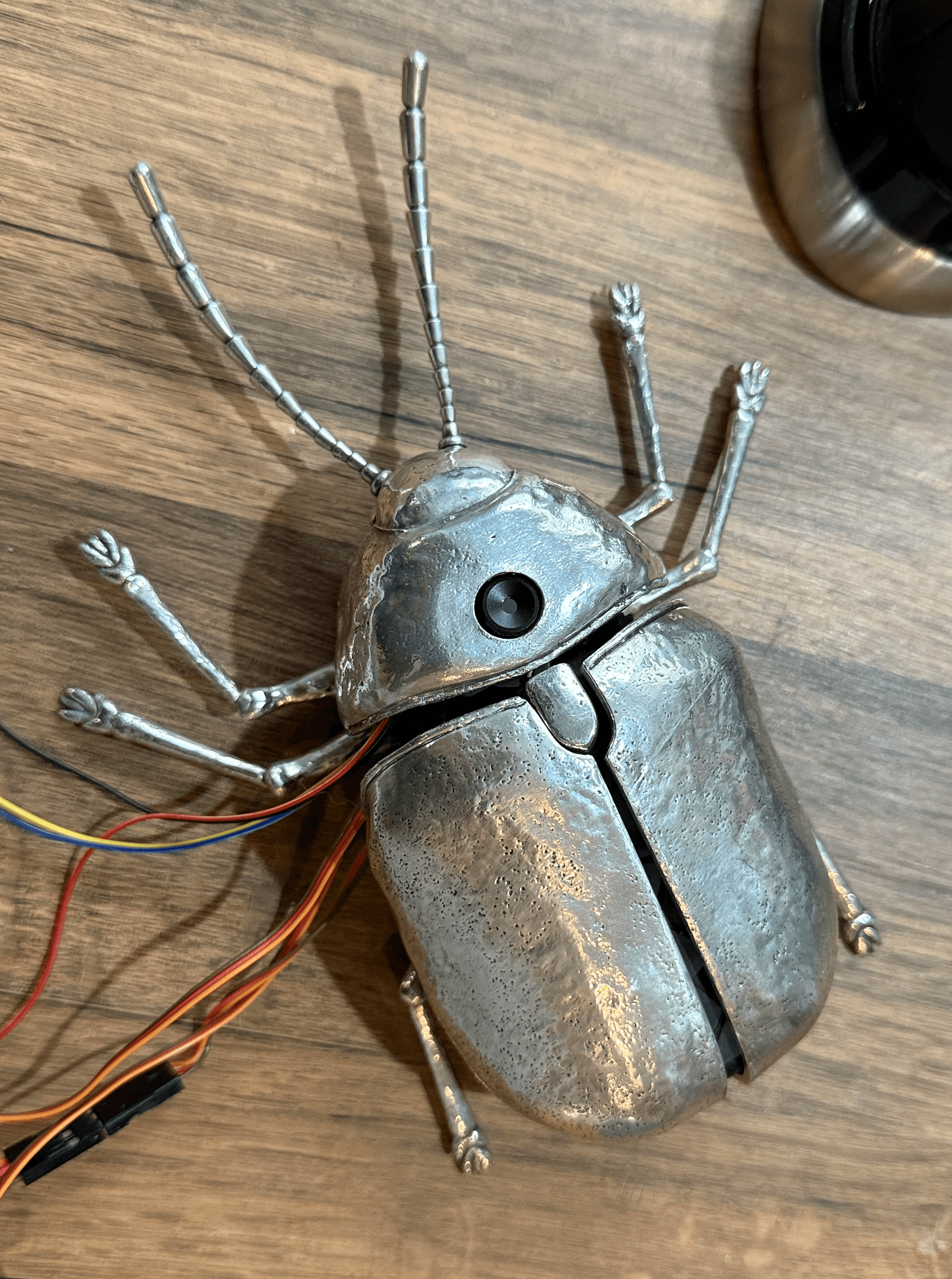
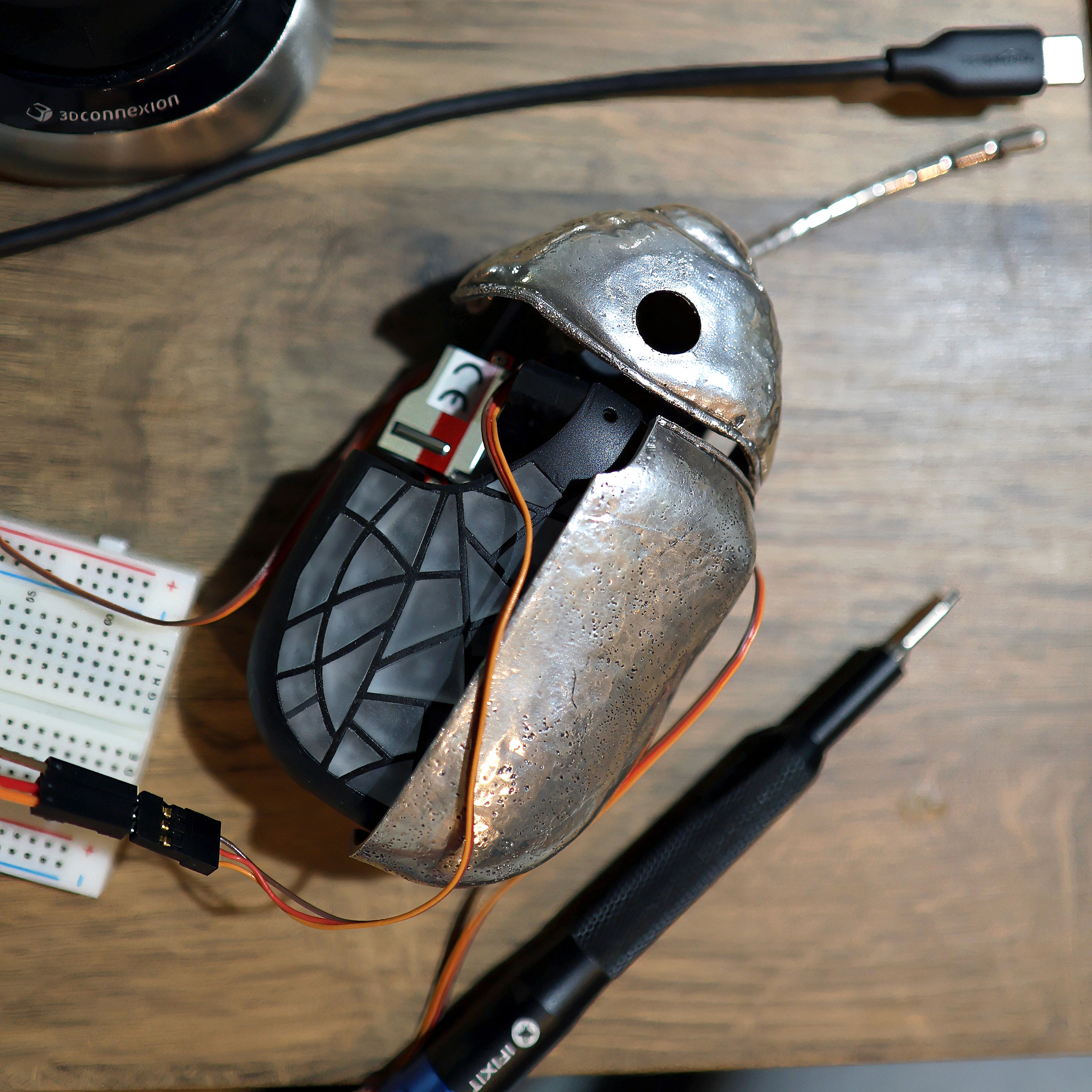
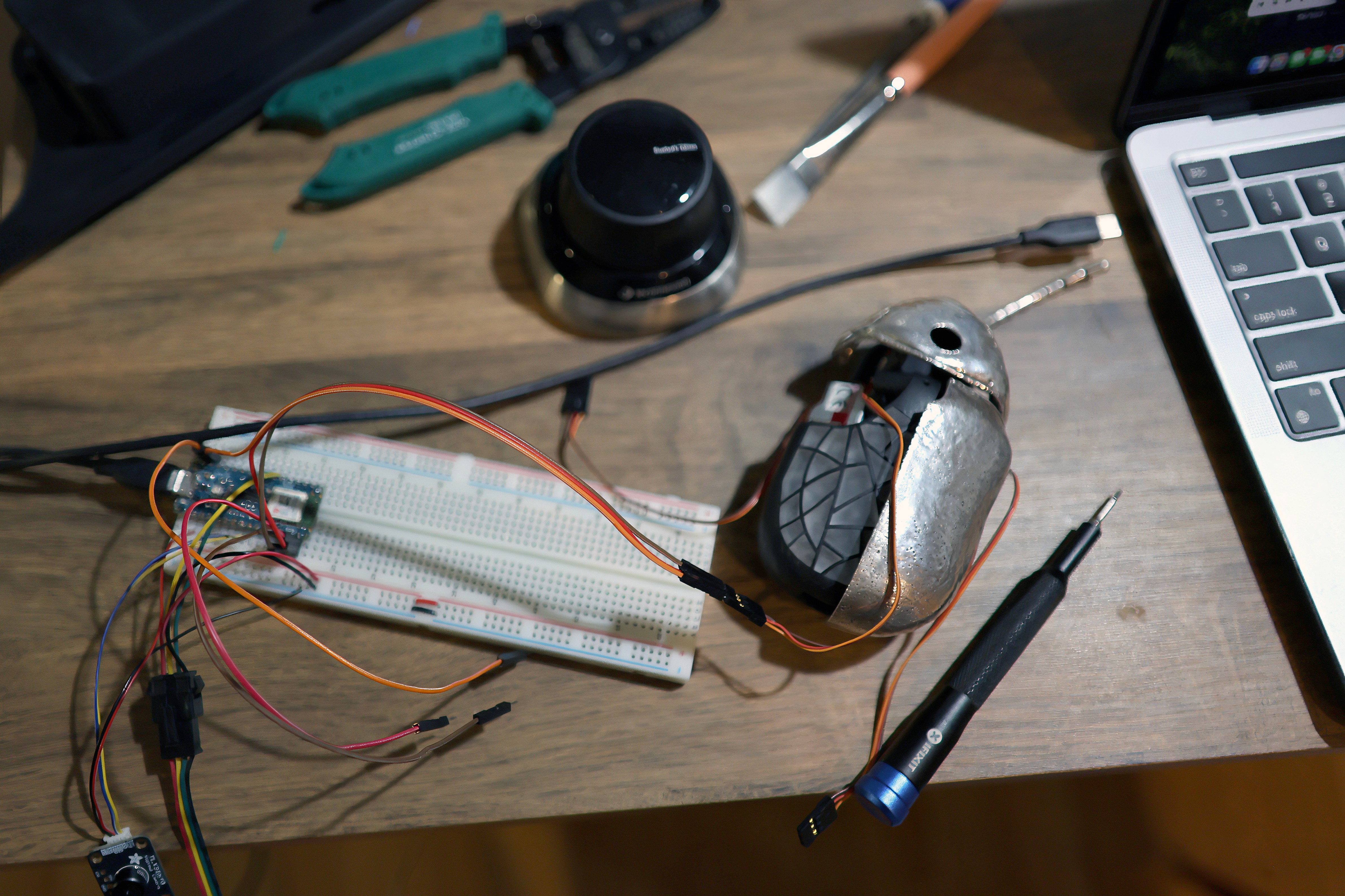
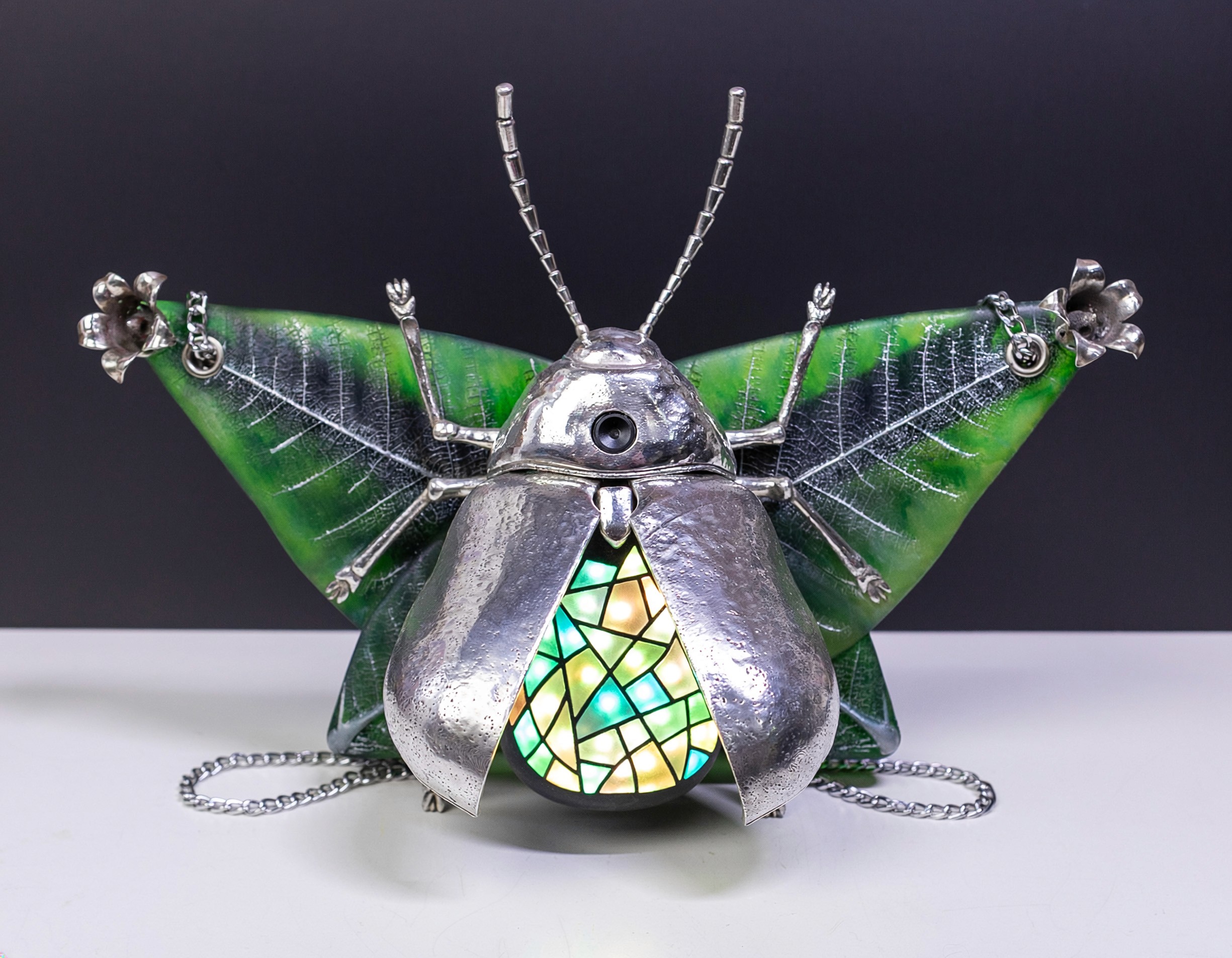
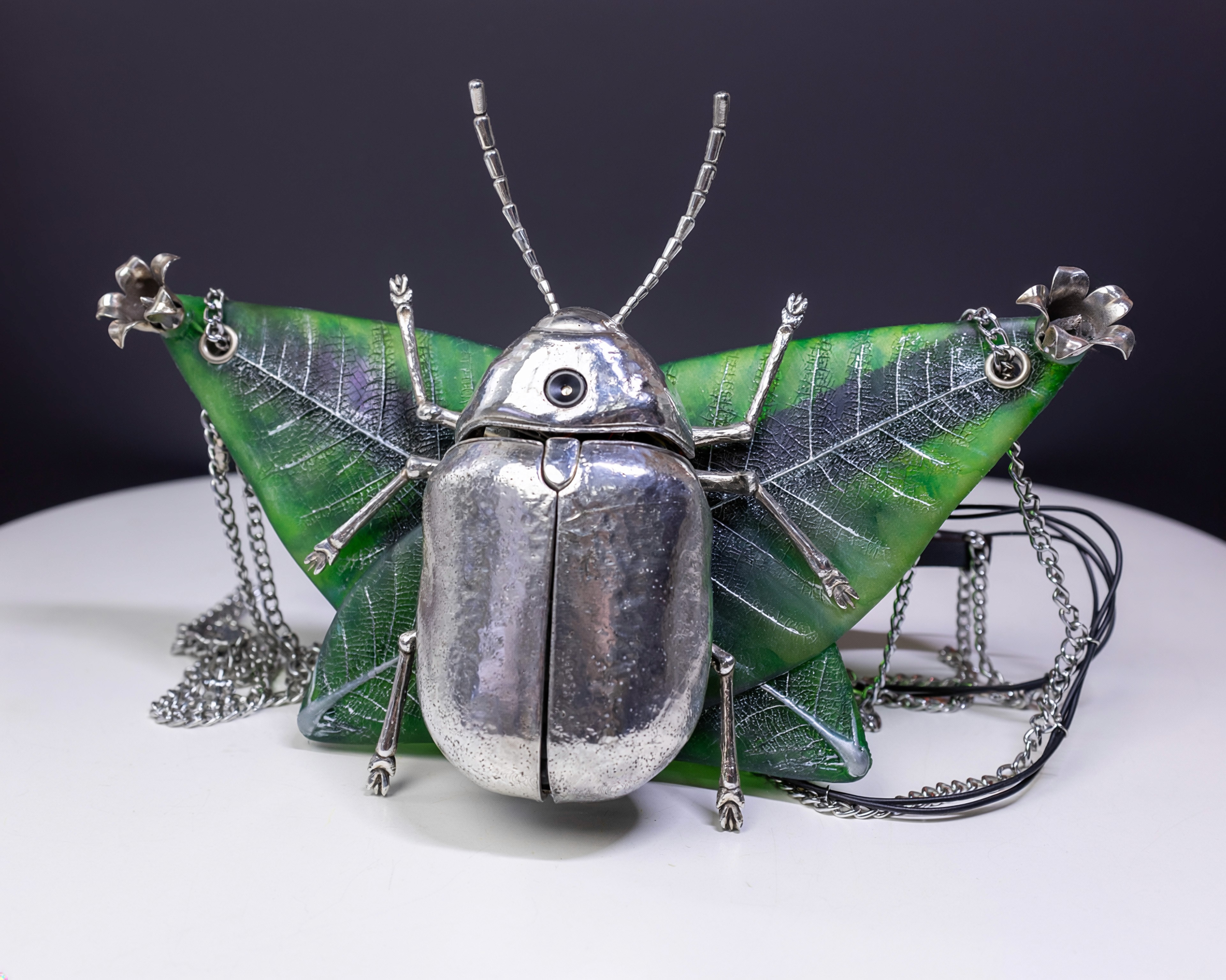
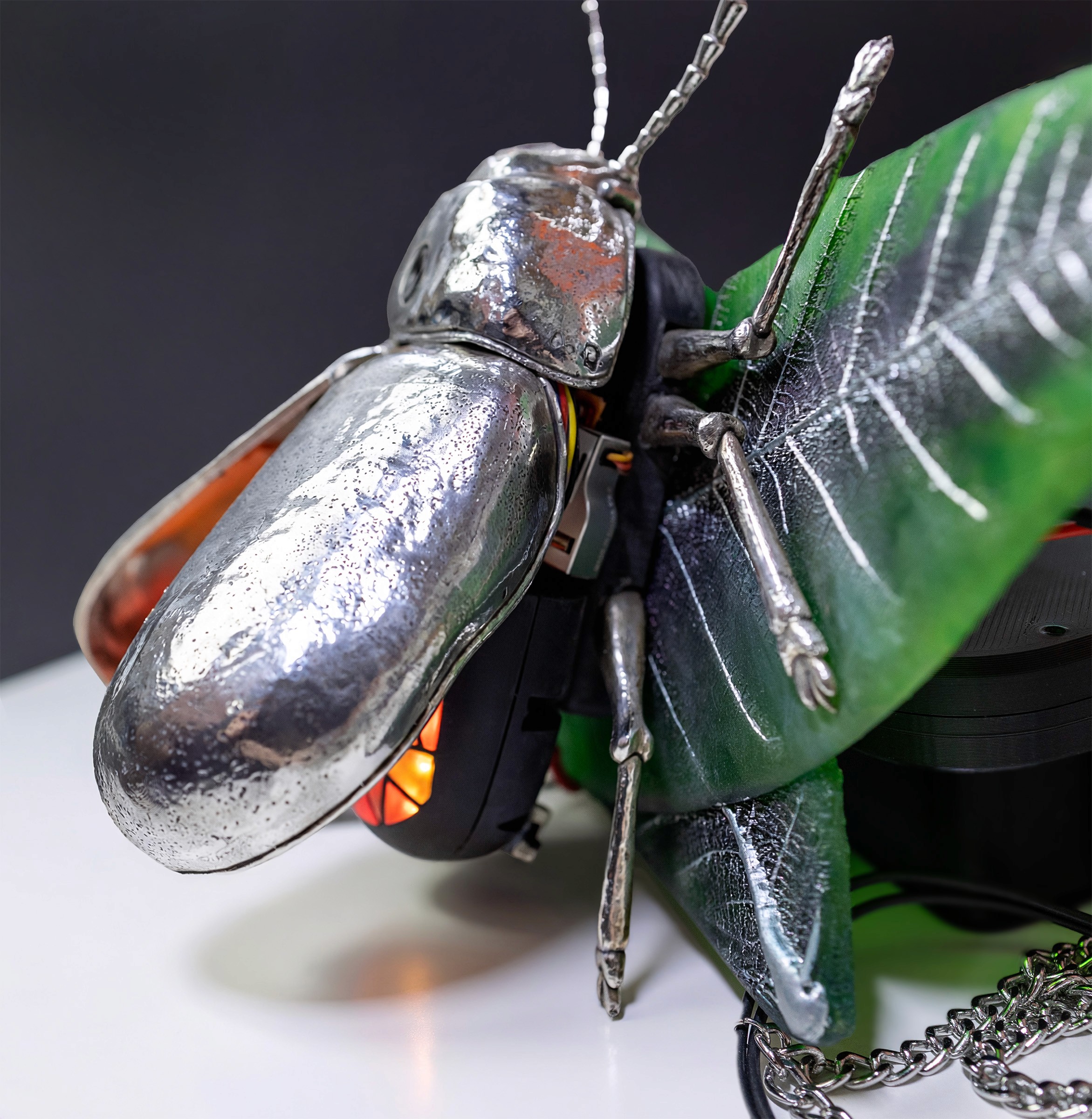
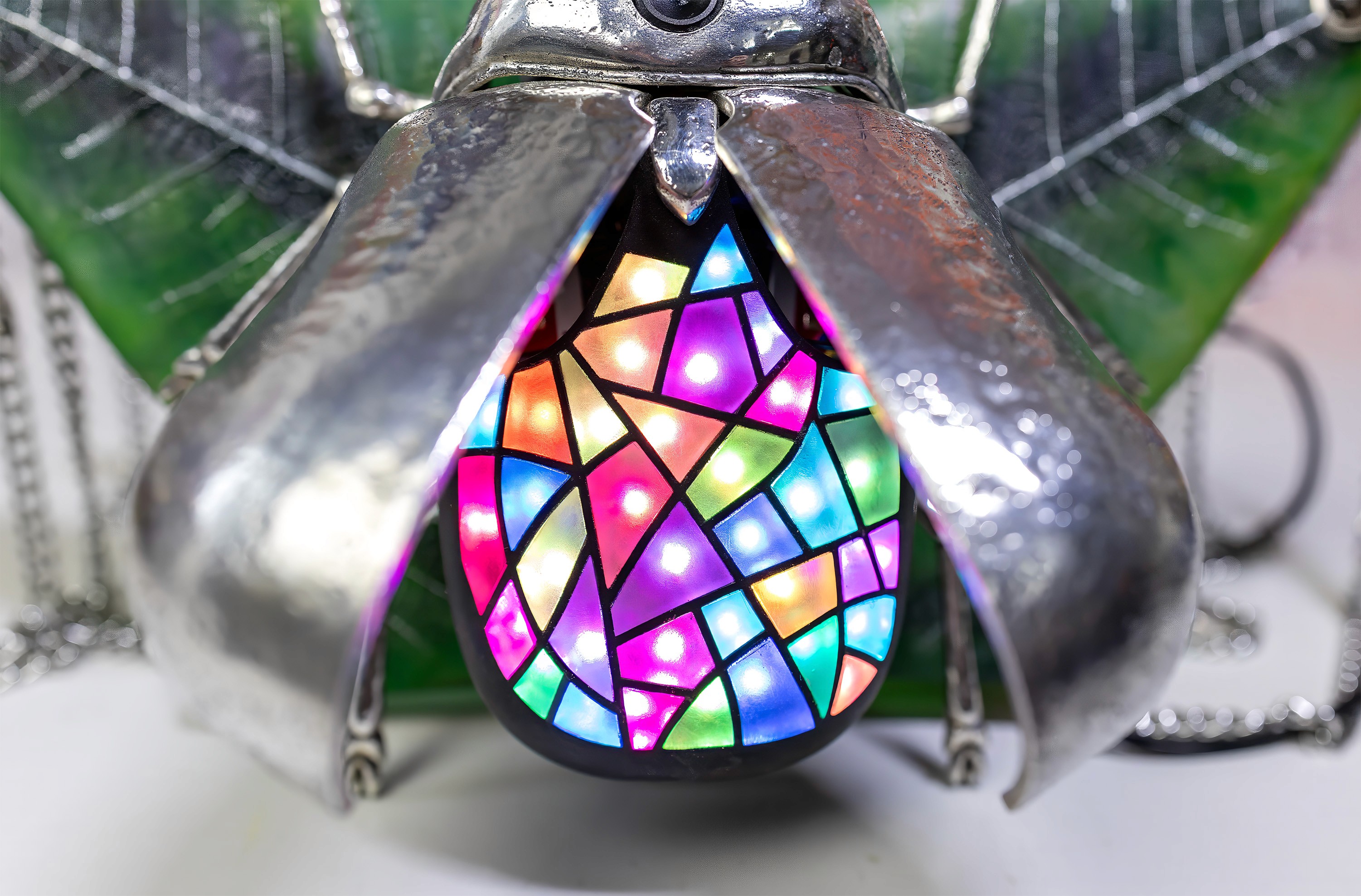
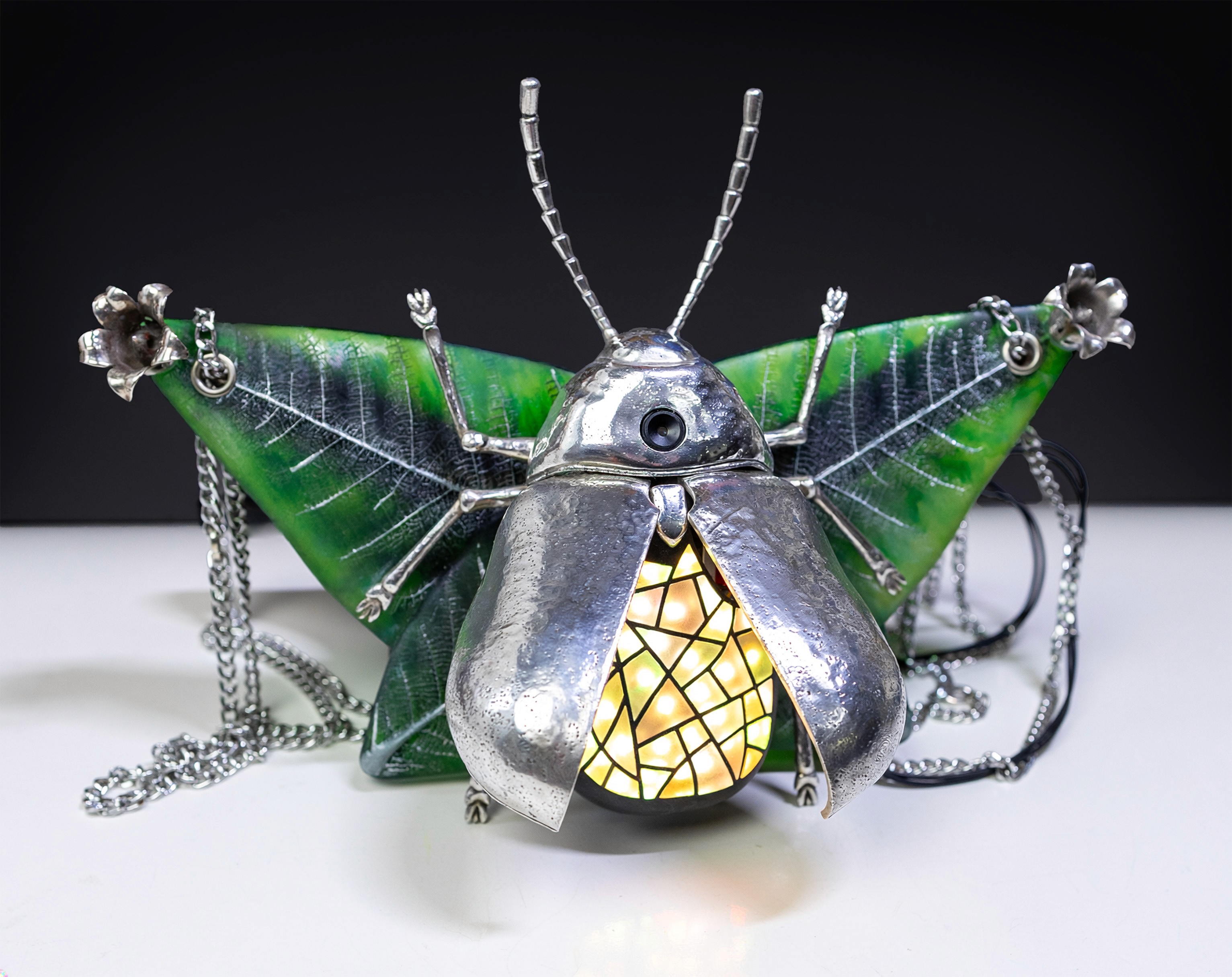
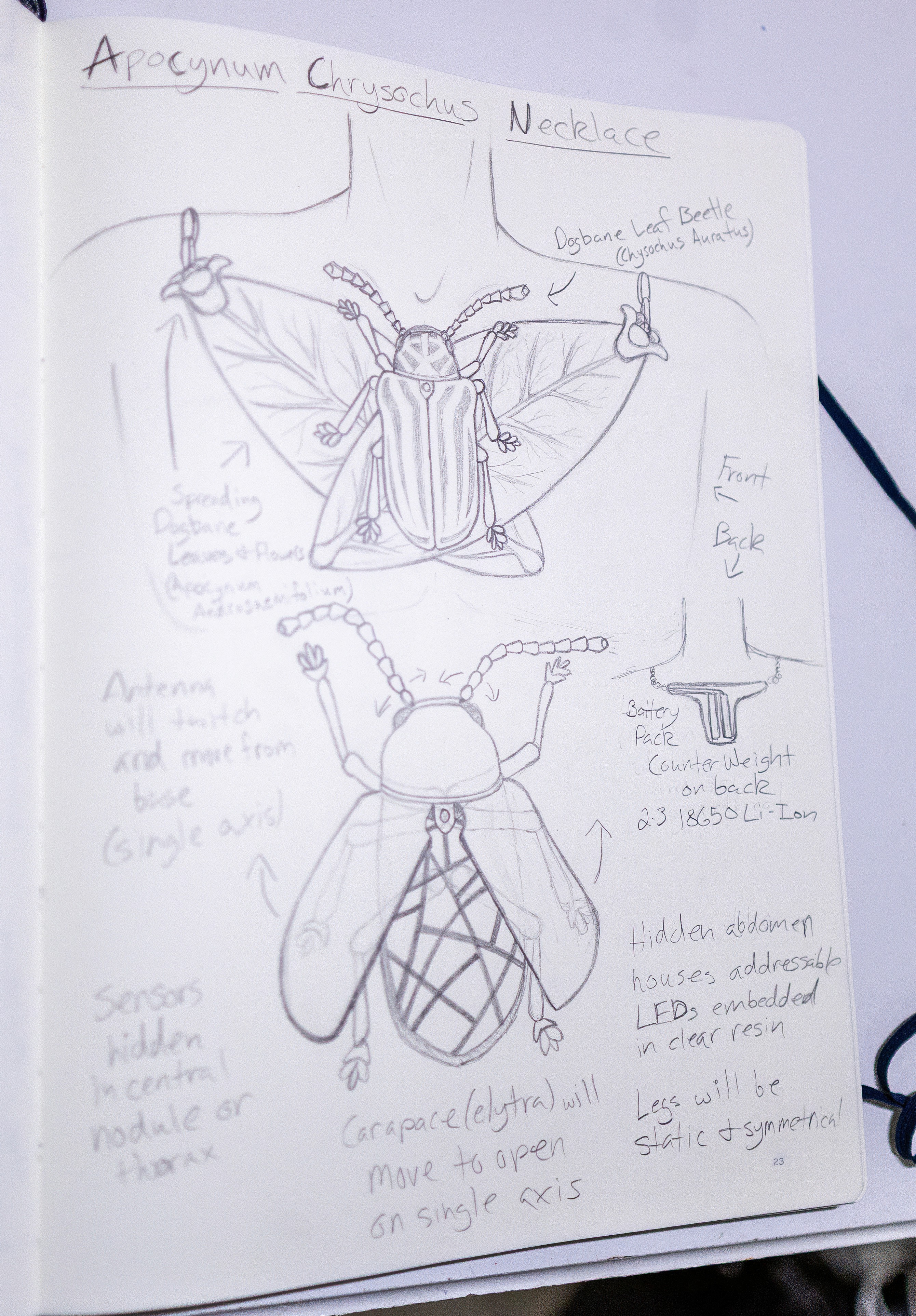
Built during the annual Formlabs Hackathon as a team-lead project, the Apocynum Chrysochys explores the intersection of fine jewelry and interactive robotics. Inspired by the Dogbane Leaf Beetle and the stained glass of La Sagrada Familia, the piece functions as a wearable proximity warning system for the wearer. Tucked inside the solid sterling silver thorax is a tiny wide angle IR thermal camera that works alongside custom code to determine distance from the wearer to other people. As someone gets closer, the embedded system triggers a mechatronic response: the silver elytra (outer shells) open, the antennae rotate and twitch with increasing speed, and the abdomen's LEDs shift from a colorful multi-color matrix through shades of yellow to an agitated, warning red.
Built during the annual Formlabs Hackathon as a team-lead project, the Apocynum Chrysochys explores the intersection of fine jewelry and interactive robotics. Inspired by the Dogbane Leaf Beetle and the stained glass of La Sagrada Familia, the piece functions as a wearable proximity warning system for the wearer. Tucked inside the solid sterling silver thorax is a tiny wide angle IR thermal camera that works alongside custom code to determine distance from the wearer to other people. As someone gets closer, the embedded system triggers a mechatronic response: the silver elytra (outer shells) open, the antennae rotate and twitch with increasing speed, and the abdomen's LEDs shift from a colorful multi-color matrix through shades of yellow to an agitated, warning red.
The Challenges
High-Stakes Fabrication Timeline: Because the build took place during a single weekend long hackathon in Boston, the lost-wax casting of the external shell had to be executed perfectly on the first try, leaving very little room for error during the delicate burnout and casting phases.
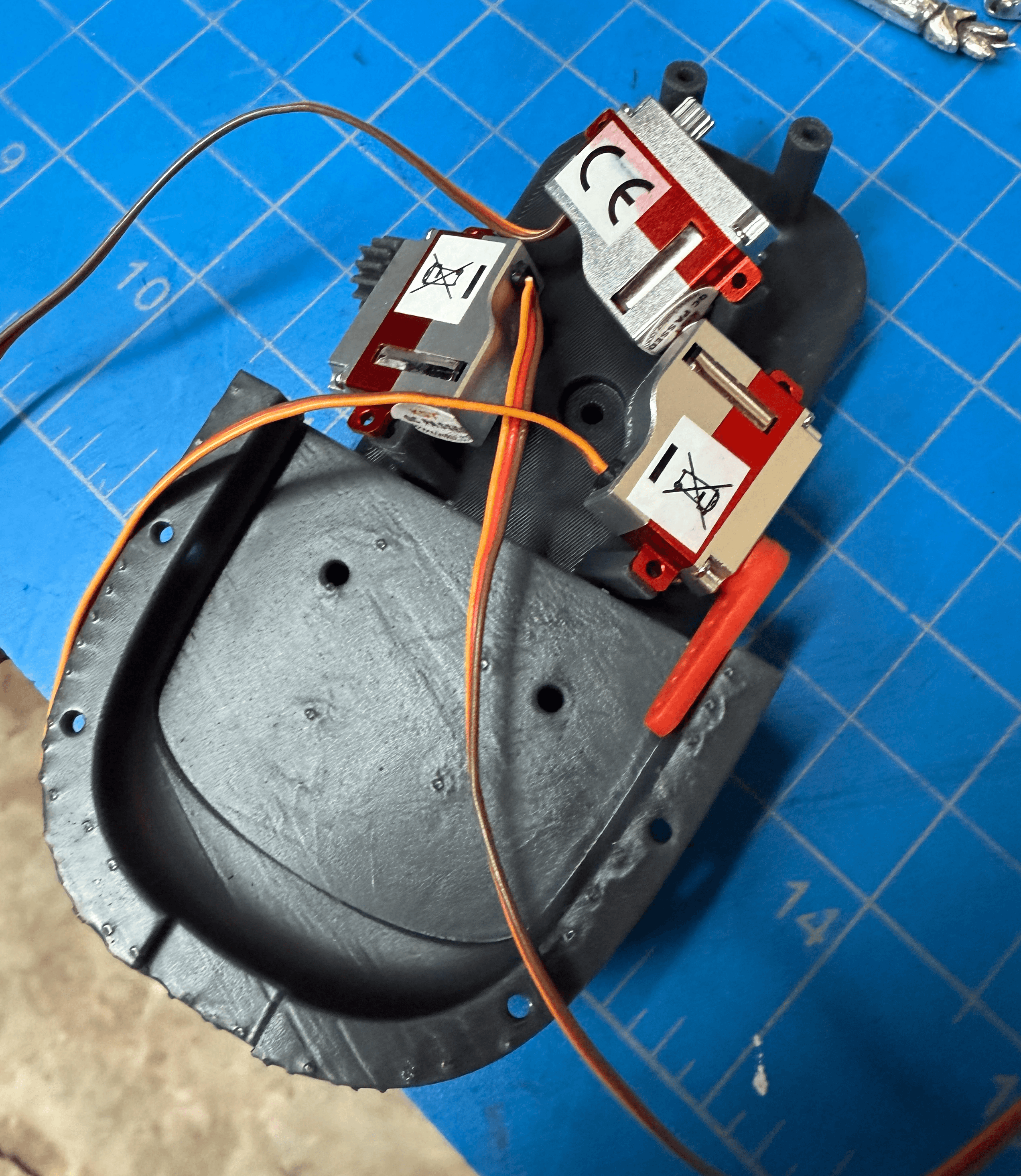
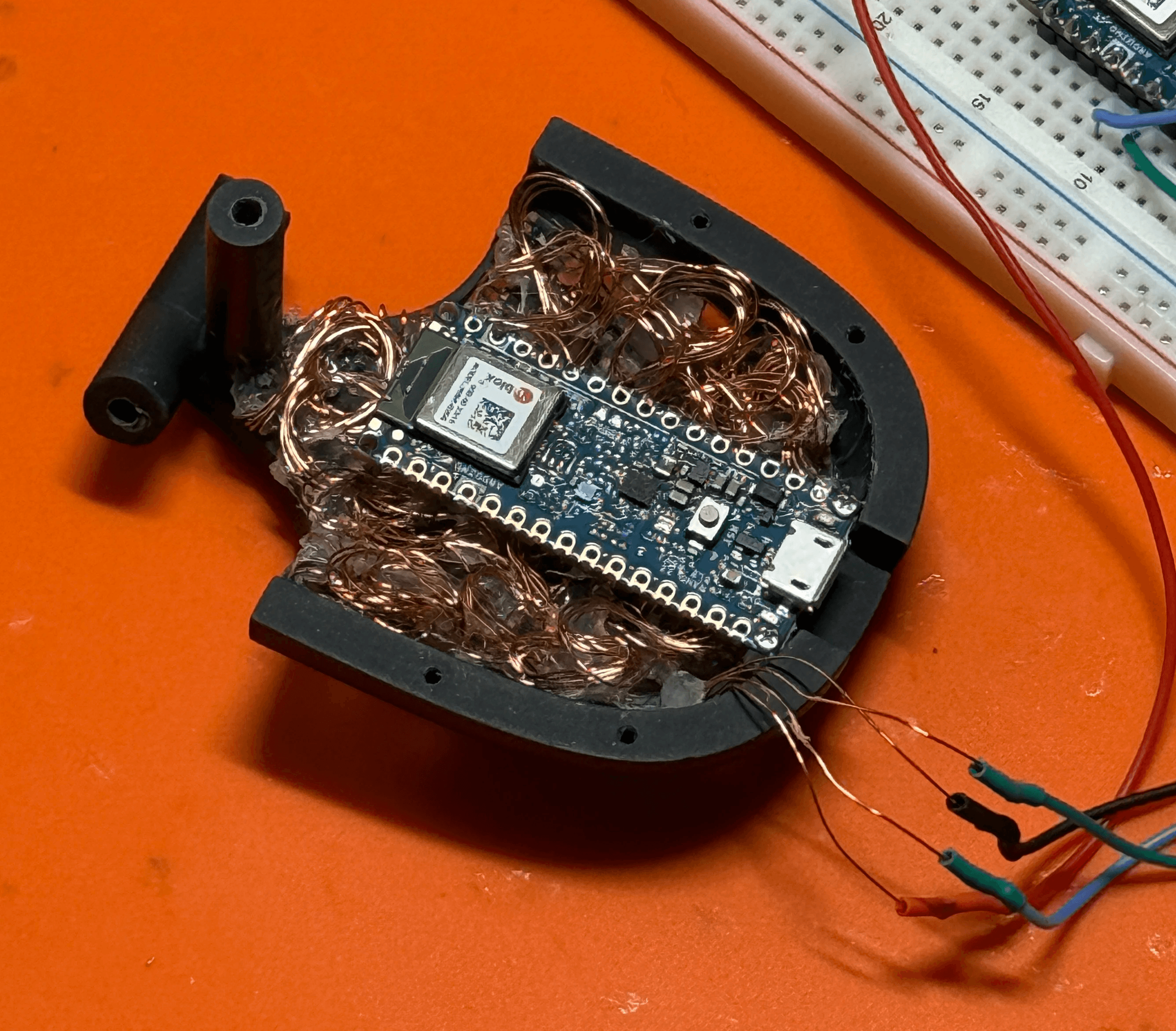
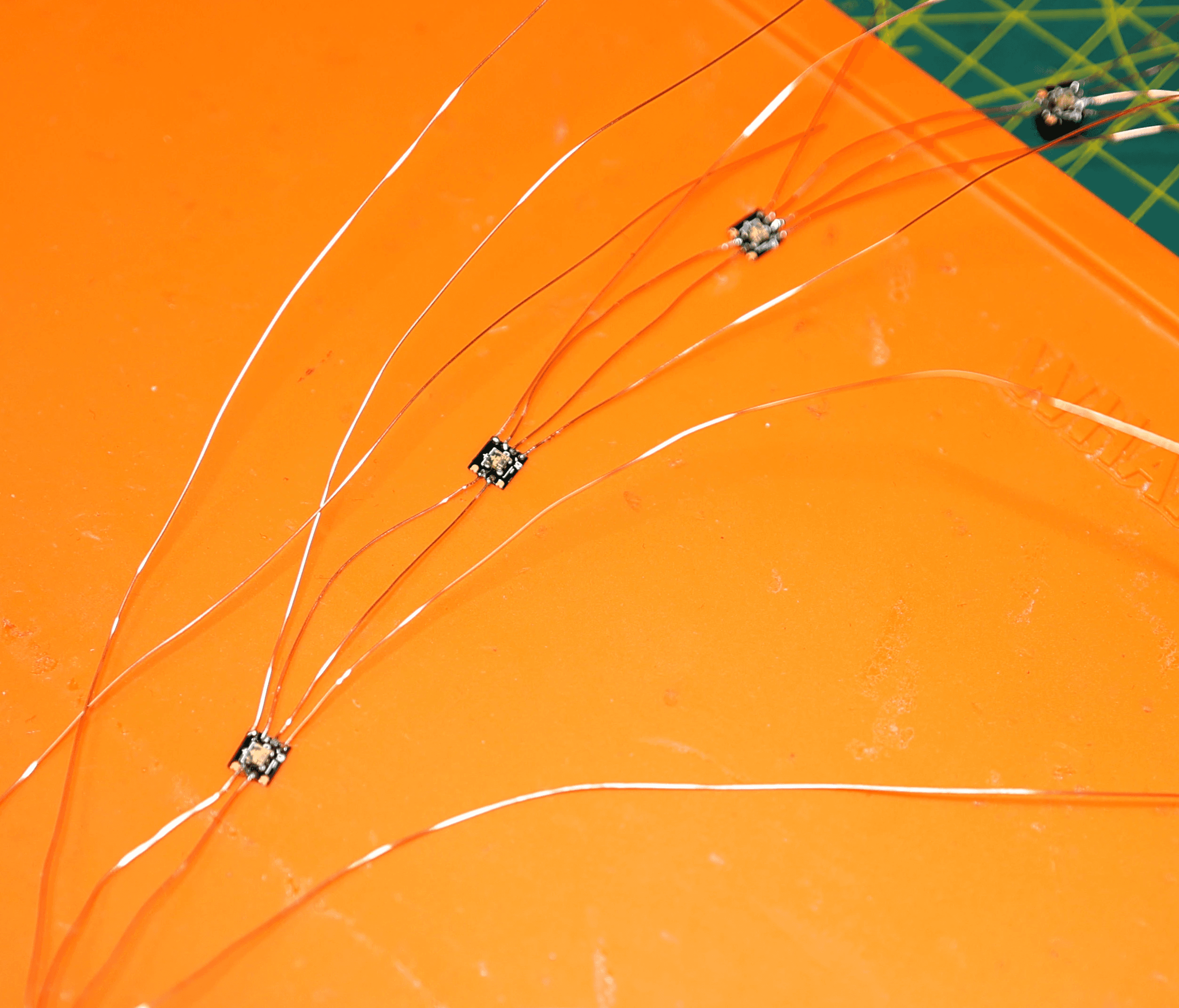
Microscopic Electronic Tolerances: Fitting an Arduino, a thermal camera, three servos, and custom lighting into a wearable pendant meant space was at an absolute premium. Hand-wiring the tiny 2020 Neopixels into the complex geometry of the abdomen would be incredibly painstaking and delicate work.
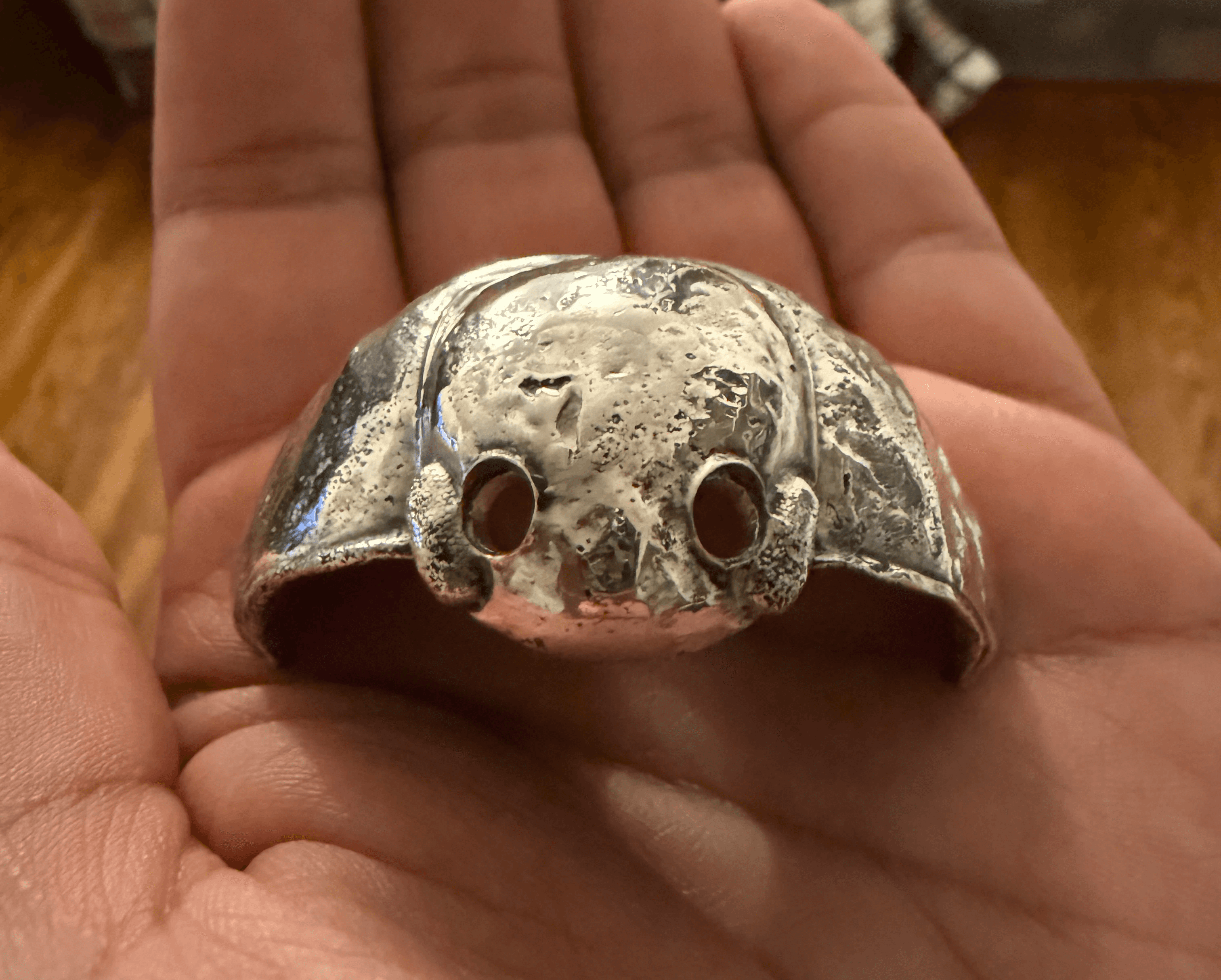
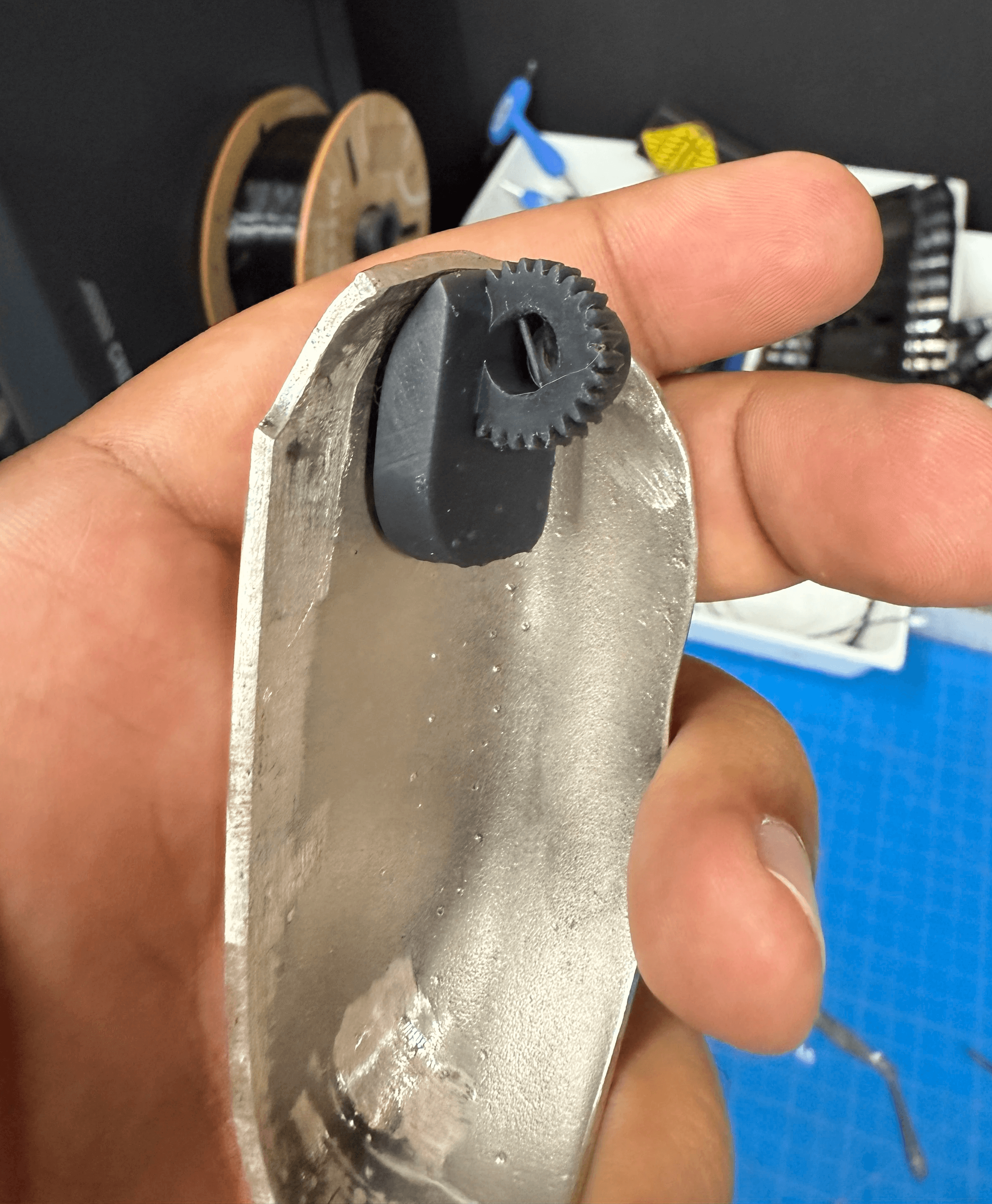
Material Discrepancies in Gearing: Cast sterling silver is not perfectly precise in it's end form and impossible to keep true to the original CAD tolerances. Designing millimeter-accurate internal gears to mount against the slightly unpredictable inner surface of the cast silver required intense problem-solving and rapid trial and error.
High-Stakes Fabrication Timeline: Because the build took place during a single weekend long hackathon in Boston, the lost-wax casting of the external shell had to be executed perfectly on the first try, leaving very little room for error during the delicate burnout and casting phases.
Microscopic Electronic Tolerances: Fitting an Arduino, a thermal camera, three servos, and custom lighting into a wearable pendant meant space was at an absolute premium. Hand-wiring the tiny 2020 Neopixels into the complex geometry of the abdomen would be incredibly painstaking and delicate work.
Material Discrepancies in Gearing: Cast sterling silver is not perfectly precise in it's end form and impossible to keep true to the original CAD tolerances. Designing millimeter-accurate internal gears to mount against the slightly unpredictable inner surface of the cast silver required intense problem-solving and rapid trial and error.
Solution and Process
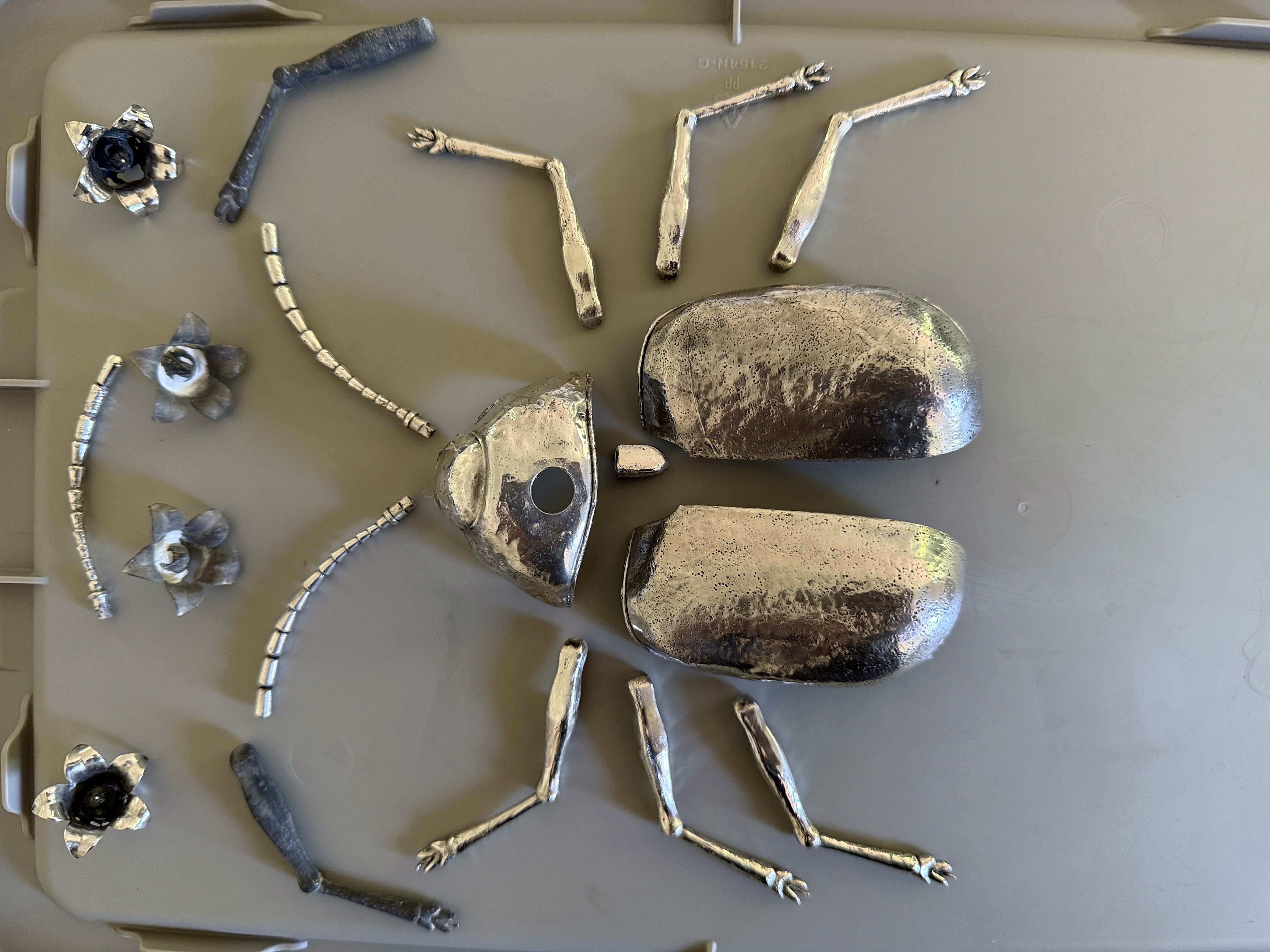
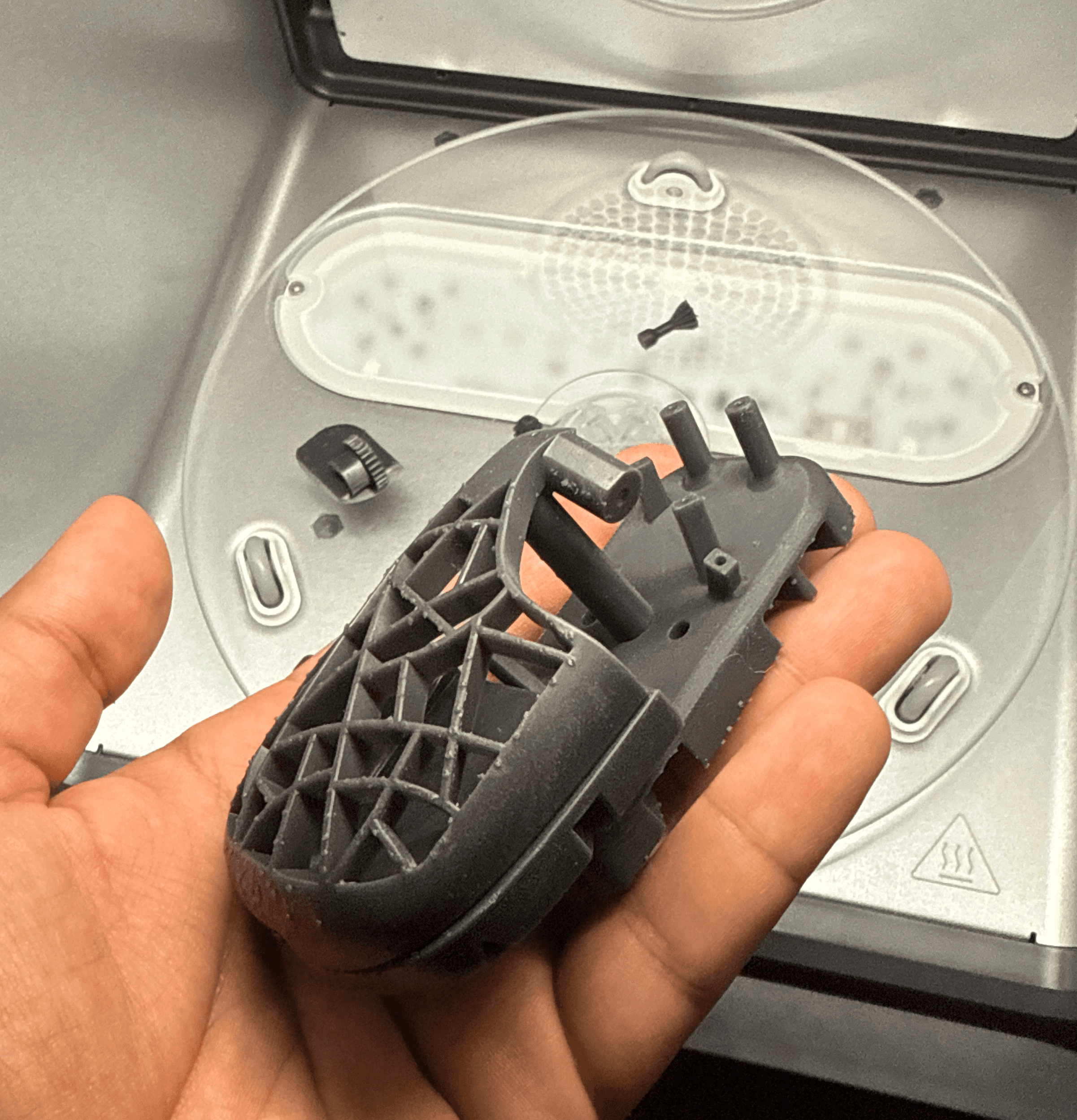
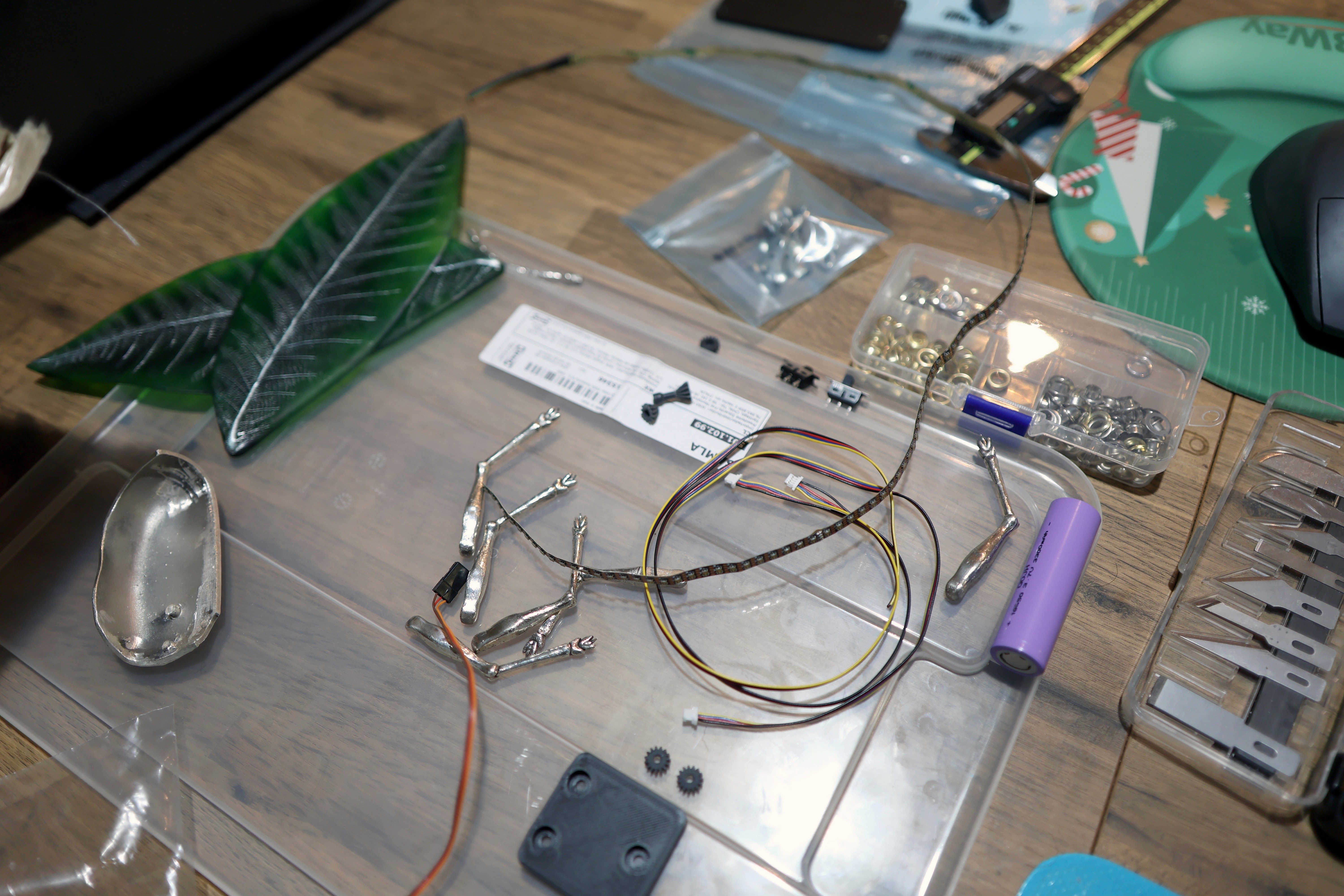
Parametric Design & Lost-Wax Casting: The workflow began with modeling the organic, insectoid forms in Fusion 360 and ZBrush while maintaining strict dimensional constraints for the internal hardware. The outer shell was printed in Formlabs True Cast resin, immediately put through the lost-wax casting process to yield the sterling silver components, and heavily hand-finished.
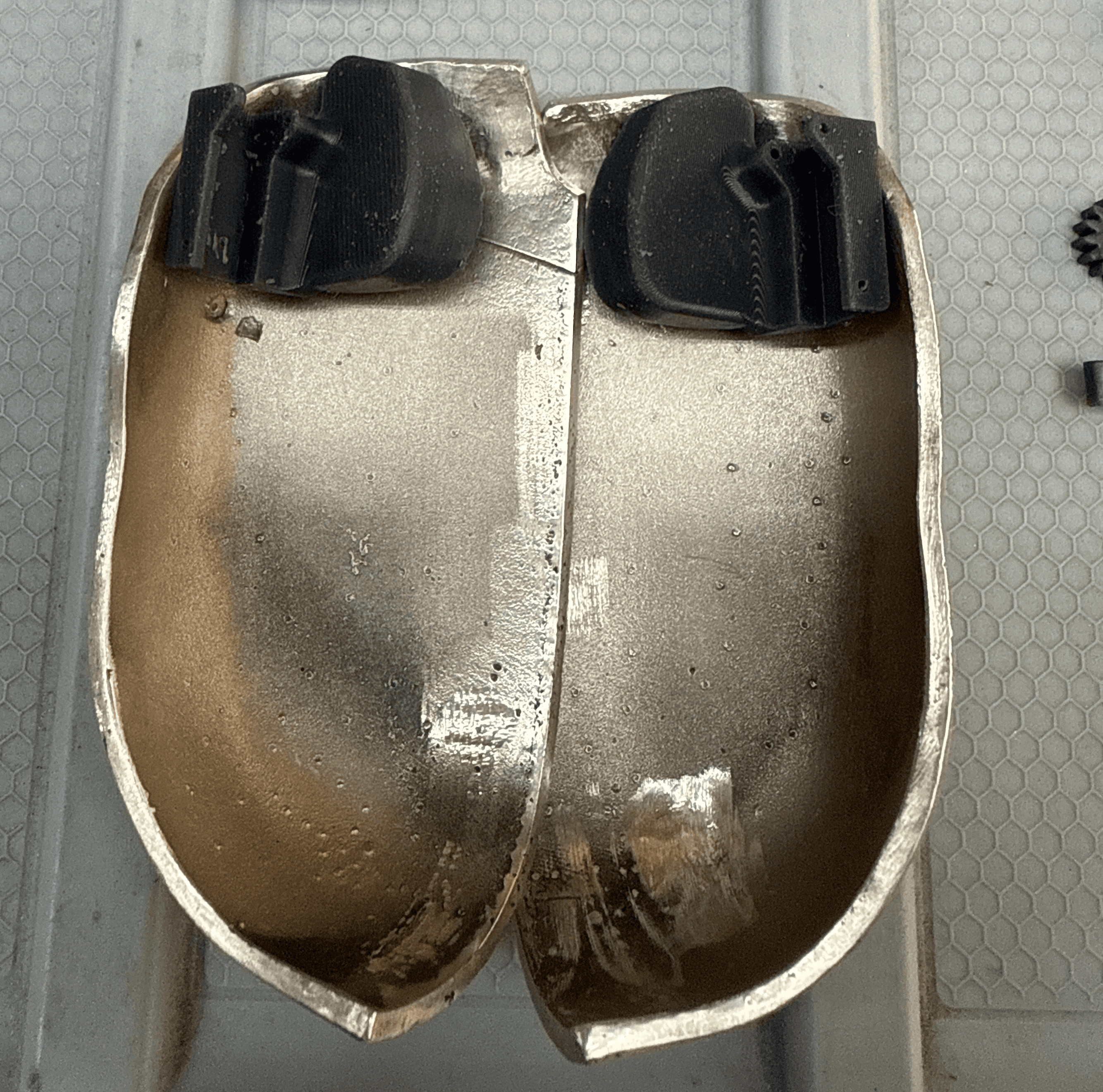
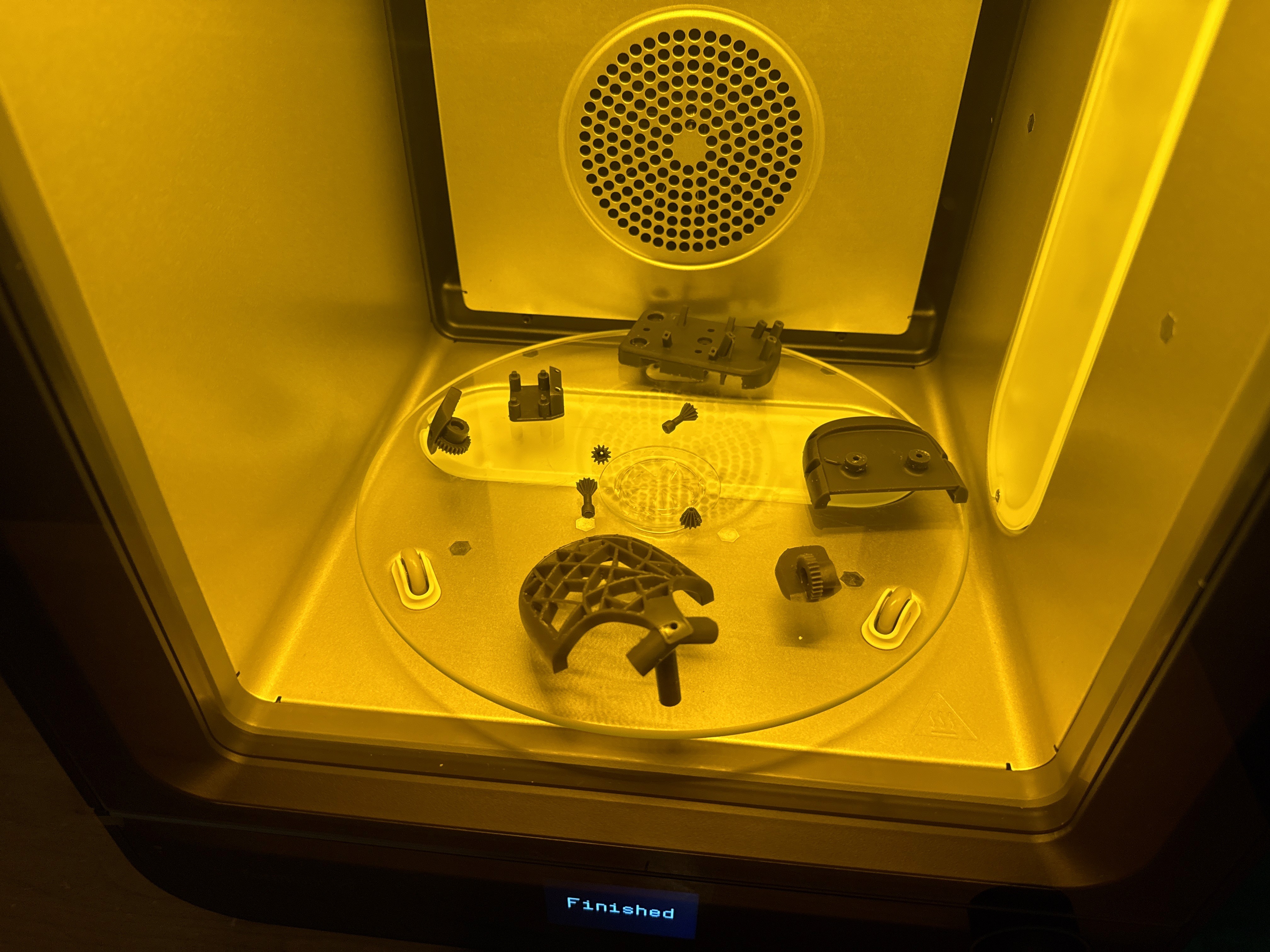
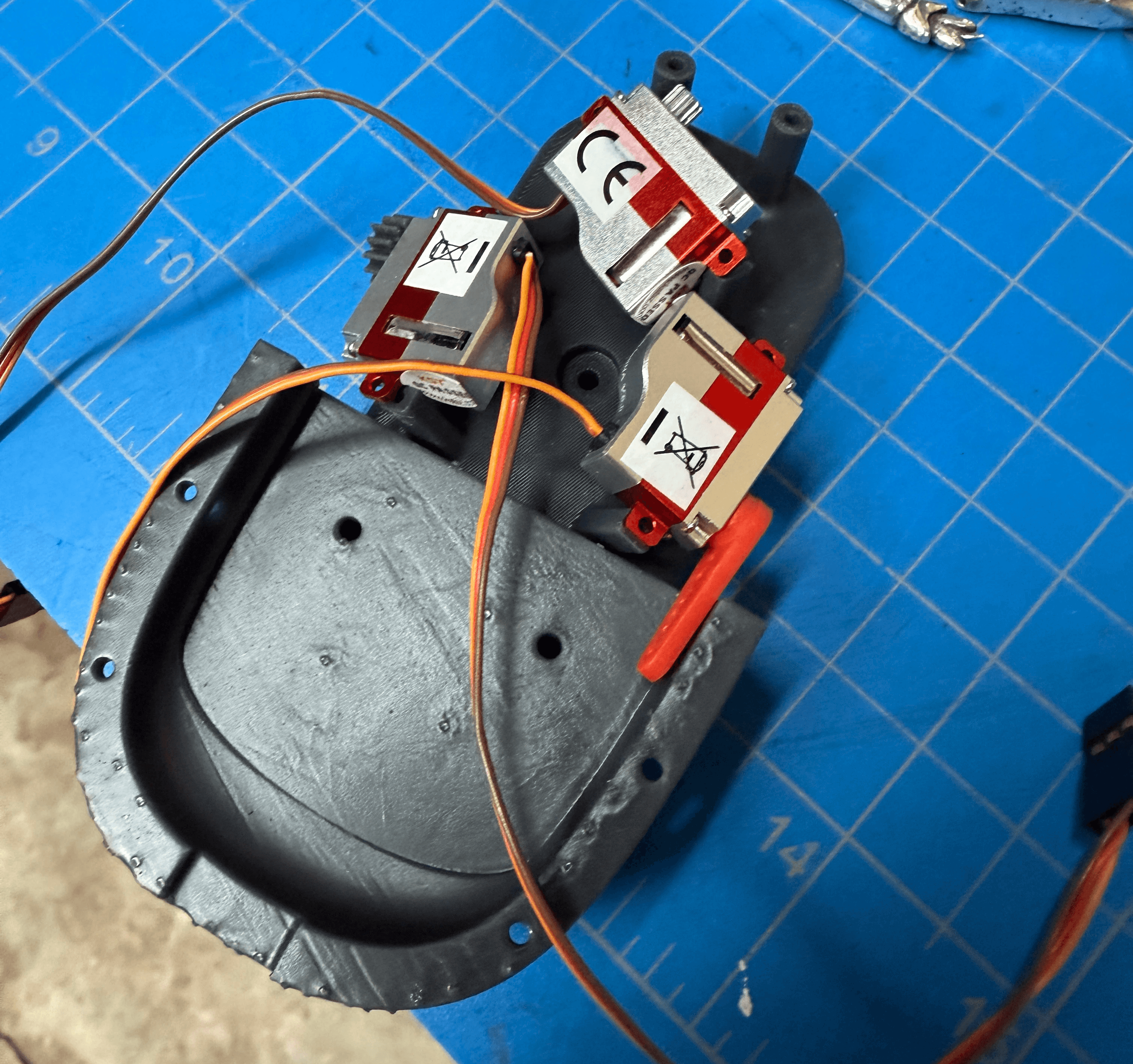
Reverse-Engineered Mechanics: Because the cast silver parts shrank and deviated slightly from the original digital files, the internal mechatronics had to be engineered "backwards." I established the exact physical pivot points on the physical silver pieces first, and then engineered custom internal mounts using Formlabs Tough 1500 resin to bridge the gap.
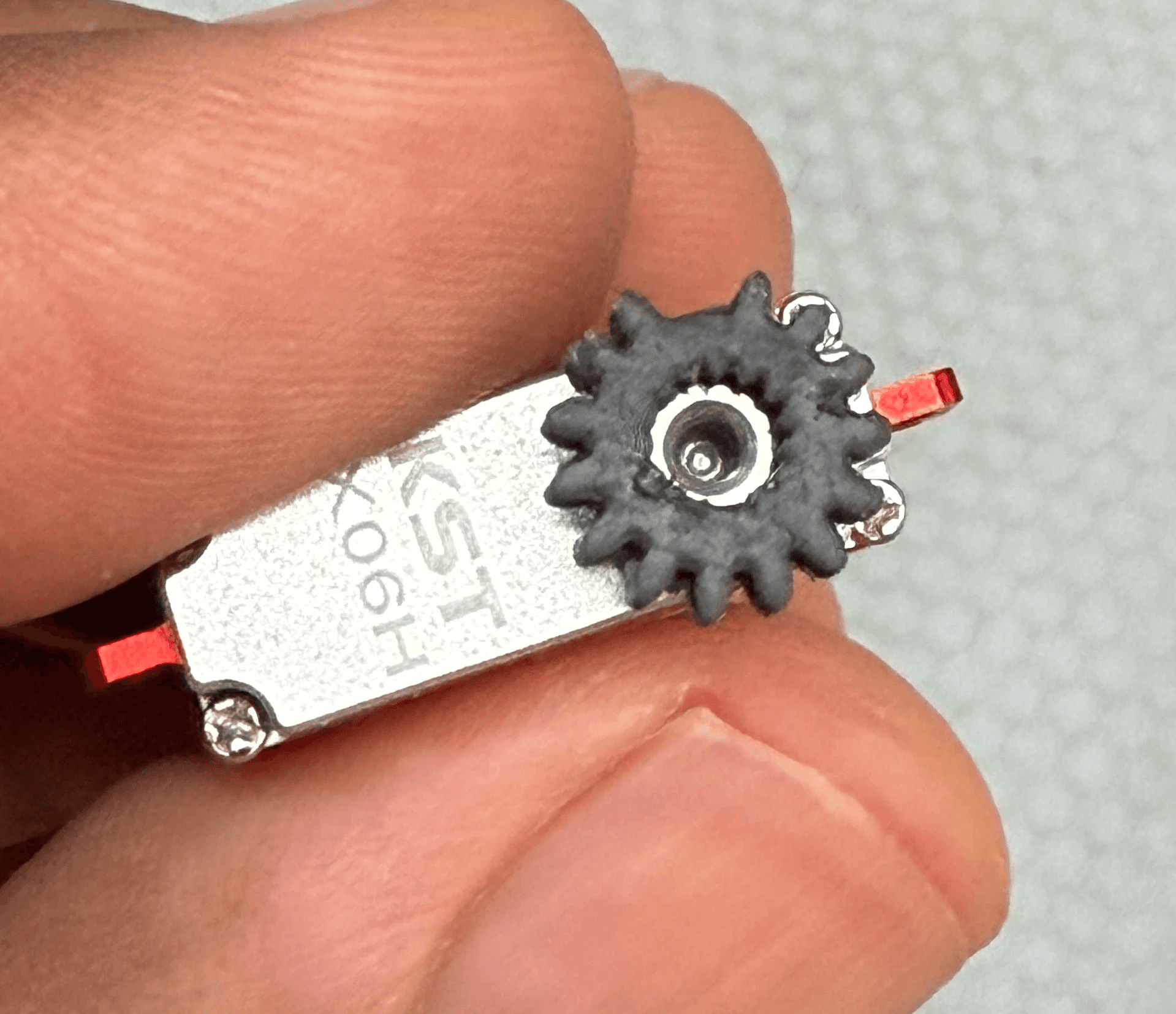
Micro-Gearing & Assembly: Operating within such a tiny cavity required highly specialized mechanical design. I engineered custom torque-leaning spur gears to actuate the elytra, and angled bevel gears that allowed a single micro-servo to rotate both antennae simultaneously. The final assembly involved the painstaking hand-wiring of the 2020 Neopixels and thermal sensors into the stained-glass abdomen, completing the illusion.
Parametric Design & Lost-Wax Casting: The workflow began with modeling the organic, insectoid forms in Fusion 360 and ZBrush while maintaining strict dimensional constraints for the internal hardware. The outer shell was printed in Formlabs True Cast resin, immediately put through the lost-wax casting process to yield the sterling silver components, and heavily hand-finished.
Reverse-Engineered Mechanics: Because the cast silver parts shrank and deviated slightly from the original digital files, the internal mechatronics had to be engineered "backwards." I established the exact physical pivot points on the physical silver pieces first, and then engineered custom internal mounts using Formlabs Tough 1500 resin to bridge the gap.
Micro-Gearing & Assembly: Operating within such a tiny cavity required highly specialized mechanical design. I engineered custom torque-leaning spur gears to actuate the elytra, and angled bevel gears that allowed a single micro-servo to rotate both antennae simultaneously. The final assembly involved the painstaking hand-wiring of the 2020 Neopixels and thermal sensors into the stained-glass abdomen, completing the illusion.

Additional Photos